

The Enduring Challenge: Overcoming the Typical Forgetting Curve in Professional L&D
In the fast-paced world of modern business, knowledge is power, and continuous learning is the engine of growth. Yet, a fundamental human characteristic, first scientifically explored by German psychologist Hermann Ebbinghaus in the late 19th century, continues to pose a significant challenge to effective learning and development (L&D) initiatives: the "Typical Forgetting Curve." This principle illustrates how quickly newly acquired information fades from our memory if not reinforced. For industries spanning finance to healthcare, and mining to retail, the implications of this natural memory decay are profound, leading to performance gaps, compliance risks, and missed opportunities. Understanding this curve is the first step; strategically countering it with innovative L&D solutions is the key to sustained success and competitive advantage.
Understanding the Forgetting Curve
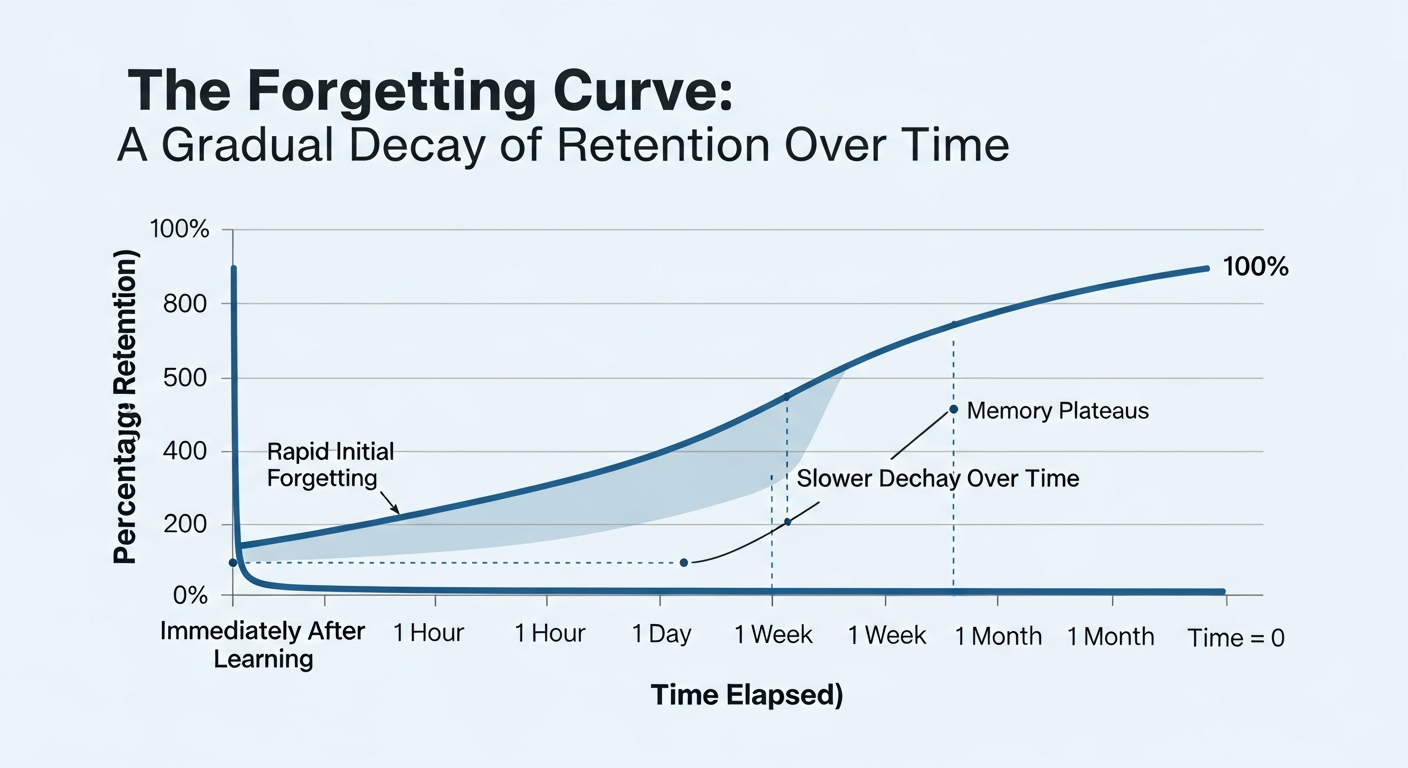
Hermann Ebbinghaus’s groundbreaking research revealed that the vast majority of learned information is forgotten within hours or days if not reviewed. His curve typically shows a sharp initial drop in retention, followed by a more gradual decline. For instance, studies suggest that within just 24 hours, learners might forget 50-80% of what they learned, and within a week, that figure can climb even higher. This isn't a sign of poor learning; it’s a natural process of the brain shedding unused information to make room for new input. Factors influencing the steepness of the curve include the complexity of the material, the learner's initial engagement, prior knowledge, and the method of delivery. In professional settings, where the stakes are high, relying solely on one-off training sessions is a recipe for rapid knowledge loss.
The Forgetting Curve’s Impact Across Critical Industries
Insurance and Finance
In the highly regulated worlds of insurance and finance, compliance knowledge is paramount. Agents and advisors must stay updated on intricate product details, evolving regulations, and risk management protocols. Forgetting critical information can lead to costly errors, legal penalties, and significant reputational damage. Continuous, reinforced training is essential to ensure Risk-focused Training and up-to-date knowledge in a sector where accuracy is non-negotiable.
Retail and Banking
Front-line staff in retail and banking interact directly with customers, requiring comprehensive product knowledge, exceptional customer service skills, and adherence to security procedures. A lapse in memory about a new product feature or a banking regulation can lead to poor customer experiences, loss of trust, and operational inefficiencies. Regular, bite-sized refreshers are crucial for maintaining peak performance and service quality.
Mining and Oil & Gas
Safety is the cornerstone of the mining and oil and gas industries. Workers operate in hazardous environments, where understanding and recalling complex safety protocols, emergency procedures, and equipment operation guidelines can be a matter of life and death. The forgetting curve here directly translates to increased accident risks, potential environmental damage, and non-compliance with stringent safety standards. Frequent, practical training is vital.
Healthcare and Pharma
Medical professionals and pharmaceutical representatives must keep pace with rapidly advancing scientific knowledge, new drug formulations, treatment protocols, and patient care best practices. Forgetting crucial details about medication interactions, diagnostic procedures, or ethical guidelines can have severe consequences for patient health. Effective L&D solutions are critical for ensuring clinicians and pharma sales teams retain life-saving information and adapt to new developments.
Combating the Forgetting Curve with Modern L&D Strategies
The good news is that the forgetting curve is not an unconquerable foe. Modern learning and development strategies, powered by technology, offer powerful ways to flatten the curve and enhance long-term retention. The key lies in strategic reinforcement, engagement, and personalization:
- Spaced Repetition: By strategically reintroducing information at increasing intervals, learners are prompted to recall knowledge just before they’re likely to forget it, strengthening neural pathways.
- Microlearning: Delivering content in small, digestible chunks makes it easier to absorb and recall. This approach is perfectly suited for reinforcing key concepts without overwhelming learners. A MaxLearn Microlearning Platform excels at this, providing targeted, on-demand content.
- Interactive and Gamified Content: Engaging learners actively through quizzes, simulations, and Gamified LMS elements makes learning more enjoyable and memorable, reducing passive consumption.
- Adaptive Learning: Tailoring the learning experience to individual needs, progress, and knowledge gaps ensures that learners receive the right content at the right time. This personalized approach is a hallmark of Adaptive Learning.
- Performance Support: Providing on-demand access to job aids, checklists, and quick guides directly within the workflow ensures that critical information is always available when needed most.
Leveraging tools like an AI Powered Authoring Tool can further streamline the creation of relevant, engaging, and personalized content, making it easier for L&D teams to implement these effective strategies.
Smart Strategies for Enhanced Learning and Retention
How can technology personalize learning paths to defy the curve?
Advanced learning platforms utilize sophisticated algorithms to analyze a learner's performance, strengths, and weaknesses. By understanding individual engagement patterns and areas of difficulty, these systems can dynamically recommend specific modules, quizzes, or review sessions tailored to reinforce fading knowledge. This data-driven approach ensures that each learner receives a uniquely optimized experience, focusing on what they need most, when they need it, thereby significantly slowing the rate of memory decay and boosting long-term recall.
How can global teams ensure consistent knowledge retention despite diverse locations?
For organizations operating across multiple time zones and cultures, maintaining a uniform standard of knowledge is a challenge. Digital learning solutions provide a centralized, accessible hub for all training materials. These platforms support various languages and can be accessed asynchronously, allowing employees worldwide to engage with content at their convenience. This ensures equitable access to critical information, facilitates standardized understanding, and enables remote teams to stay aligned with corporate knowledge benchmarks, regardless of their physical presence.
How do L&D solutions ensure training genuinely addresses learners' immediate needs and challenges?
Effective L&D moves beyond generic content to deliver training that is directly relevant to a learner's role, current projects, and performance gaps. Modern platforms often integrate with performance management systems or allow for real-time feedback from managers and peers. This contextual information enables the delivery of highly targeted content, such as quick guides for specific tasks or short courses addressing a common issue observed in performance reviews. By aligning learning interventions precisely with current operational demands and individual development areas, these solutions ensure the knowledge acquired is immediately applicable and therefore more likely to be retained.
Conclusion
The Typical Forgetting Curve is a natural phenomenon, but its negative impact on organizational performance is entirely manageable. By embracing forward-thinking L&D strategies that prioritize reinforcement, engagement, and personalization—supported by advanced technological solutions—businesses in every sector can transform their learning landscapes. Moving beyond traditional, passive training to dynamic, adaptive, and accessible learning experiences is not just about improving memory; it's about building a more knowledgeable, skilled, and resilient workforce ready to meet the challenges of tomorrow.
.jpg)


