

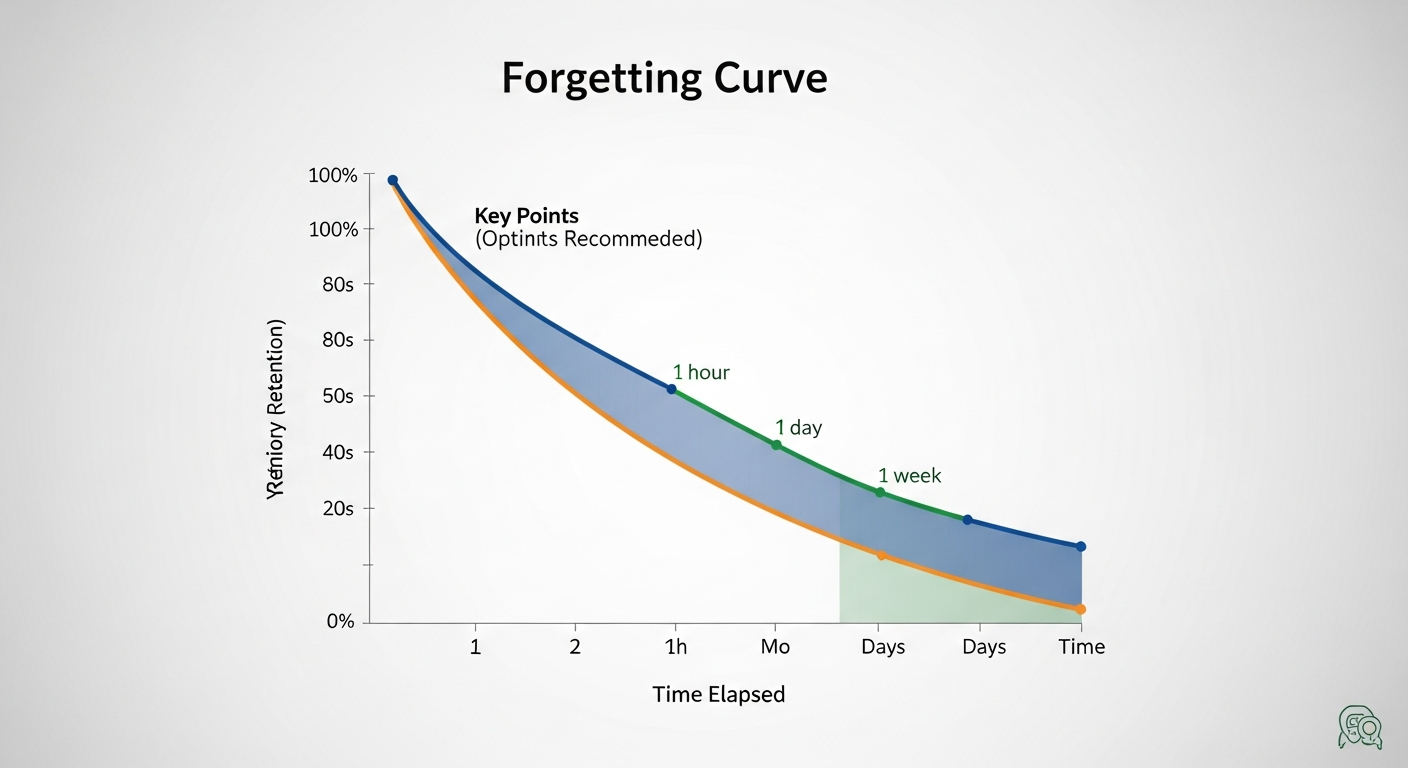
Mastering Knowledge Retention: Understanding and Overcoming the Forgetting Curve Graph
In the vast landscape of professional development and continuous learning, one challenge consistently looms large: the rapid decay of newly acquired knowledge. This phenomenon, scientifically documented as the Forgetting Curve, highlights a critical bottleneck for organizations striving for an informed, skilled, and compliant workforce. Understanding this curve isn't just academic; it's a strategic imperative for any business investing in its people, from the high-stakes environments of healthcare and finance to the rigorous operational demands of mining and oil & gas.
What is the Forgetting Curve Graph?
The Forgetting Curve, a concept pioneered by German psychologist Hermann Ebbinghaus in the late 19th century, illustrates the rate at which information is lost over time when there is no attempt to retain it. Ebbinghaus conducted self-experiments, memorizing nonsense syllables and then testing his recall at various intervals. His findings were striking: a significant portion of learned information is forgotten almost immediately, with the rate of forgetting slowing down considerably thereafter.
Visually, the graph typically shows a steep initial drop in retention, followed by a more gradual decline. Within just hours or days of initial learning, a staggering percentage of information can vanish from memory if not reinforced. This isn't a sign of poor intellect, but a natural brain function that prioritizes information, often discarding what it deems irrelevant or unused.
Several factors can influence the steepness of this curve, including the meaningfulness of the information, the learner's emotional state, the quality of sleep, and, crucially, the presence or absence of repetition and reinforcement. For L&D professionals, this graph serves as a stark reminder that delivering training is only half the battle; ensuring its lasting impact is the real challenge.
The Forgetting Curve's Impact on Modern Learning & Development
For decades, traditional corporate training models inadvertently played into the hands of the Forgetting Curve. Hour-long seminars, dense manuals, and annual training refreshers often failed to account for the brain's natural tendency to forget. Employees would attend training, perhaps pass a test, but weeks later, much of that knowledge would have evaporated, particularly if not immediately applied or reinforced.
This has profound implications across industries. In finance, forgetting critical compliance regulations can lead to costly penalties. In healthcare, forgetting best practices can compromise patient safety. In retail, forgetting product details can lose sales. The challenge for modern L&D is to move beyond mere knowledge delivery and focus on creating an environment where knowledge is not just acquired, but truly embedded and readily accessible when needed.
Strategies to Combat the Forgetting Curve Effectively
Fortunately, understanding the Forgetting Curve provides a powerful roadmap for designing more effective learning interventions. Modern L&D strategies leverage technology and cognitive science to flatten the curve and enhance long-term retention:
Microlearning
Breaking down complex information into small, digestible chunks delivered over time is a highly effective countermeasure. MaxLearn Microlearning Platform provides a perfect framework for this, allowing learners to engage with content in short bursts, reducing cognitive overload and facilitating better processing and retention. These brief modules are easier to integrate into busy workdays and more conducive to spaced repetition.
Spaced Repetition
The strategic re-exposure to information at increasing intervals is a cornerstone of effective retention. Instead of one-off training, learners revisit key concepts days, weeks, or even months after initial exposure. This spaced practice strengthens memory traces and signals to the brain that the information is important and worth retaining.
Gamification
Engaging learners through game-like elements can significantly boost motivation and participation, leading to better retention. A Gamified LMS transforms learning into an interactive, rewarding experience with points, badges, leaderboards, and challenges. This not only makes learning fun but also encourages repeated engagement with content, reinforcing memory.
Adaptive Learning
Not all learners are the same, and neither are their knowledge gaps. Adaptive Learning tailors the learning path to individual needs, identifying areas where a learner struggles and providing targeted reinforcement. This personalized approach ensures that time is spent efficiently, focusing on strengthening weak points and preventing unnecessary review of already mastered concepts.
AI-Powered Tools
Artificial intelligence is revolutionizing content creation and delivery. An AI Powered Authoring Tool can analyze learning data to suggest optimal content formats, personalize recommendations, and even generate practice questions based on a learner's performance. AI can predict when a learner is likely to forget certain information and proactively push relevant refreshers, making the fight against the forgetting curve more predictive and efficient.
Industry-Specific Applications of Retention Strategies
The principles of overcoming the Forgetting Curve are universally applicable but have specific resonance across various sectors:
- Insurance and Finance: Compliance regulations change frequently. Effective retention ensures agents and advisors stay updated on products, ethical guidelines, and legal requirements, mitigating risk and ensuring customer trust.
- Retail and Banking: For customer-facing roles, product knowledge, sales techniques, and fraud prevention protocols are vital. Consistent, reinforced training helps employees confidently serve customers and protect assets.
- Mining and Oil and Gas: Safety protocols, operational procedures, and emergency responses are non-negotiable. Regular, engaging refreshers are crucial for preventing accidents and maintaining operational integrity, making it ideal for Risk-focused Training.
- Healthcare and Pharma: The pace of medical innovation is relentless. Doctors, nurses, and pharmaceutical representatives must retain vast amounts of information on new treatments, patient care, and drug regulations. High-retention training directly impacts patient outcomes and regulatory adherence.
Frequently Asked Questions on Learning Retention
Why do we forget information so quickly after learning it?
Our brains naturally prioritize information, often discarding details not immediately applied or frequently revisited. This process, known as memory decay, is a survival mechanism. Without reinforcement or perceived importance, new information tends to fade rapidly, as illustrated by the Forgetting Curve.
How can organizations improve employee knowledge retention?
Organizations can significantly boost retention by implementing strategies like microlearning, spaced repetition, and gamified content. Utilizing adaptive learning technologies and AI-driven platforms also helps personalize the learning experience, making it more relevant and memorable for individual employees.
What role does technology play in combating information decay?
Technology offers powerful tools to counter information decay. Learning platforms can automate spaced repetition, deliver content in engaging formats (like games), and use data to personalize learning paths. AI, in particular, can analyze performance and predict knowledge gaps, pushing timely refreshers to maximize retention.
Is continuous learning truly necessary for business success in today's world?
Absolutely. In rapidly evolving industries, continuous learning is not just an advantage but a necessity. It ensures employees stay current with new technologies, market trends, and regulations, fostering innovation, adaptability, and sustained competitive advantage for the business.
What are the benefits of effective knowledge retention for a business?
Effective knowledge retention leads to numerous benefits: improved employee performance, higher compliance rates, reduced errors, enhanced decision-making, greater customer satisfaction, and a stronger return on investment from training initiatives. It creates a more knowledgeable, skilled, and resilient workforce.
Conclusion
The Forgetting Curve is a fundamental aspect of human memory, but it doesn't have to be a barrier to effective organizational learning. By understanding its mechanisms and embracing modern L&D strategies—from microlearning and gamification to adaptive pathways and AI-powered tools—businesses can transform their approach to knowledge retention. The goal is no longer just to teach, but to ensure that vital information truly sticks, empowering employees across all industries to perform at their best and drive sustained success.
.jpg)


