

The Ebbinghaus Forgetting Curve Shows That: Mastering Knowledge Retention in Modern Industries
In today's rapidly evolving business landscape, knowledge is power. Yet, a fundamental human characteristic, scientifically proven over a century ago, constantly threatens this power: forgetting. The concept, famously illustrated by Hermann Ebbinghaus's forgetting curve, reveals a stark truth – without active reinforcement, newly acquired information slips away rapidly. For industries ranging from high-stakes finance to critical healthcare, understanding and counteracting this inherent memory decay is not just an academic exercise; it's a strategic imperative for operational excellence, compliance, and competitive advantage.
Understanding the Silent Saboteur of Learning
What exactly is the curve of forgetting?
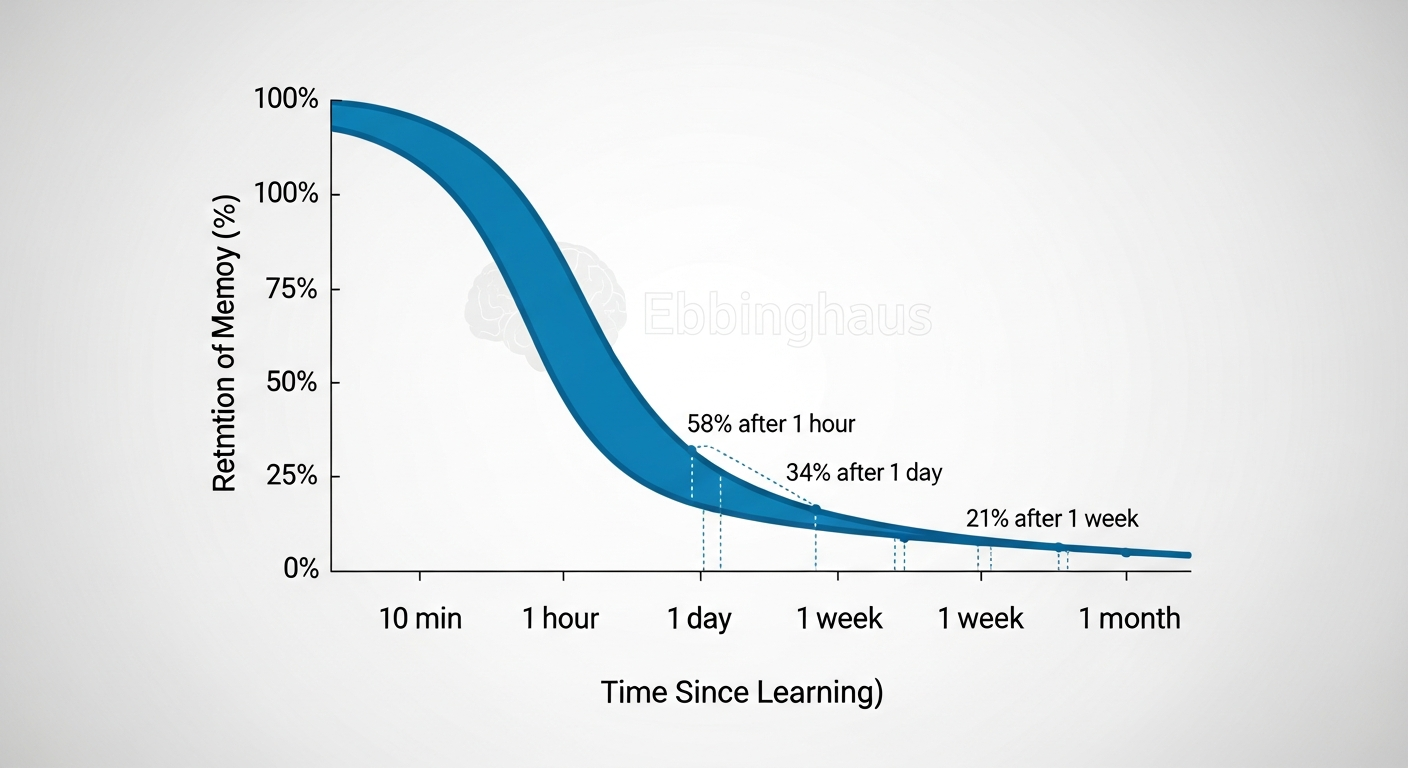
Developed by German psychologist Hermann Ebbinghaus in 1885, the forgetting curve is a hypothetical plot that describes the rate at which information is forgotten over time. Ebbinghaus found that memory retention decreases exponentially. Initially, there's a steep drop-off in recall—we forget a significant portion of what we've learned within hours or days. After this initial decline, the rate of forgetting slows down, but the information continues to fade without intervention. This phenomenon underscores why a single training session, no matter how comprehensive, often fails to produce lasting knowledge.
Why does information retention matter for businesses today?
For organizations, the implications of the forgetting curve are profound. It directly impacts the effectiveness of training programs, the efficiency of operations, and ultimately, the bottom line. When employees forget critical information:
- **Productivity suffers:** Time is wasted re-learning tasks or searching for forgotten procedures.
- **Compliance risks increase:** In regulated sectors like finance, healthcare, and mining, forgetting protocols can lead to costly errors, penalties, or safety incidents.
- **Innovation stalls:** New strategies, product features, or best practices are forgotten before they can be fully implemented.
- **Customer service degrades:** Staff unable to recall product details or service policies provide inconsistent or inadequate support.
- **Investment in L&D is wasted:** Significant resources poured into training yield diminishing returns if knowledge isn't retained.
The Curve's Unavoidable Impact Across Key Industries
The challenges posed by the forgetting curve are universal but manifest uniquely across different sectors:
In Finance and Banking: Ensuring Compliance and Product Acumen
From anti-money laundering regulations to new investment products, financial professionals are swamped with complex information. Forgetting compliance updates can lead to severe regulatory penalties, while forgotten product details can hinder sales and client trust. Continuous, reinforced learning is essential to maintain a sharp, compliant, and client-ready workforce.
In Healthcare and Pharma: Safeguarding Lives and Advancing Science
Medical professionals must constantly update their knowledge on new drug protocols, treatment methodologies, and patient safety guidelines. Pharmaceutical sales teams need to retain intricate details about drug efficacy and regulations. A lapse in memory here isn't just an inconvenience; it can have life-or-death consequences. Effective learning strategies are paramount for patient safety and drug development integrity.
In Mining, Oil, and Gas: Prioritizing Safety and Operational Efficiency
These industries operate in high-risk environments where safety protocols, machinery operation, and emergency procedures are paramount. Forgetting even a small detail can lead to catastrophic accidents, environmental damage, or significant operational downtime. Robust and frequently reinforced training is crucial for mitigating risks and ensuring a safe working environment.
In Retail and Insurance: Enhancing Customer Experience and Sales Performance
Retail employees need to remember product features, promotions, and customer service best practices to drive sales and create positive shopping experiences. Insurance agents must recall intricate policy details, new offerings, and claims processes. Forgetting this information directly impacts sales conversion, customer satisfaction, and overall brand reputation.
Strategies to Flatten the Forgetting Curve
How can businesses effectively combat knowledge decay and improve retention?
While forgetting is natural, its effects can be significantly mitigated through scientifically-backed learning strategies. Modern learning and development (L&D) solutions are specifically designed to counteract the forgetting curve:
- Spaced Repetition: This is the most direct countermeasure to the forgetting curve. Instead of one-off training, information is revisited at increasing intervals over time. This consistent, spaced reinforcement moves knowledge from short-term to long-term memory.
- Microlearning: Delivering content in short, bite-sized modules (MaxLearn Microlearning Platform) makes it easier for learners to consume and retain information. These focused bursts of learning are ideal for spaced repetition and for integrating learning into the flow of work, rather than disrupting it.
- Engaging and Interactive Content: Passive learning yields poor retention. By incorporating interactive elements, simulations, and scenarios, learners become active participants. A Gamified LMS, for instance, can boost engagement and motivate learners to return for repeated practice.
- Personalized Learning Paths: Not all learners start at the same knowledge level, nor do they forget at the same rate. Adaptive Learning tailors content and repetition schedules based on individual performance and knowledge gaps, ensuring that learners spend time on what they need most.
- Accessible and Up-to-Date Content Creation: Rapidly changing regulations and product lines require agility in content development. Utilizing an AI Powered Authoring Tool can dramatically speed up the creation and updating of learning materials, ensuring that employees always have access to the most current and relevant information.
- Prioritizing Critical Knowledge: Not all information is equally important. Businesses must identify high-impact knowledge areas—such as safety protocols, compliance regulations, or core product features—and build targeted reinforcement strategies around them. Risk-focused Training ensures that the most crucial information is retained, directly impacting business resilience and growth.
The Future of Learning: Leveraging Technology for Lasting Success
The modern L&D landscape is increasingly powered by technology to battle the forgetting curve. Advanced learning platforms use data analytics to track learner progress, identify areas of weakness, and automate the delivery of spaced repetition modules. The integration of intelligent algorithms allows for a highly personalized and efficient learning experience, moving beyond the limitations of traditional, one-size-fits-all training.
For organizations across finance, healthcare, retail, mining, and beyond, embracing these innovative L&D strategies is not just about adopting new tools; it's about fundamentally rethinking how knowledge is acquired, reinforced, and applied. By actively working to flatten the Ebbinghaus forgetting curve, businesses can ensure their workforce remains knowledgeable, compliant, and highly productive, turning learning investments into lasting success.
.jpg)


