

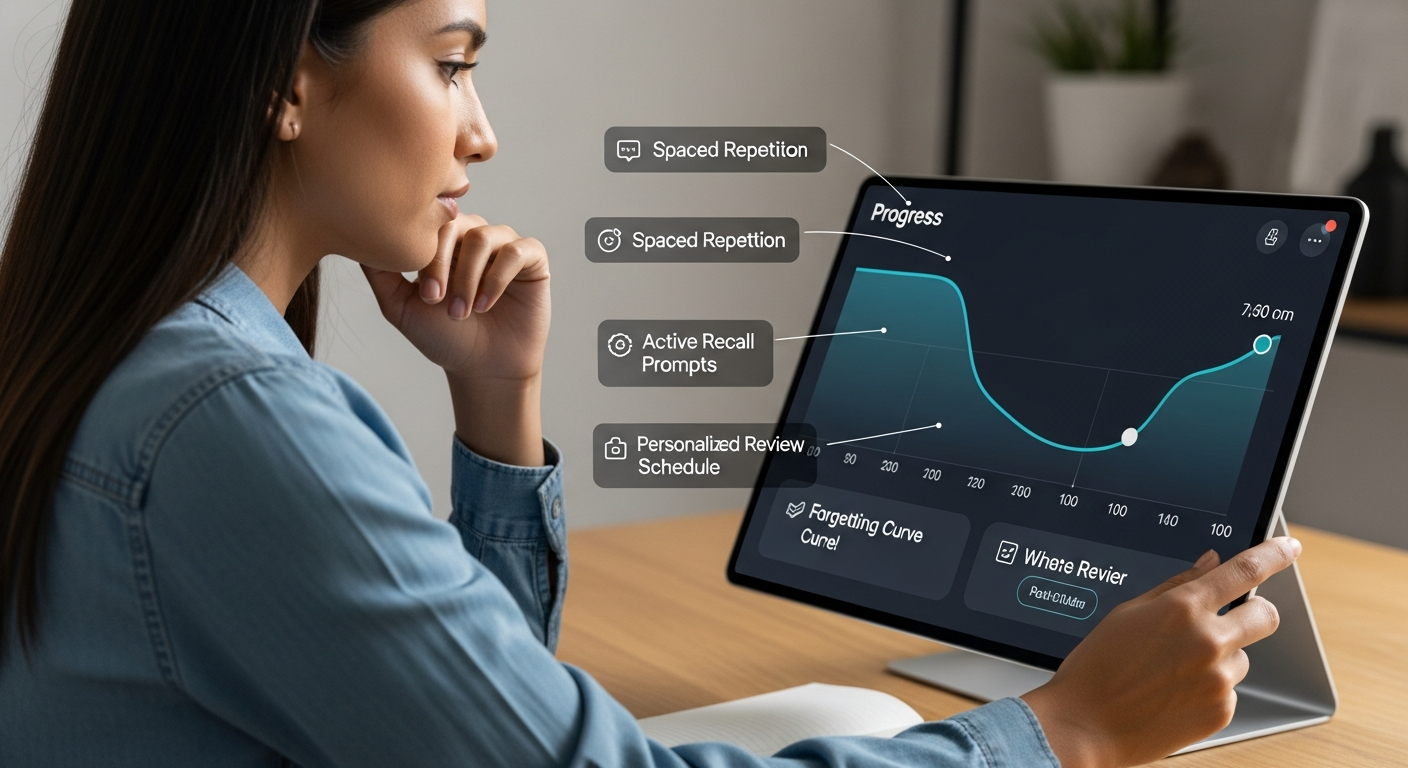
Conquering the Forgetting Curve: Strategies for Lasting Knowledge Retention in the Modern Workplace
In today's fast-paced corporate world, where continuous learning is not just an advantage but a necessity, the "forgetting curve" poses a significant challenge. Coined by German psychologist Hermann Ebbinghaus, this concept illustrates how much information we lose over time if we don't actively try to retain it. For industries ranging from Insurance to Healthcare, Banking to Mining, and Retail to Oil & Gas, the rapid decay of learned knowledge can lead to serious repercussions – from compliance failures and reduced productivity to safety hazards and missed opportunities for innovation. This article explores the science behind the forgetting curve and provides actionable strategies, powered by modern learning technologies, to ensure your workforce retains critical information and thrives.
Understanding the Forgetting Curve
Ebbinghaus's groundbreaking research in the late 19th century revealed that humans tend to forget approximately 50% of newly learned information within an hour, and around 70% within 24 hours, if there is no reinforcement. Over a month, this can climb to 90%. While the exact rate varies based on the complexity and relevance of the information, the fundamental principle remains: without intervention, knowledge fades rapidly.
For organizations, this means that significant investments in training programs – be it on new financial regulations, advanced drilling techniques, patient care protocols, or product specifications – can yield diminishing returns if the learning isn't reinforced. In sectors like Pharma, where understanding intricate drug mechanisms is vital, or in Banking, where compliance with evolving regulatory frameworks is paramount, the cost of forgetting is exceptionally high.
Why the Forgetting Curve is a Critical Challenge for Modern Businesses
The implications of the forgetting curve stretch across every industry:
- Compliance and Risk: In Insurance and Finance, forgetting regulatory updates can lead to hefty fines and reputational damage. In Mining and Oil & Gas, forgotten safety procedures can have catastrophic consequences. Risk-focused Training is crucial here.
- Productivity and Performance: Retail staff forgetting product features or sales techniques directly impacts sales. Healthcare professionals forgetting diagnostic protocols can affect patient outcomes.
- Innovation and Adaptability: As technology evolves rapidly, particularly in sectors like Pharma and Banking, the inability to retain new skills and information hinders an organization's capacity to innovate and remain competitive.
- Return on Investment (ROI) in L&D: If employees forget what they learned soon after a training session, the time and money invested in learning and development programs are largely wasted.
Effective Strategies to Combat the Forgetting Curve
Fortunately, the forgetting curve is not an insurmountable obstacle. By employing scientifically-backed learning strategies and leveraging cutting-edge technology, businesses can significantly improve knowledge retention.
Spaced Repetition
This technique involves reviewing information at increasing intervals over time. Instead of cramming, spaced repetition systematically brings information back to the learner just before they are about to forget it. This strengthens memory traces and moves information from short-term to long-term memory. It's particularly effective for memorizing vast amounts of data, like policy details in Insurance or drug names in Pharma.
Microlearning
Breaking down complex information into bite-sized, easily digestible modules is a powerful counter to the forgetting curve. MaxLearn Microlearning Platform delivers short bursts of information (typically 2-10 minutes) that are focused on a single learning objective. This approach reduces cognitive overload, makes learning more accessible during busy workdays, and is ideal for quick reinforcement, especially for updates in Retail product lines or new safety instructions in Mining.
Interactive and Engaging Content
Passive learning leads to rapid forgetting. Engaging learners through interactive elements, simulations, quizzes, and problem-solving scenarios significantly boosts retention. Platforms featuring a Gamified LMS turn learning into an enjoyable experience, leveraging competitive elements and rewards to keep employees motivated and reinforce concepts more effectively. This is vital for sales training in Retail or customer service roles in Banking, where practical application is key.
Adaptive Learning Paths
Recognizing that not all learners are alike, Adaptive Learning tailors the content and pace of learning to each individual's needs, performance, and existing knowledge. If a learner struggles with a particular concept, the system provides additional resources or different approaches. If they master it quickly, they can move on. This personalized approach ensures efficient learning and focused reinforcement where it's most needed, common in complex fields like medical diagnostics or financial modeling.
Reinforcement and Recall Activities
Active recall, such as testing oneself, is more effective than passive review. Regular, low-stakes quizzes, flashcards, scenario-based questions, and practical exercises embedded within the learning journey force learners to retrieve information from memory, strengthening its retention. This is particularly useful for critical procedures in Healthcare or safety checklists in Oil & Gas.
Artificial Intelligence-Powered Personalization
Modern learning platforms, often equipped with an AI Powered Authoring Tool, can analyze learner data to identify knowledge gaps, predict areas where forgetting is likely to occur, and automatically schedule targeted reinforcement. AI can recommend specific microlearning modules, spaced repetition intervals, or even peer-to-peer learning opportunities based on individual performance and job role. This ensures that learning interventions are precise and timely, maximizing their impact.
Industry-Specific Applications
- Healthcare: Regular microlearning modules on new drug protocols, disease management, and patient safety, reinforced with spaced repetition and AI-driven personalized refreshers.
- Finance & Banking: Gamified compliance training with adaptive paths based on job role, ensuring employees are up-to-date on anti-money laundering (AML) regulations and product offerings.
- Mining & Oil & Gas: Frequent, short safety training videos and interactive quizzes on equipment operation and emergency procedures, with mandatory recall activities before critical tasks.
- Retail: Product knowledge delivered via microlearning, combined with sales simulations and gamified challenges to reinforce customer interaction skills and inventory management.
- Pharma: Adaptive learning systems for new drug launches, allowing medical representatives to master complex information at their own pace, reinforced with AI-scheduled reviews.
- Insurance: Interactive scenarios for claims processing and policy sales, backed by microlearning modules on policy changes and regulatory updates, driven by AI to target specific agent needs.
Leveraging Technology for Lasting Knowledge Retention
The key to effectively overcoming the forgetting curve lies in integrating these strategies into a cohesive, technology-driven learning ecosystem. Advanced learning platforms offer the tools to deploy microlearning, implement spaced repetition, create engaging gamified experiences, and leverage the power of Artificial Intelligence to personalize and optimize the entire learning journey. This holistic approach transforms training from a periodic event into a continuous, embedded process.
Addressing Key Learning Questions with Intelligent Systems
How can smart learning systems predict skill gaps and tailor content?
Intelligent learning platforms utilize sophisticated algorithms to analyze a learner's performance data, engagement levels, and historical learning patterns. By comparing this data against desired competency profiles for specific roles or industry standards, these systems can accurately predict where an individual might have knowledge gaps or where forgetting is likely to occur. They then automatically recommend or deliver highly personalized content, such as targeted microlearning modules or interactive simulations, ensuring that training interventions are precise and timely, maximizing efficiency and impact.
What are the benefits of personalized training delivery for geographically diverse teams?
For teams spread across different regions, personalized training delivered through advanced learning platforms offers immense benefits. It ensures consistency in core knowledge, regardless of location, while allowing for localized content relevance where necessary (e.g., region-specific regulations). Each learner receives material tailored to their individual needs and pace, accessible on demand. This approach overcomes logistical challenges, reduces travel costs, and fosters a unified, highly skilled workforce across all locations, enhancing overall operational excellence.
How do advanced content optimization tools enhance knowledge recall and application?
Advanced content optimization tools within modern learning platforms go beyond mere content delivery. They use data analytics and machine learning to identify which content formats, lengths, and interaction types lead to the best retention and application outcomes. For example, they can determine if a short video, an interactive quiz, or a simulation is most effective for a particular topic or learner segment. By continuously optimizing content based on real-world performance data, these tools ensure that learning material is not only engaging but also maximally effective in transferring knowledge into long-term memory and enabling its practical application in real-world scenarios.
Conclusion
The forgetting curve is a natural human phenomenon, but its impact on organizational effectiveness and success can be mitigated. By strategically implementing spaced repetition, microlearning, gamification, adaptive learning, and leveraging the power of Artificial Intelligence, businesses across all sectors – from Health care to Retail – can build resilient learning ecosystems. These strategies ensure that critical knowledge is not just acquired but retained and applied, driving continuous improvement, fostering innovation, ensuring compliance, and ultimately securing a competitive edge in an ever-evolving global landscape.
.jpg)


