

The Silent Killer of Knowledge: Understanding the Rate of Forgetting in Corporate L&D
In the fast-paced world of modern business, continuous learning is not just an advantage; it's a necessity. From navigating complex financial regulations to mastering new drilling techniques, or understanding the latest pharmaceutical breakthroughs, employees across all sectors are constantly bombarded with new information. Yet, a fundamental human truth often undermines even the most robust training programs: the rate of forgetting. This phenomenon, where newly acquired knowledge fades over time if not reinforced, poses a significant challenge for Learning & Development (L&D) professionals in industries like Insurance, Finance, Retail, Banking, Mining, Healthcare, Oil and Gas, and Pharma.
Understanding how and why we forget is the first step toward building more effective, resilient learning ecosystems. By acknowledging this cognitive reality, L&D teams can strategically design interventions that not only deliver information but ensure it sticks, driving tangible business outcomes and fostering a truly knowledgeable workforce.
The Forgetting Curve: A Universal Truth
Ebbinghaus's Groundbreaking Work
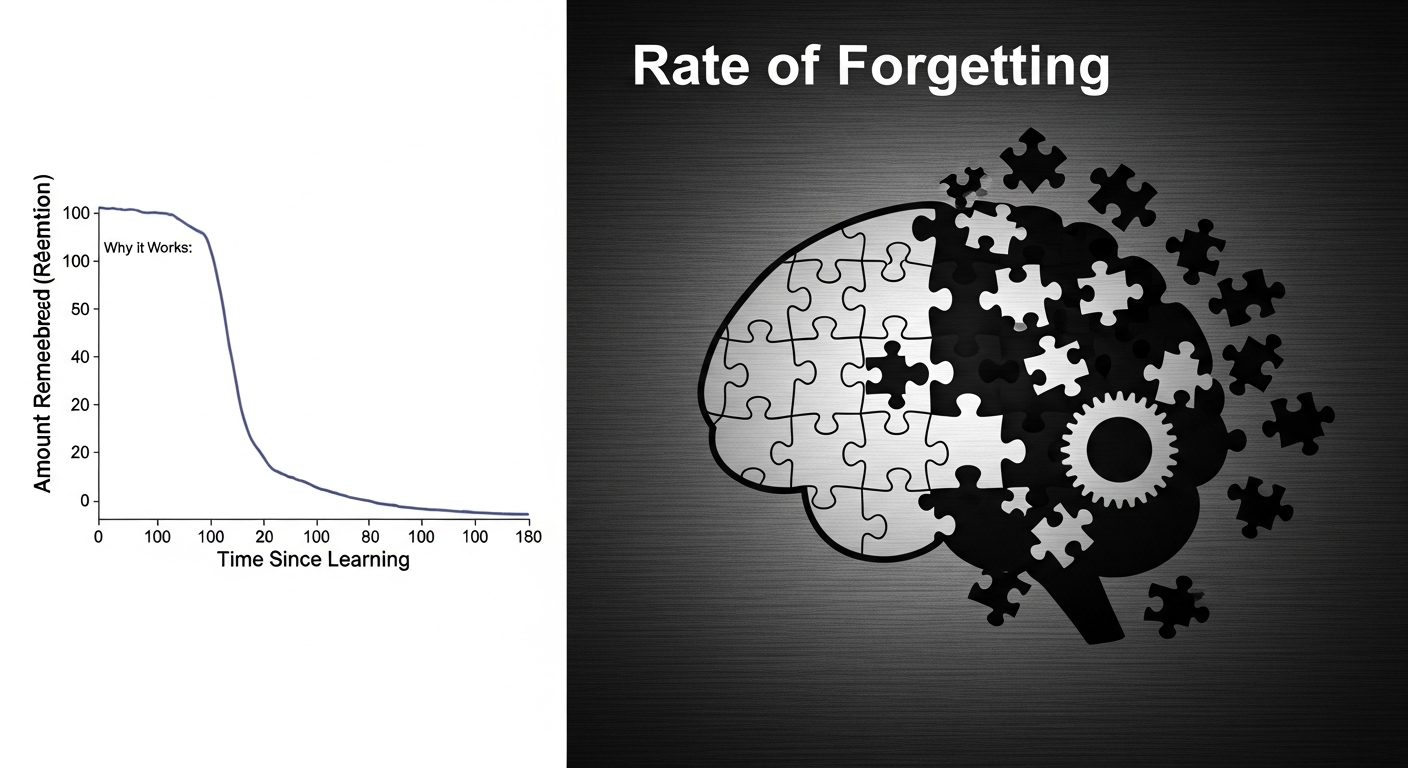
The concept of the "rate of forgetting" is most famously attributed to German psychologist Hermann Ebbinghaus, who, in 1885, conducted pioneering experiments on memory. His research led to the articulation of the "forgetting curve," a startling visual representation of how quickly we lose information without active recall. Ebbinghaus demonstrated that within just hours or days of initial learning, a significant portion of information can be lost – often as much as 50-70% within the first 24-48 hours. This steep decline highlights the inherent fragility of new memories, especially if they are not revisited or applied.
Implications for Traditional Training
For decades, corporate training models have often relied on lengthy, infrequent sessions – think annual compliance workshops, intensive onboarding bootcamps, or multi-day product seminars. While these formats can be effective for initial knowledge transfer, they are profoundly susceptible to the forgetting curve. Employees might absorb a lot during the training, but without strategic reinforcement, much of that knowledge simply evaporates by the time it needs to be applied in real-world scenarios. This leads to wasted training investments, decreased performance, increased risk, and a perpetual cycle of relearning.
Imagine a financial advisor learning about new investment products, a healthcare worker absorbing updated patient safety protocols, or an oil rig operator being trained on new equipment. If the knowledge isn't actively reinforced, the critical details needed for optimal performance and compliance will quickly fade, potentially leading to costly errors or missed opportunities.
Industry-Specific Impacts of Knowledge Decay
- Insurance & Finance: Compliance and Risk
In highly regulated industries, forgetting critical compliance procedures or policy details can result in hefty fines, legal liabilities, and reputational damage. Continuous updates mean employees must not only learn but retain vast amounts of evolving information, making the rate of forgetting a significant risk factor. - Retail & Banking: Product Knowledge and Customer Service
Forgetting product specifications, service offerings, or customer interaction protocols directly impacts sales, customer satisfaction, and brand loyalty. Employees need instant recall to provide excellent service and convert leads. - Mining, Oil & Gas: Safety and Operational Efficiency
In high-risk environments, forgetting safety procedures, emergency protocols, or critical operational steps can have catastrophic consequences, leading to accidents, injuries, or environmental damage. Knowledge retention is directly linked to worker safety and operational integrity. - Healthcare & Pharma: Patient Care and Regulatory Updates
The ability to remember drug dosages, treatment protocols, patient histories, or the latest research findings is paramount in healthcare. In pharma, forgetting regulatory requirements or drug development processes can delay market entry or compromise patient safety.
Combatting the Forgetting Curve: Modern L&D Strategies
Fortunately, understanding the rate of forgetting empowers L&D professionals to design more effective interventions. Modern learning methodologies leverage technology and cognitive science to "bend" the forgetting curve and ensure knowledge retention.
The Power of Microlearning and Spaced Repetition
One of the most effective ways to counteract memory decay is through microlearning combined with spaced repetition. Microlearning breaks down complex topics into bite-sized, digestible modules that can be consumed quickly. Spaced repetition then strategically reintroduces this content over increasing intervals, triggering active recall just as memory begins to fade. This approach is highly effective because it aligns with how the brain best processes and stores information. Businesses looking to implement such a system can benefit from a robust MaxLearn Microlearning Platform.
Engaging Learners with Gamification
Engagement is a crucial factor in knowledge retention. When learning is enjoyable and interactive, learners are more likely to participate, focus, and retain information. Gamification introduces game-like elements such as points, badges, leaderboards, and challenges into the learning process, transforming mundane training into an exciting experience. This not only boosts motivation but also provides opportunities for repeated practice and application of knowledge in a low-stakes environment. A Gamified LMS can dramatically improve learner engagement and recall.
Personalizing the Learning Journey
Every learner is unique, with different prior knowledge, learning styles, and paces. Traditional one-size-fits-all training often fails to cater to these individual needs. Adaptive learning uses data and algorithms to tailor the content, pace, and sequence of learning activities to each individual. By focusing on areas where a learner struggles and skipping what they already know, adaptive learning optimizes the learning experience, making it more efficient and effective for long-term retention. Explore the benefits of Adaptive Learning for your workforce.
Leveraging Advanced Content Creation Tools
Creating engaging, up-to-date learning content for diverse industries and rapidly changing information can be a monumental task. Tools that leverage artificial intelligence can significantly streamline this process. These tools can help author content faster, suggest relevant material, and even personalize learning paths based on learner data, ensuring that the most current and relevant information is always available. An AI Powered Authoring Tool can be a game-changer for L&D teams aiming for speed and relevance.
Focusing on Critical Knowledge
In industries where errors can have severe consequences, it's not enough to simply reduce forgetting; it's essential to prioritize what absolutely cannot be forgotten. By identifying core competencies, high-risk procedures, and critical compliance points, L&D teams can implement targeted, intensive reinforcement strategies for this essential knowledge. This strategic approach ensures that the most vital information is cemented in learners' long-term memory. Implementing Risk-focused Training can safeguard your organization.
Common Questions on Enhancing Memory in the Workplace
How does technology help organizations in diverse sectors counter knowledge erosion?
Modern learning technologies, particularly those incorporating microlearning, spaced repetition, and personalization, are instrumental. They provide platforms for delivering bite-sized content at optimal intervals, assess individual learning needs, and offer engaging formats that reinforce information. This helps learners recall critical details on demand, whether they are on a remote mining site, in a bustling retail environment, or managing complex financial portfolios.
Are there regional considerations when implementing new learning retention programs?
While the basic cognitive principles of memory and forgetting are universal, regional and cultural factors can influence the *delivery* and *engagement* with learning programs. For example, language differences, local regulatory requirements (especially in finance or healthcare), technological infrastructure availability, and cultural preferences for learning styles (e.g., individual vs. collaborative learning) all need to be considered. Global companies often employ adaptable platforms that can be localized to meet these specific needs while maintaining core learning objectives.
What immediate actions can L&D teams take to improve long-term recall and application?
L&D teams can start by auditing existing training for "forgetting points" – where knowledge is most likely to decay. Then, they can integrate small, regular refreshers, quizzes, or scenario-based practice into daily workflows. Encouraging peer-to-peer teaching, creating accessible knowledge bases, and leveraging manager check-ins to discuss applied learning are also low-cost, high-impact strategies. Implementing short, frequent digital learning bursts is a highly effective way to embed critical information without overwhelming employees.
The Future of Learning: Building Resilient Knowledge
The rate of forgetting is a natural human phenomenon, but its impact on corporate knowledge and performance doesn't have to be a given. By embracing contemporary L&D strategies that are rooted in cognitive science and powered by technology, organizations can move beyond simply delivering information to truly cultivating a knowledgeable, high-performing workforce. Investing in learning approaches that actively combat the forgetting curve is not just an L&D initiative; it's a strategic imperative for business growth, risk mitigation, and sustained innovation across all industries.
.jpg)


