

What Is The Forgetting Curve: Mastering Retention in the Modern Workplace
In today’s rapidly evolving professional landscape, continuous learning isn't just an advantage; it's a necessity. Yet, even the most meticulously designed training programs can fall victim to a fundamental human challenge: forgetting. This phenomenon, scientifically quantified as the "Forgetting Curve," presents a significant hurdle for organizations across all industries, from healthcare to finance, and mining to retail. Understanding the Forgetting Curve is the first step toward building more effective, enduring, and impactful learning and development (L&D) strategies that genuinely stick.
Understanding the Forgetting Curve
What is the Forgetting Curve?
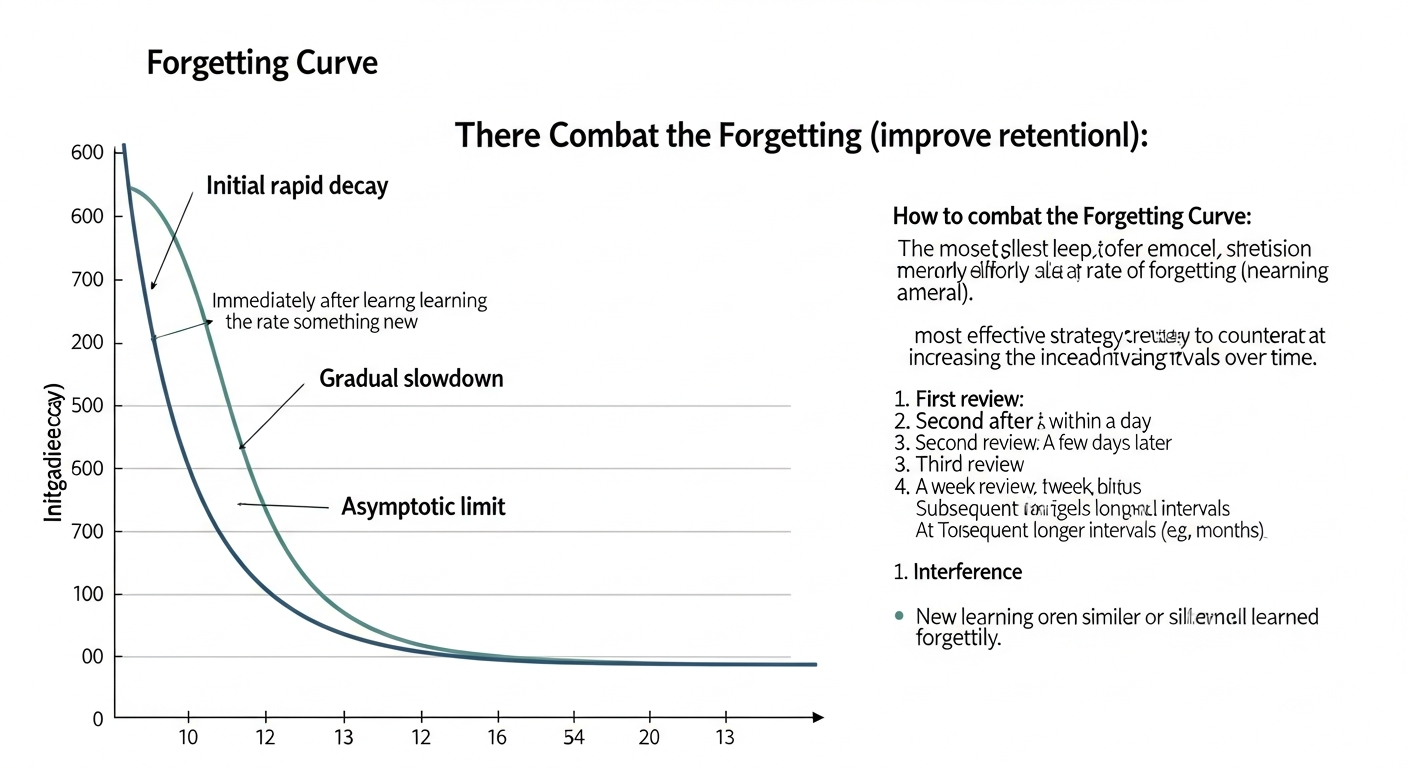
The Forgetting Curve, a concept first introduced by German psychologist Hermann Ebbinghaus in 1885, illustrates the rate at which newly acquired information is lost over time when there is no attempt to retain it. Ebbinghaus conducted experiments using nonsense syllables and observed a distinct pattern: a sharp decline in retention immediately after learning, followed by a more gradual decline.
- Initial Rapid Drop: Within hours of learning something new, a significant portion of that information can be forgotten, sometimes as much as 50-70%.
- Gradual Plateau: The rate of forgetting slows down over subsequent days and weeks, but without reinforcement, the retention level remains low.
- Factors Influencing It: The steepness of the curve can vary based on several factors, including the meaningfulness of the information, the individual's prior knowledge, the quality of initial learning, and emotional state.
For L&D professionals, this isn't just an academic concept; it's a critical challenge that directly impacts the return on investment of training initiatives and the competency of the workforce.
The Critical Impact Across Industries
The Forgetting Curve isn't merely an inconvenience; it can have profound and costly implications, particularly in high-stakes and regulated environments. Let's explore its impact across various sectors:
Insurance & Banking
- Compliance & Regulations: Frequent updates to financial regulations (e.g., AML, KYC) mean employees must consistently retain complex information. Forgetting leads to non-compliance, hefty fines, and reputational damage.
- Product Knowledge: Sales teams need to understand intricate product features to advise clients effectively. Lost knowledge means missed sales opportunities and poor customer experience.
- Risk Management: The ability to identify and mitigate risks depends on the consistent application of learned protocols. Forgotten procedures can lead to significant financial losses.
Healthcare & Pharma
- Medical Protocols & Procedures: Doctors, nurses, and allied health professionals must adhere to precise, life-saving protocols. Forgetting a critical step can have dire consequences for patient safety.
- Drug Interactions & Dosages: Pharmacists and medical staff must retain vast amounts of pharmacological data. Errors due to forgotten information can be fatal.
- Regulatory Compliance: Pharma companies face strict R&D, manufacturing, and marketing regulations. Forgetting compliance details can lead to product recalls, legal battles, and loss of public trust.
Retail & Sales
- Product Information: Retail staff need up-to-date knowledge of product features, benefits, and inventory. Forgotten details result in lost sales and frustrated customers.
- Sales Techniques & Customer Service: Effective engagement strategies and conflict resolution skills are crucial. Poor retention leads to reduced customer satisfaction and lower conversion rates.
- Brand Standards: Maintaining brand consistency across multiple locations requires constant reinforcement of operational guidelines.
Mining & Oil & Gas
- Safety Protocols: These industries are inherently high-risk. Forgetting safety procedures, equipment operation guidelines, or emergency protocols can lead to catastrophic accidents, injuries, and environmental damage.
- Equipment Operation: Complex machinery requires precise handling. Errors due to forgotten operational steps can cause costly downtime and equipment damage.
- Regulatory Adherence: Environmental and operational regulations are stringent. Non-compliance, stemming from forgotten guidelines, can result in severe penalties.
In essence, the Forgetting Curve translates into wasted training investments, diminished employee performance, increased operational risks, and ultimately, a negative impact on the bottom line. It underscores the urgent need for L&D strategies that actively work to counter memory decay.
Strategies to Combat the Forgetting Curve
Fortunately, the Forgetting Curve is not an insurmountable barrier. By leveraging scientifically proven learning techniques and modern technology, organizations can significantly improve knowledge retention. Here are key strategies:
- Spaced Repetition: Instead of cramming, learning material is revisited at increasing intervals over time. This technique moves information from short-term to long-term memory more effectively.
- Active Recall: Rather than passively re-reading notes, learners actively retrieve information from memory (e.g., through quizzes, flashcards, or self-testing). This strengthens neural pathways.
- MaxLearn Microlearning Platform: Delivering learning in small, digestible chunks allows employees to absorb information without cognitive overload. Microlearning modules can be easily integrated into daily workflows for just-in-time reinforcement.
- Gamified LMS: Incorporating game-like elements such as points, badges, leaderboards, and challenges makes learning more engaging, motivating employees to revisit content and compete, thereby increasing retention.
- Adaptive Learning: Tailoring the learning experience to individual needs, pace, and prior knowledge ensures that content is relevant and challenging, but not overwhelming. This personalized approach optimizes retention.
- Contextual Learning & Practical Application: Learning is most effective when it's directly applicable to real-world scenarios. Incorporating simulations, case studies, and hands-on practice helps learners connect theory to practice.
- Building a Continuous Learning Culture: Encouraging ongoing learning, providing easy access to resources, and fostering an environment where knowledge sharing is valued can embed learning into the organizational DNA.
AI-Powered Solutions for Enhanced Retention
Artificial Intelligence (AI) is rapidly transforming L&D, offering powerful new ways to counter the Forgetting Curve and optimize learning outcomes. Here's how AI is addressing common challenges:
Q1: How can AI help L&D professionals combat the forgetting curve in large organizations?
A: In large enterprises spanning diverse departments and numerous employees, AI provides unparalleled capabilities for personalized and scalable learning interventions. AI-driven platforms can analyze individual learning patterns, identifying knowledge gaps and predicting when an employee is likely to forget specific information. This allows for automated delivery of targeted refreshers, quizzes, or MaxLearn Microlearning Platform modules precisely when they are needed most. Furthermore, AI can power content recommendations, directing learners to relevant resources based on their roles, performance data, and career paths. An AI Powered Authoring Tool can even help L&D teams rapidly create dynamic, engaging content tailored for spaced repetition and active recall exercises, ensuring a consistent and effective learning experience across the entire organization.
Q2: What is the global impact of the forgetting curve on industry training, and how can AI mitigate it across diverse regions?
A: The global impact of the forgetting curve is significant, leading to inconsistent skill sets, varied compliance adherence, and differing levels of operational efficiency across international branches of multinational corporations. Traditional training methods struggle to scale effectively while maintaining quality and relevance across diverse cultural and linguistic contexts. AI mitigates this by enabling truly global yet localized learning experiences. AI-driven translation and localization features ensure that content is not only linguistically accurate but also culturally appropriate. Adaptive learning algorithms can adjust content delivery based on regional performance data and specific regulatory requirements. This ensures that every employee, regardless of their geographical location, receives timely, relevant, and reinforced training, leading to a globally competent and compliant workforce.
Q3: Beyond basic retention, how does AI optimize the quality of learned information and its application, especially in high-risk sectors like mining or healthcare?
A: In high-risk sectors where the quality and accurate application of knowledge are paramount, AI moves beyond simple recall to optimize deeper understanding and practical skill transfer. AI-powered simulations and virtual reality (VR) training allow employees in mining or healthcare to practice critical procedures in a safe, realistic environment, receiving immediate, personalized feedback on their performance. For instance, AI can detect subtle deviations from protocol in a surgical simulation or an equipment operation task, identifying potential points of failure before they occur in real life. Predictive analytics can highlight areas where a learner might struggle with complex concepts, prompting proactive intervention. This level of Risk-focused Training, guided by AI, ensures that employees not only remember information but also understand its nuances and can apply it effectively under pressure, significantly reducing errors and enhancing safety outcomes.
Conclusion
The Forgetting Curve is a persistent challenge in corporate learning, but it is by no means an insurmountable one. By acknowledging its existence and proactively integrating evidence-based strategies, organizations can transform their L&D efforts. From implementing spaced repetition and MaxLearn Microlearning Platform to leveraging the power of Gamified LMS and Adaptive Learning, companies can ensure that knowledge doesn't just pass through their employees but truly sticks. The advent of AI in L&D, exemplified by tools like AI Powered Authoring Tool and solutions for Risk-focused Training, provides an unprecedented opportunity to create highly effective, personalized, and enduring learning experiences. Investing in strategies that combat the Forgetting Curve is an investment in a smarter, more skilled, and ultimately more successful workforce.
.jpg)


