

Unlocking Potential: The Transformative Power of Real-Time Learning Analytics
In an era defined by data and instant gratification, the world of learning and development is undergoing a profound transformation. Gone are the days of post-mortem analysis where insights arrived long after the learning event concluded. Today, organizations and educational institutions are increasingly turning to real-time learning analytics to provide immediate, actionable insights that can revolutionize how we teach, learn, and grow. This cutting-edge approach moves beyond static reports, offering a dynamic window into the learner's journey as it unfolds, enabling proactive interventions and truly personalized experiences.
The promise of real-time learning analytics is immense: to understand individual learner needs, optimize content on the fly, and ensure that every moment of instruction contributes effectively to desired outcomes. By harnessing the power of live data streams, educators and trainers can shift from reactive problem-solving to proactive performance enhancement, creating more engaging, efficient, and impactful learning environments.
What is Real-Time Learning Analytics?
Real-time learning analytics refers to the process of collecting, processing, and analyzing data about learning activities as they happen. Unlike traditional learning analytics, which often involves batch processing data hours or even days later, real-time analytics provides immediate feedback and insights. This immediacy allows for dynamic adjustments to the learning experience, interventions for struggling learners, and instantaneous performance evaluations.
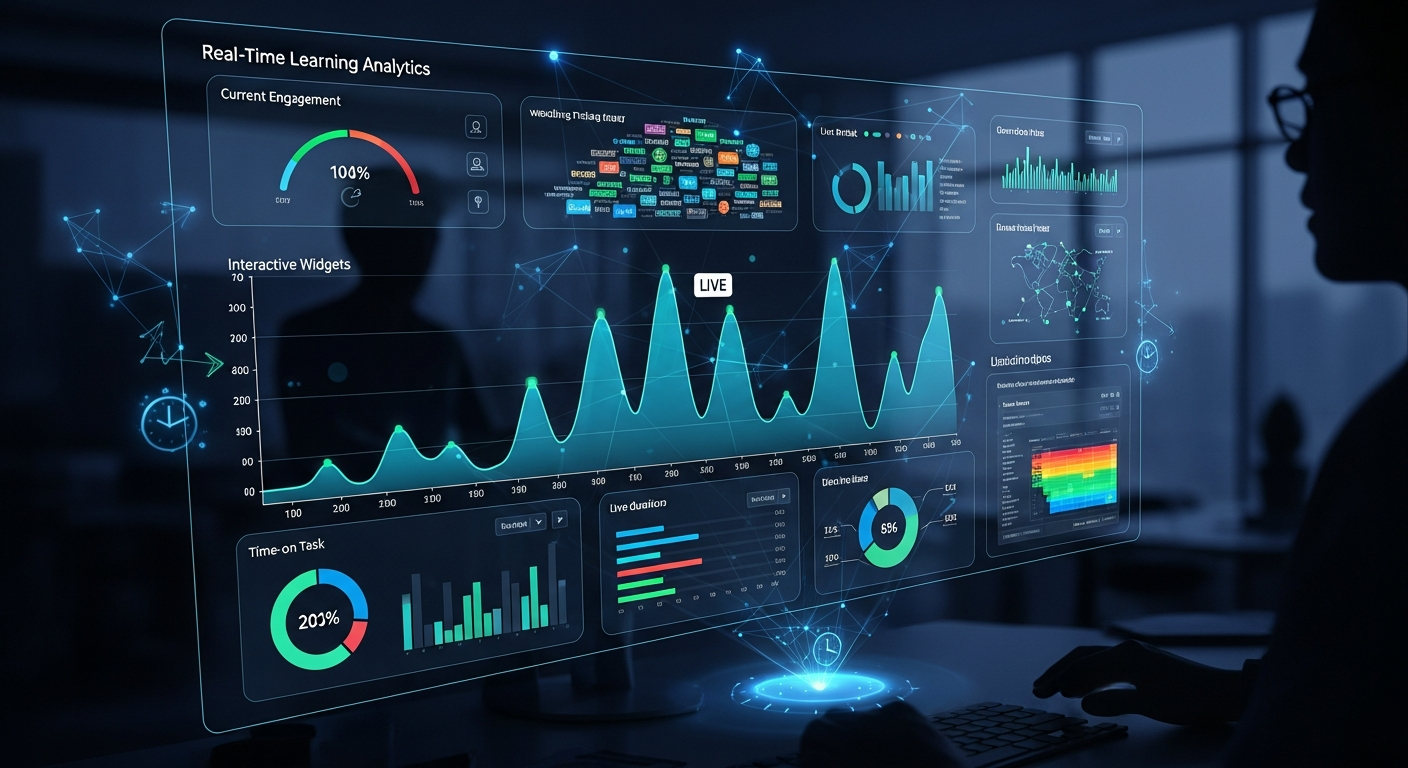
Think of it as a live dashboard for the learning process. It monitors interactions, progress, engagement levels, and performance metrics in the moment, providing a constant pulse on how learners are interacting with content and each other. This continuous flow of information is critical for agile learning environments that demand quick responses and adaptive strategies.
Why Real-Time Matters: The Core Benefits
The shift to real-time data analysis offers a multitude of benefits that traditional methods simply cannot match. Its immediate feedback loop is a game-changer for learners and educators alike.
Personalized Learning Paths
One of the most significant advantages of real-time analytics is its capacity to facilitate truly personalized learning. By monitoring a learner's progress, difficulties, and areas of excellence in the moment, the system can dynamically adjust the content, pace, and sequence of learning materials. This enables Adaptive Learning, where the curriculum molds itself to the individual, ensuring that each learner receives the most relevant and effective instruction for their unique needs and learning style. This prevents frustration and boosts comprehension.
Immediate Intervention & Support
When a learner begins to struggle, real-time analytics can detect patterns of difficulty almost instantaneously. This could be repeated incorrect answers, prolonged hesitation on a task, or a drop in engagement. With these immediate alerts, instructors or automated systems can provide timely interventions, offer additional resources, or suggest alternative approaches before a learner falls too far behind. This proactive support is crucial for preventing disengagement and ensuring no learner is left behind.
Optimizing Content & Instruction
Educators and content creators can gain invaluable insights into the effectiveness of their materials. Real-time data reveals which modules are highly engaging, which questions are consistently missed, or where learners tend to drop off. This immediate feedback loop allows for rapid iteration and improvement of courses, training modules, and instructional strategies. It transforms content development from a static process into a dynamic, data-driven evolution.
Enhanced Engagement & Motivation
When learners receive immediate feedback on their performance, or when their learning path adapts to their needs, their engagement naturally increases. Knowing that their actions have immediate consequences and that the system is responding to them creates a more dynamic and interactive experience. Features often integrated with real-time analytics, such as leaderboards, badges, and progress bars, common in a Gamified LMS, can further boost motivation and foster a sense of accomplishment.
Key Features and Capabilities
To deliver on its promise, real-time learning analytics solutions incorporate several key features:
- Dynamic Dashboards & Visualizations: Provides educators and administrators with easily digestible, visual representations of live data, showing learner progress, engagement metrics, and performance trends at a glance.
- Performance Tracking: Monitors individual and group performance across various learning activities, assessments, and modules in real time.
- Predictive Analytics: Utilizes algorithms to identify learners who might be at risk of failing or disengaging based on current and historical data patterns, enabling pre-emptive action.
- Automated Feedback Loops: Delivers instant feedback to learners, offering hints, corrections, or further resources based on their actions.
- Integration with Learning Platforms: Seamlessly collects data from various sources, including Learning Management Systems (LMS), content platforms, and assessment tools. A robust platform like the MaxLearn Microlearning Platform can serve as the central hub for such integrations.
Real-Time Analytics in Action: Use Cases
The applications of real-time learning analytics are vast and span across various sectors:
- Corporate Training: Companies use real-time analytics to monitor employee skill development, compliance training completion, and onboarding progress. It helps identify knowledge gaps quickly, tailor training to specific job roles, and ensure employees are up-to-date with critical information, especially in areas like Risk-focused Training where immediate comprehension is paramount.
- K-12 & Higher Education: Teachers can identify students struggling with specific concepts during a lesson, allowing for immediate clarification or differentiated instruction. Universities can track student engagement in online courses to improve completion rates and academic success.
- Online Courses & MOOCs: Providers can observe how thousands of learners interact with content simultaneously, allowing them to refine course structure, improve instructional design, and increase learner retention by addressing bottlenecks as they appear.
Challenges and Considerations
While the benefits are clear, implementing real-time learning analytics is not without its challenges:
- Data Privacy and Security: Handling sensitive learner data in real time requires robust security protocols and strict adherence to privacy regulations (e.g., GDPR, FERPA).
- Data Overload and Interpretation: The sheer volume of data generated can be overwhelming. Tools must be sophisticated enough to filter out noise and present actionable insights clearly.
- Integration Complexities: Integrating real-time analytics with existing learning systems and tools can be technically challenging and require significant IT resources.
- Infrastructure Requirements: Processing and analyzing data in real time demands powerful computing infrastructure and reliable network connectivity.
Choosing the Right Solution
When selecting a real-time learning analytics solution, organizations should consider several factors:
- Scalability: Can the system handle a growing number of learners and data points?
- User-Friendliness: Is the interface intuitive for educators, trainers, and administrators?
- Integration Capabilities: How well does it integrate with existing LMS platforms, content authoring tools, and other educational technologies? An AI Powered Authoring Tool, for instance, often benefits greatly from seamless integration with real-time analytics to optimize content delivery.
- Reporting and Visualization: Does it offer customizable dashboards and clear visualizations that provide actionable insights?
- Security and Compliance: Does it meet all necessary data privacy and security standards?
The Future of Learning with Real-Time Analytics
The trajectory of real-time learning analytics points towards increasingly intelligent, personalized, and efficient learning ecosystems. As artificial intelligence and machine learning continue to advance, these systems will become even more sophisticated in predicting learner needs, offering hyper-personalized interventions, and automating content optimization. The future of learning will be characterized by continuous improvement, driven by the immediate feedback loop that real-time analytics provides.
For organizations and educational institutions committed to fostering optimal learning outcomes, embracing real-time learning analytics is no longer a luxury but a strategic imperative. It empowers them to build dynamic, responsive, and highly effective learning environments that truly unlock the potential of every individual.
.jpg)


