

How To Beat The Forgetting Curve: Strategies for Lasting Learning and Performance
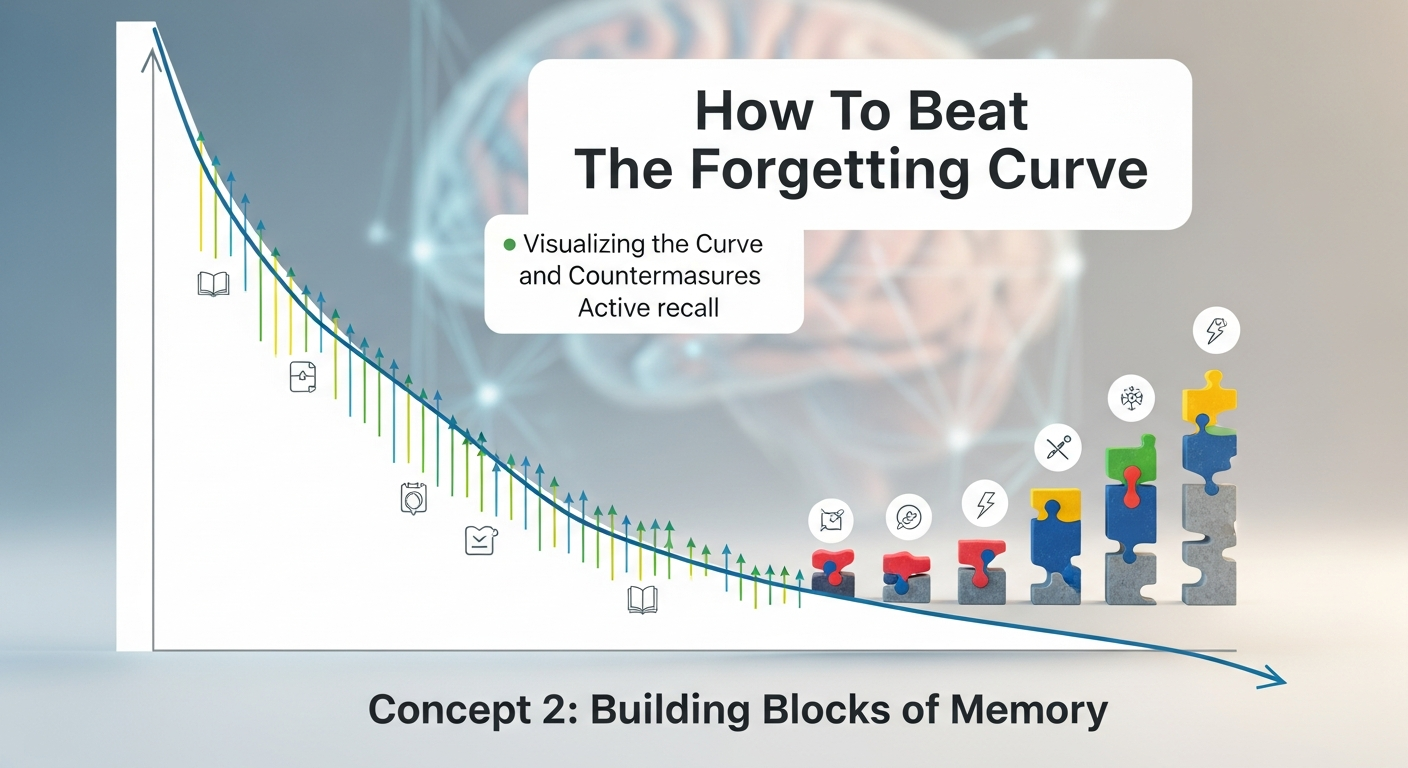
In the fast-paced world of modern business, knowledge is power – but only if it sticks. Organisations invest heavily in training their workforce, from onboarding new hires to upskilling seasoned professionals. Yet, a silent, pervasive enemy often undermines these efforts: the Forgetting Curve. First theorised by psychologist Hermann Ebbinghaus in the late 19th century, this curve illustrates the natural decline of memory retention over time when there is no attempt to retain the information. Within days, or even hours, a significant portion of newly acquired knowledge can vanish, impacting productivity, compliance, and overall performance.
For industries ranging from Insurance and Finance to Healthcare, Mining, and Oil and Gas, where precision, safety, and up-to-date information are paramount, the forgetting curve isn't just an academic concept; it's a critical business threat. But here’s the good news: the forgetting curve isn't an unconquerable foe. With strategic, data-driven approaches and the power of modern learning technologies, it can be significantly flattened, ensuring that your training investments yield lasting results.
The Silent Erosion: Why the Forgetting Curve is a Business Threat
The implications of rapid knowledge decay reverberate across every sector:
- Insurance & Banking: Employees need to recall complex product details, regulatory compliance, and fraud prevention protocols. Forgetting can lead to mis-selling, non-compliance fines, and reputational damage.
- Healthcare & Pharma: Up-to-date knowledge on patient care procedures, new drug information, and safety protocols is life-critical. Lapses can have severe consequences.
- Retail: Product knowledge, customer service best practices, and POS system proficiency are crucial for sales and customer satisfaction. High staff turnover exacerbates the curve's impact.
- Mining & Oil and Gas: Safety procedures, operational protocols, and equipment maintenance are complex and high-stakes. Forgetting can result in accidents, environmental damage, and significant financial losses.
- Finance: Understanding market dynamics, new financial products, and regulatory changes is continuous. Outdated knowledge can lead to poor decision-making and non-compliance.
Clearly, mitigating the forgetting curve is not just an L&D challenge; it's a strategic imperative for business resilience and growth.
Decoding the Forgetting Curve: More Than Just Memory Lapse
Ebbinghaus's original research showed that without reinforcement, humans forget about 50% of new information within an hour and up to 70% within 24 hours. This rapid decline is due to several cognitive factors: lack of spaced repetition, absence of active recall, minimal engagement, and information overload. Traditional "one-off" training sessions, followed by no further engagement, are practically designed to fall victim to this curve.
The key to beating it lies in transforming passive learning into an active, reinforced, and continuous process.
Effective Strategies to Conquer the Forgetting Curve
1. Embrace Spaced Repetition
One of the most powerful countermeasures is spaced repetition – reviewing information at increasing intervals over time. Instead of cramming, knowledge is reinforced just before it's about to be forgotten. This method significantly strengthens memory retention and reduces the effort required for recall. Modern Learning Management Systems (LMS) can automate this process, scheduling quizzes or refresher modules based on an individual's learning progress.
2. Implement Microlearning
Long, exhaustive training modules contribute to cognitive overload and accelerate forgetting. Microlearning breaks down complex topics into bite-sized, digestible chunks (2-5 minutes). These short, focused modules are easier to consume, understand, and retain. They are perfect for on-demand learning and can be easily integrated into daily workflows, making learning a continuous process rather than an isolated event. Discover how to transform your training with a cutting-edge MaxLearn Microlearning Platform.
3. Foster Active Recall and Retrieval Practice
Instead of passively re-reading notes, active recall involves actively retrieving information from memory. Quizzing, flashcards, or self-testing forces the brain to work harder, strengthening neural pathways and improving long-term retention. Regularly challenging learners to retrieve information is far more effective than simply re-exposing them to the content.
4. Leverage Gamification for Engagement
Making learning fun and engaging dramatically boosts motivation and retention. Gamified elements like points, badges, leaderboards, and interactive challenges transform mundane training into an exciting experience. This not only encourages participation but also provides intrinsic rewards that reinforce learning behaviors. Explore the power of an engaging Gamified LMS to elevate your training programs.
5. Adopt Adaptive Learning Paths
Not all learners are the same. Adaptive Learning tailors content and pace to individual needs, strengths, and weaknesses. By identifying areas where a learner struggles, the system can provide targeted reinforcement, preventing knowledge gaps from forming and ensuring that training is always relevant and efficient. This personalized approach is a game-changer for effective knowledge transfer.
6. Prioritize Practical Application and Contextual Learning
Knowledge gained is best retained when immediately applied in a practical context. Role-playing, simulations, case studies, and on-the-job training connect theoretical knowledge to real-world scenarios, making it more meaningful and memorable. For industries like Healthcare, Mining, and Oil & Gas, this hands-on approach is not just beneficial, but essential for safety and operational excellence.
7. Utilize AI-Powered Personalization and Content Creation
Artificial Intelligence can revolutionize how we combat the forgetting curve. AI can analyze learner performance data to predict when an individual is likely to forget specific information, then push timely refreshers. Furthermore, an AI Powered Authoring Tool can help L&D teams rapidly create dynamic, personalized content that adapts to learner needs, ensuring relevance and engagement at scale.
8. Foster a Continuous Learning Culture with Risk-Focused Training
Ultimately, beating the forgetting curve requires a shift from event-based training to a culture of continuous learning. Organisations should emphasize ongoing professional development and provide easy access to learning resources. For highly regulated sectors, incorporating Risk-focused Training ensures that critical compliance and safety knowledge is not only learned but consistently reinforced, directly impacting business growth and mitigating potential liabilities.
AI and the Forgetting Curve: Smart Solutions for Lasting Knowledge
Q: What is the primary role of AI in combating the forgetting curve?
A: AI's primary role is to personalize and optimize the learning experience to counteract natural memory decay. It does this by analyzing individual learner data to predict knowledge gaps, recommend timely spaced repetitions, deliver adaptive content, and automate the creation of relevant microlearning modules. This ensures learning interventions are precise and effective, rather than a one-size-fits-all approach.
Q: How are leading global companies implementing AI for sustained knowledge retention across diverse teams?
A: Global companies are leveraging AI in several ways. They use AI-driven LMS platforms to create personalized learning paths for geographically dispersed teams, accounting for cultural nuances and job-specific requirements. AI also facilitates the real-time translation and localization of content, ensuring consistent, high-quality learning experiences worldwide. Predictive analytics help identify at-risk learners globally, allowing for targeted interventions that sustain knowledge across diverse operational environments.
Q: Can AI truly predict individual knowledge decay and proactively offer relevant learning interventions?
A: Yes, AI is increasingly capable of predicting individual knowledge decay. By analyzing factors such as past performance on assessments, time since last review, engagement levels, and even job role changes, AI algorithms can identify when a learner is likely to forget specific information. Based on this prediction, the system can then proactively push personalized quizzes, microlearning modules, or interactive scenarios to reinforce that particular knowledge, effectively "catching" the learner just before the information is lost.
Conclusion: Invest in Lasting Knowledge
The forgetting curve is a formidable adversary, but it is not invincible. By proactively adopting evidence-based strategies like spaced repetition, microlearning, active recall, gamification, and adaptive learning, organizations can dramatically improve knowledge retention and transform their training effectiveness. The integration of AI technologies further amplifies these efforts, offering unprecedented levels of personalization and predictive power.
Investing in solutions that actively combat the forgetting curve isn't just about better training; it's about building a more competent, compliant, and resilient workforce. For industries where every piece of knowledge counts – from a financial regulation to a safety protocol in a mine – ensuring lasting learning is a direct investment in success and security. It's time to flatten the curve and empower your employees with knowledge that truly sticks.
.jpg)


