

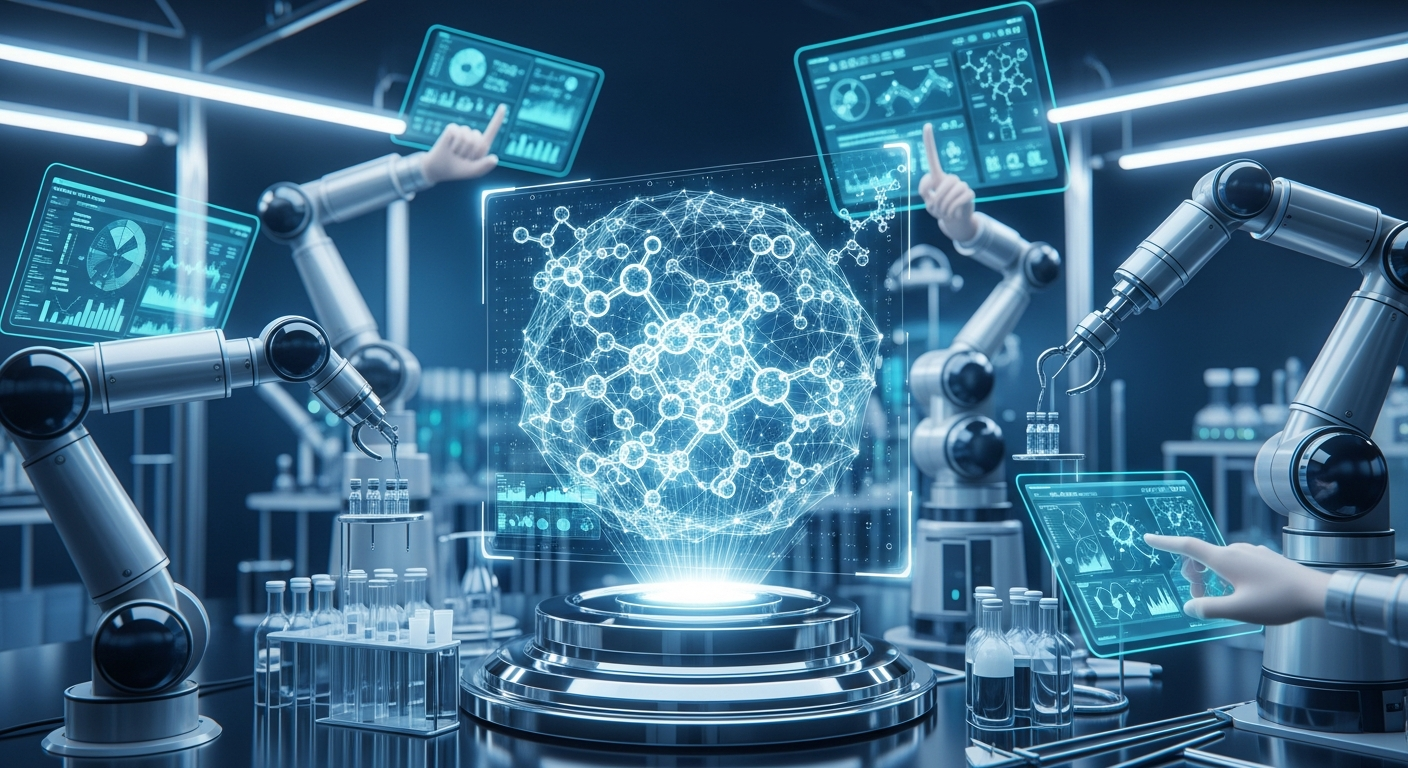
AI and Pharmaceuticals: Revolutionizing Drug Discovery, Development, and Delivery
The pharmaceutical industry stands at the cusp of a profound transformation, driven by the relentless advancement of Artificial intelligence (AI). From the nascent stages of drug discovery to the intricate processes of clinical trials, manufacturing, and even post-market surveillance, AI is not merely optimizing existing workflows; it is fundamentally redefining how medicines are conceptualized, created, and delivered to patients. This paradigm shift promises to accelerate innovation, reduce costs, enhance efficacy, and ultimately bring life-saving treatments to those who need them faster than ever before.
The complexity and high stakes of pharmaceutical R&D have long presented significant challenges. Developing a single new drug can take over a decade and cost billions of dollars, with a high rate of failure. AI offers a powerful solution, capable of sifting through vast datasets, identifying patterns imperceptible to humans, and making predictions with remarkable accuracy. This article explores the multifaceted impact of AI on the pharmaceutical landscape, delving into its applications, benefits, and the critical role of continuous learning and development in harnessing its full potential.
AI's Transformative Power Across the Pharmaceutical Value Chain
AI's influence is pervasive, touching every stage of drug development and beyond. Its ability to process and analyze massive amounts of biological, chemical, and clinical data makes it an invaluable partner for pharmaceutical companies striving for efficiency and innovation.
Drug Discovery and Target Identification
- Accelerated Screening: AI algorithms can rapidly analyze millions of compounds, predicting their binding affinities and potential efficacy against specific disease targets, dramatically reducing the time and cost associated with traditional high-throughput screening.
- Novel Molecule Design: Generative AI models can design entirely new molecules with desired properties, opening avenues for drugs that might not have been conceived through conventional methods.
- Target Validation: By integrating data from genomics, proteomics, and real-world evidence, AI helps identify and validate promising drug targets with higher confidence, increasing the chances of success in later development stages.
Optimizing Clinical Trials
- Patient Recruitment: AI can analyze patient data to identify suitable candidates for clinical trials more efficiently, reducing recruitment times and costs, and ensuring diverse participant pools.
- Trial Design and Monitoring: Predictive analytics helps optimize trial protocols, identify potential risks, and monitor patient responses in real-time, allowing for adaptive trial designs that are more efficient and ethical.
- Data Analysis: AI tools can rapidly process and interpret complex clinical trial data, extracting insights that might otherwise be missed, thereby accelerating regulatory submissions and approvals.
Enhancing Manufacturing and Supply Chain
- Predictive Maintenance: AI-powered sensors can predict equipment failures in manufacturing plants, minimizing downtime and ensuring continuous production.
- Quality Control: Machine vision and AI analytics can detect subtle defects in products or inconsistencies in manufacturing processes, ensuring higher quality and reducing waste.
- Supply Chain Optimization: AI algorithms can forecast demand, optimize inventory levels, and manage logistics more efficiently, ensuring a stable and cost-effective supply of medicines globally.
Personalized Medicine and Pharmacovigilance
- Tailored Treatments: By analyzing a patient's genetic profile, lifestyle, and medical history, AI can help predict their response to specific drugs, enabling the development of truly personalized medicine approaches.
- Adverse Event Detection: AI can monitor vast amounts of real-world data, including social media and electronic health records, to rapidly identify potential adverse drug reactions, improving patient safety through enhanced pharmacovigilance.
AI-Related Questions & Answers for Pharmaceutical Professionals
Understanding the "what," "how," and "where" of AI in pharma is crucial for professionals navigating this evolving landscape.
What is AI's most significant impact on drug discovery today?
AI's most significant impact on drug discovery today lies in its ability to dramatically accelerate the identification and optimization of drug candidates. By leveraging advanced machine learning and deep learning algorithms, AI can analyze vast datasets of chemical structures, biological targets, and disease pathways to predict potential interactions and efficacy, significantly reducing the time and resources traditionally required for hit identification and lead optimization. This allows researchers to focus on the most promising compounds much earlier in the process.
How is AI optimizing clinical trial efficiency?
AI optimizes clinical trial efficiency through several key mechanisms. It streamlines patient recruitment by identifying eligible candidates from diverse data sources, enhances trial design by predicting optimal dosages and endpoints, and improves data analysis by quickly processing complex clinical results. Furthermore, AI contributes to better risk management and adaptive trial protocols, leading to faster, more cost-effective, and more successful trials. This holistic approach helps bring new therapies to market quicker while maintaining rigorous safety and efficacy standards.
Where are the leading AI pharmaceutical innovations taking place globally?
Leading AI pharmaceutical innovations are occurring in major biotech hubs worldwide, including the San Francisco Bay Area, Boston/Cambridge in the USA, London and Oxford in the UK, and specific clusters in China (e.g., Beijing, Shanghai) and Switzerland (e.g., Basel). These regions boast a confluence of academic excellence, venture capital funding, established pharmaceutical companies, and burgeoning AI startups, fostering an ecosystem ripe for groundbreaking advancements in AI-driven drug development.
What are the benefits of integrating AI into pharmaceutical manufacturing?
Integrating AI into pharmaceutical manufacturing brings numerous benefits, including enhanced operational efficiency, improved product quality, and reduced waste. AI-powered systems can predict equipment failures, optimize production schedules, and ensure precise quality control through real-time monitoring. This leads to higher yields, consistent product standards, lower operational costs, and a more resilient supply chain capable of responding quickly to market demands. These benefits are pivotal for a sector where precision and reliability are paramount.
How does AI enhance Learning and Development (L&D) in the pharmaceutical industry?
AI significantly enhances L&D in the pharmaceutical industry by enabling personalized, efficient, and highly effective training programs. With the rapid evolution of AI tools and scientific discoveries, continuous learning is non-negotiable. Platforms like the MaxLearn Microlearning Platform leverage AI to deliver Adaptive Learning experiences, tailoring content to individual learner needs and knowledge gaps. An AI Powered Authoring Tool can rapidly generate relevant training modules, while a Gamified LMS increases engagement and knowledge retention. Furthermore, AI helps identify critical skill gaps and provides Risk-focused Training, ensuring pharmaceutical professionals are equipped to handle complex scientific, regulatory, and ethical challenges associated with AI integration and new drug development.
Challenges and Ethical Considerations
Despite its immense promise, the integration of AI into pharmaceuticals is not without challenges. Data privacy and security, particularly when dealing with sensitive patient information, are paramount. The potential for algorithmic bias, if not carefully managed, could exacerbate health inequalities. Regulatory frameworks need to evolve to keep pace with AI innovations, ensuring both safety and efficacy without stifling progress. Furthermore, the ethical implications of AI in drug development, from intellectual property to decision-making autonomy, require careful consideration and robust governance.
The Future: A Synergistic Partnership
The future of pharmaceuticals will undoubtedly be characterized by a synergistic partnership between human expertise and artificial intelligence. AI will serve as an indispensable tool, augmenting human capabilities in research, development, manufacturing, and patient care. The continuous innovation in AI algorithms, coupled with advancements in data collection and processing, will unlock new frontiers in medicine, leading to treatments for previously intractable diseases and a new era of proactive, personalized healthcare.
For pharmaceutical companies, investing in AI is no longer optional but a strategic imperative. Equally important is the investment in human capital—ensuring that the workforce is equipped with the necessary skills to leverage these powerful technologies effectively. Through targeted L&D initiatives, including those powered by AI itself, the industry can ensure its professionals are ready for the challenges and opportunities ahead.
Conclusion
AI is not just a technological trend; it is a fundamental force reshaping the pharmaceutical industry. By streamlining drug discovery, optimizing clinical trials, enhancing manufacturing efficiency, and paving the way for personalized medicine, AI promises to accelerate the delivery of safe and effective treatments to patients worldwide. While challenges related to data, ethics, and regulation remain, the unwavering commitment to innovation, coupled with robust L&D strategies, will ensure that the pharmaceutical sector fully harnesses the potential of AI, driving unprecedented advancements in global health.
.jpg)


