

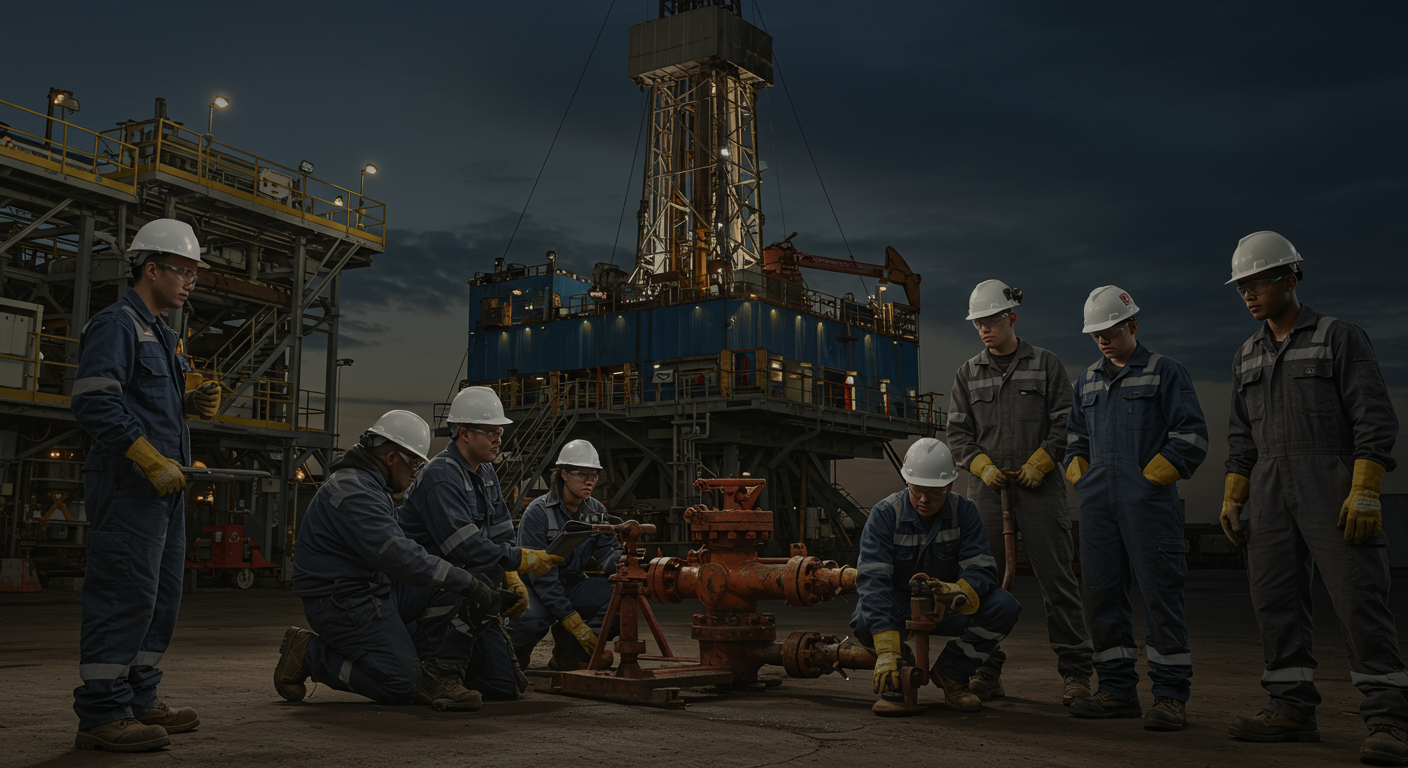
Training For Oil And Gas: Navigating Complexity with Expertise and Safety
The oil and gas industry stands as a global powerhouse, fueling economies and driving innovation. However, it is also an arena defined by extreme environments, intricate operations, significant capital investment, and inherent risks. In such a high-stakes sector, the cornerstone of success and sustainability isn't just technology or resources, but the highly skilled and continuously trained workforce. Comprehensive
training for oil and gas
professionals is not merely a regulatory obligation; it is a strategic imperative that dictates safety, operational efficiency, compliance, and adaptability in a rapidly evolving landscape. This article delves into the critical role of training, exploring its multifaceted challenges, modern solutions, and profound benefits for the industry.The Indispensable Pillars of Oil and Gas Training
Training in the oil and gas sector encompasses a broad spectrum of knowledge and skills, meticulously designed to prepare personnel for every eventuality, from routine operations to critical emergencies.
Safety, Health, and Environment (HSE) Training
- Hazard Identification & Risk Assessment: Equipping workers to identify potential dangers in complex operational settings, from drilling rigs to refineries, and assess associated risks.
- Emergency Response & Preparedness: Critical training for managing blowouts, fires, spills, explosions, medical emergencies, and evacuations, ensuring swift and effective action.
- Personal Protective Equipment (PPE) Usage: Comprehensive instruction on the correct selection, use, and maintenance of PPE to minimize exposure to hazards.
- Lockout/Tagout (LOTO): Procedures for safely de-energizing machinery during maintenance to prevent accidental startup and injury.
- Confined Space Entry: Protocols for safe entry, work, and exit from confined spaces with limited access and potential atmospheric hazards.
- Environmental Stewardship: Training on best practices for minimizing environmental impact, waste management, and regulatory compliance.
Technical Skills Development
- Drilling & Well Operations: From geological understanding and well planning to drilling techniques, mud engineering, and well control.
- Production & Processing: Training on managing extraction, separation, processing, and storage of oil and gas, including sophisticated control systems.
- Maintenance & Reliability: Equipping technicians with skills for inspecting, maintaining, and repairing complex machinery, pipelines, and infrastructure to ensure operational integrity.
- Digitalization & Automation: As the industry adopts advanced technologies, training on automation systems, data analytics, and remote operations becomes paramount.
Compliance and Regulatory Training
The oil and gas industry is heavily regulated by international, national, and local bodies. Training ensures that all personnel are aware of and adhere to relevant standards (e.g., API, ISO, OSHA), legal requirements, and best practices to avoid penalties, ensure ethical operations, and maintain licenses.
Leadership and Soft Skills
Beyond technical prowess, effective communication, decision-making under pressure, team collaboration, and leadership are vital. These skills ensure efficient team performance, conflict resolution, and the ability to manage crises effectively in often challenging and isolated environments.
Challenges in Oil and Gas Training
Delivering effective training in the oil and gas sector comes with a unique set of obstacles:
- Remote and Hazardous Environments: Many operations occur in offshore platforms, remote deserts, or arctic regions, making traditional classroom training logistical nightmare.
- High-Risk Operations: The inherent dangers demand highly effective training that promotes retention and immediate recall in critical situations.
- Rapid Technological Evolution: Constant advancements in drilling techniques, digital tools, and sustainable energy solutions require continuous upskilling and reskilling of the workforce.
- Aging Workforce & Knowledge Transfer: The industry faces a demographic shift, necessitating robust strategies for transferring invaluable institutional knowledge from experienced personnel to new generations.
- Regulatory Complexity: Navigating a labyrinth of global and regional regulations requires constant updates to training content and delivery.
Modern Solutions for Enhanced Training
To overcome these challenges, the oil and gas industry is increasingly turning to innovative, technology-driven training methodologies:
- Digital Learning Platforms: Leveraging online learning management systems (LMS) and specialized platforms offers unprecedented flexibility. The MaxLearn Microlearning Platform, for instance, delivers bite-sized, digestible content that can be accessed anytime, anywhere, making it ideal for busy professionals and remote workers in the oil and gas sector.
- Microlearning: This approach breaks down complex topics into short, focused modules. This improves knowledge retention, reduces cognitive overload, and allows for quick refreshers on critical procedures or safety protocols.
- Gamification: Integrating game-like elements into learning environments can significantly boost engagement and motivation. A Gamified LMS can transform mandatory training into an interactive and rewarding experience, leading to better participation and skill development.
- Adaptive Learning: Tailoring educational content to an individual's specific needs, pace, and knowledge gaps ensures more efficient and effective learning. Adaptive Learning systems identify areas where an employee needs more support, optimizing their learning path and accelerating skill acquisition.
- AI-Powered Authoring Tools: Artificial intelligence can revolutionize content creation, making it faster, more personalized, and relevant. An AI Powered Authoring Tool can help subject matter experts quickly generate high-quality training modules, keeping pace with regulatory changes and technological advancements.
- Risk-focused Training: Given the high-risk nature of the industry, training must explicitly address potential hazards and their mitigation. Risk-focused Training integrates hazard identification, incident prevention, and emergency response into every learning pathway, fostering a proactive safety culture.
- Virtual Reality (VR) and Augmented Reality (AR): VR/AR simulations offer immersive, realistic, and safe environments for practicing complex procedures, equipment operation, and emergency scenarios without actual risk or costly equipment downtime.
The Profound Benefits of Effective Training
Investing in advanced
training for oil and gas
professionals yields substantial returns:- Enhanced Safety Records: A well-trained workforce is less prone to accidents, reducing injuries, fatalities, and environmental incidents.
- Improved Operational Efficiency: Skilled personnel operate equipment more effectively, leading to reduced downtime, optimized production, and lower operational costs.
- Regulatory Compliance: Ensures adherence to industry standards and government regulations, mitigating legal risks and penalties.
- Talent Retention & Development: A commitment to professional development attracts top talent and fosters loyalty, reducing turnover in a competitive market.
- Adaptability & Innovation: A continuously trained workforce is better equipped to adapt to new technologies, market shifts, and environmental challenges, driving innovation within the company.
- Stronger Company Reputation: A track record of safety and expertise enhances public trust and stakeholder confidence.
Conclusion
The oil and gas industry's future is inextricably linked to the expertise and preparedness of its workforce. As the sector navigates energy transitions, technological advancements, and evolving regulatory frameworks, the role of robust, continuous, and innovative training becomes even more critical. By embracing modern digital learning solutions, such as microlearning, gamification, and AI-powered platforms, oil and gas companies can cultivate a culture of safety, efficiency, and excellence that will underpin their success for decades to come. Investing in people through advanced training is not merely an expenditure; it is the most vital investment a company can make in its future.
.jpg)


