

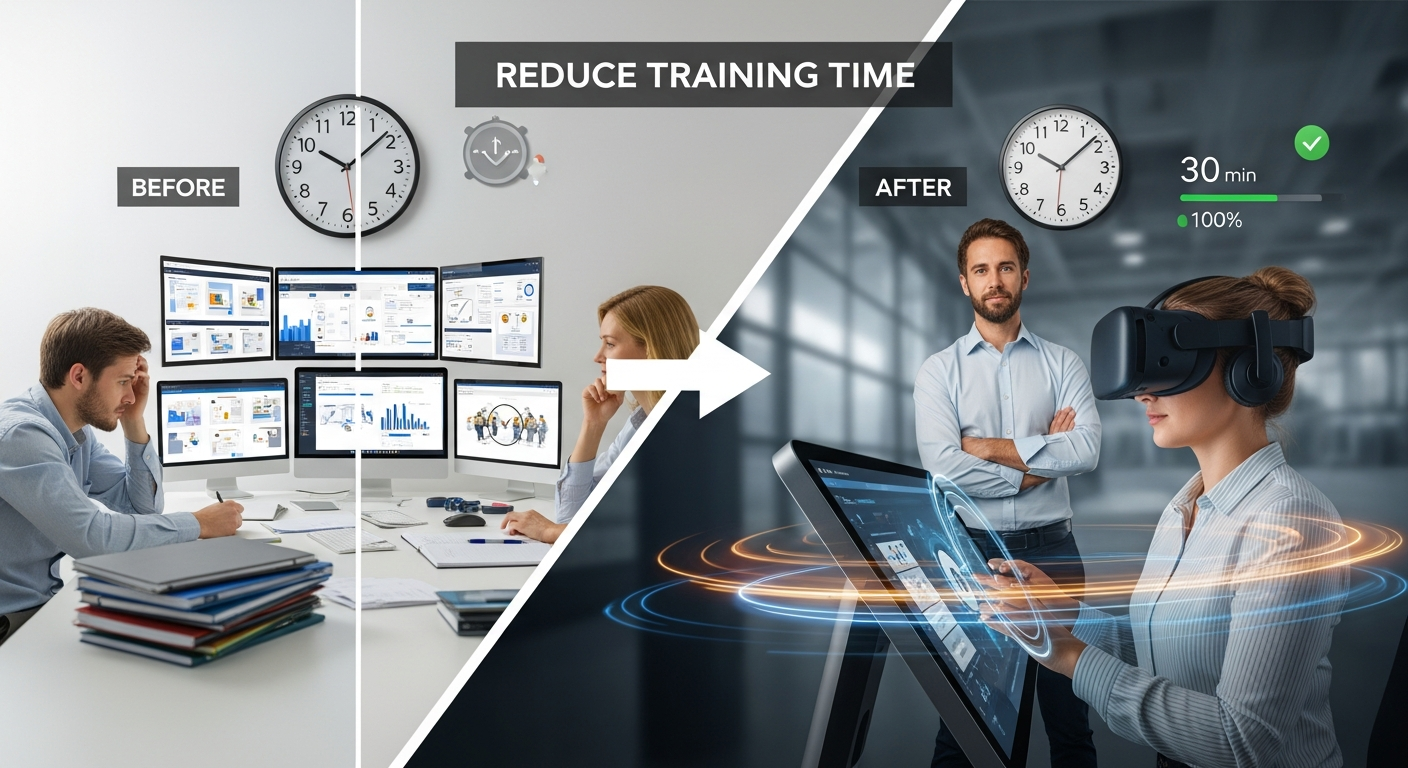
Revolutionize Your Workforce: Strategies to Drastically Reduce Training Time
In today's fast-paced business world, the ability to quickly equip employees with new skills and knowledge isn't just an advantage—it's a necessity. Long, drawn-out training programs can be a significant drain on resources, productivity, and even employee morale. They translate directly into higher costs, lost work hours, and a slower response to market demands. The good news? It's entirely possible to significantly reduce training time without compromising on effectiveness. In fact, by adopting modern methodologies and leveraging cutting-edge technology, organizations can achieve faster skill acquisition, higher engagement, and a more agile workforce.
This article will explore why reducing training time is crucial for business success and delve into actionable strategies and tools that can help you achieve this goal, transforming your learning and development (L&D) initiatives into efficient, impactful powerhouses.
Why Reducing Training Time is a Game-Changer
The benefits of streamlined training extend far beyond simple cost savings. They permeate every aspect of an organization:
- Significant Cost Reduction: Less time spent in training means reduced expenses related to instructor fees, venue rentals, materials, and employee salaries for non-productive hours. It frees up budget for other critical business areas.
- Increased Productivity and Faster Time-to-Proficiency: Every hour an employee spends in training is an hour they're not contributing directly to core business objectives. Shorter training cycles mean employees become productive faster, applying new skills to their roles sooner and impacting the bottom line more quickly.
- Improved Employee Engagement and Retention: Modern learners, particularly younger generations, prefer concise, relevant, and engaging content. Lengthy, monotonous training can lead to disengagement and a lack of retention. Efficient, focused training respects their time and boosts their motivation, leading to higher satisfaction and lower turnover rates.
- Enhanced Business Agility and Adaptability: Markets evolve rapidly, and businesses must adapt constantly. The ability to quickly reskill or upskill employees in response to new technologies, regulations, or market trends gives organizations a competitive edge. Reduced training time facilitates this agility.
- Better Knowledge Retention: Counterintuitively, shorter, more frequent training sessions often lead to better knowledge retention than one-off, marathon sessions. The human brain is better equipped to absorb and remember information in smaller, digestible chunks.
Key Strategies to Drastically Cut Training Time
Reducing training time isn't about cutting corners; it's about optimizing the learning process. Here's how you can achieve it:
Embrace Microlearning: Small Chunks, Big Impact
One of the most powerful methodologies for reducing training time is microlearning. Instead of lengthy courses, microlearning breaks down content into bite-sized modules—short videos, infographics, quick quizzes, or interactive simulations—that can be completed in minutes. This approach aligns perfectly with modern attention spans and allows employees to learn during brief breaks or commutes, integrating learning seamlessly into their workday without requiring large blocks of dedicated time. A robust MaxLearn Microlearning Platform can host these small, impactful lessons, making learning accessible and efficient.
Leverage Technology: The Power of an Advanced LMS
A sophisticated Learning Management System (LMS) is the backbone of efficient training. It automates administrative tasks, tracks progress, and provides a centralized hub for all learning content. Modern LMS platforms go further, incorporating features like gamification, social learning, and personalized dashboards. A Gamified LMS, for instance, can boost engagement and completion rates, making the learning process more enjoyable and less of a chore, ultimately speeding up the acquisition of skills.
Personalize Learning Paths with Adaptive Learning
Not every employee needs the same training. Some may have prior knowledge, while others might grasp concepts faster. Adaptive Learning uses algorithms to tailor content and pace to individual learners. This means employees aren't wasting time on material they already know or struggling through concepts that are too advanced. By dynamically adjusting the learning path based on performance and preferences, adaptive learning significantly reduces the overall time required for each individual to achieve proficiency.
Automate Content Creation with AI
Developing engaging and effective training content can be time-consuming. Artificial Intelligence (AI) is revolutionizing this process. An AI Powered Authoring Tool can help generate course material, summarize existing documents, create quizzes, and even translate content into multiple languages much faster than traditional methods. This drastically cuts down on the development cycle, allowing L&D teams to produce relevant training content more quickly and respond to organizational needs in real-time.
Focus on What Matters: Risk-focused Training
Not all information is equally critical. By identifying the highest-impact knowledge and skills—those that pose the greatest risk if not mastered, or offer the greatest reward if applied—organizations can prioritize and streamline their training efforts. Risk-focused Training cuts out the 'nice-to-know' content and concentrates solely on the 'must-know' elements, ensuring that employees gain proficiency in essential areas without being bogged down by superfluous information. This approach is highly efficient and directly supports business objectives.
Optimize Delivery Methods
- Blended Learning: Combine online modules (for foundational knowledge) with shorter, focused in-person or virtual sessions (for practical application and Q&A). This maximizes efficiency.
- Just-in-Time Learning: Provide resources exactly when they are needed, often through performance support tools or accessible knowledge bases. This reduces the need for extensive upfront training.
- Spaced Repetition: Utilize quizzes and refreshers at increasing intervals to reinforce learning and improve long-term retention, minimizing the need for re-training.
Pre-assess Knowledge & Skills
Before enrolling employees in a full training program, use pre-assessments to gauge their existing knowledge. This allows you to skip modules they've already mastered or place them into more advanced tracks, preventing redundant training and saving valuable time for both the learner and the organization.
Implement Effective Feedback Loops and Analytics
Regularly collect feedback from learners and analyze training data. What parts of the training are effective? What causes confusion? Where do learners get stuck? By continuously refining and optimizing your training content and delivery based on data, you can identify bottlenecks and further reduce the time it takes to achieve learning objectives.
Measuring Success and Continuous Improvement
To truly understand the impact of your efforts to reduce training time, it’s essential to measure the right metrics. Track completion rates, time to proficiency, post-training performance improvements, and, most importantly, the tangible cost savings. Use this data to iterate and improve your L&D strategy continuously. Reducing training time is not a one-time fix but an ongoing commitment to efficiency and effectiveness.
Conclusion
The days of lengthy, generic training programs are coming to an end. Modern businesses demand agile, effective, and efficient learning solutions that empower their workforce without disrupting productivity. By strategically implementing microlearning, leveraging advanced LMS platforms, embracing adaptive and AI-powered tools, and focusing on high-impact, risk-focused content, organizations can drastically reduce training time. This not only cuts costs and boosts productivity but also cultivates a more engaged, skilled, and adaptable workforce ready to meet the challenges of tomorrow. Invest in smart training solutions today to unlock your team's full potential faster.
.jpg)


