

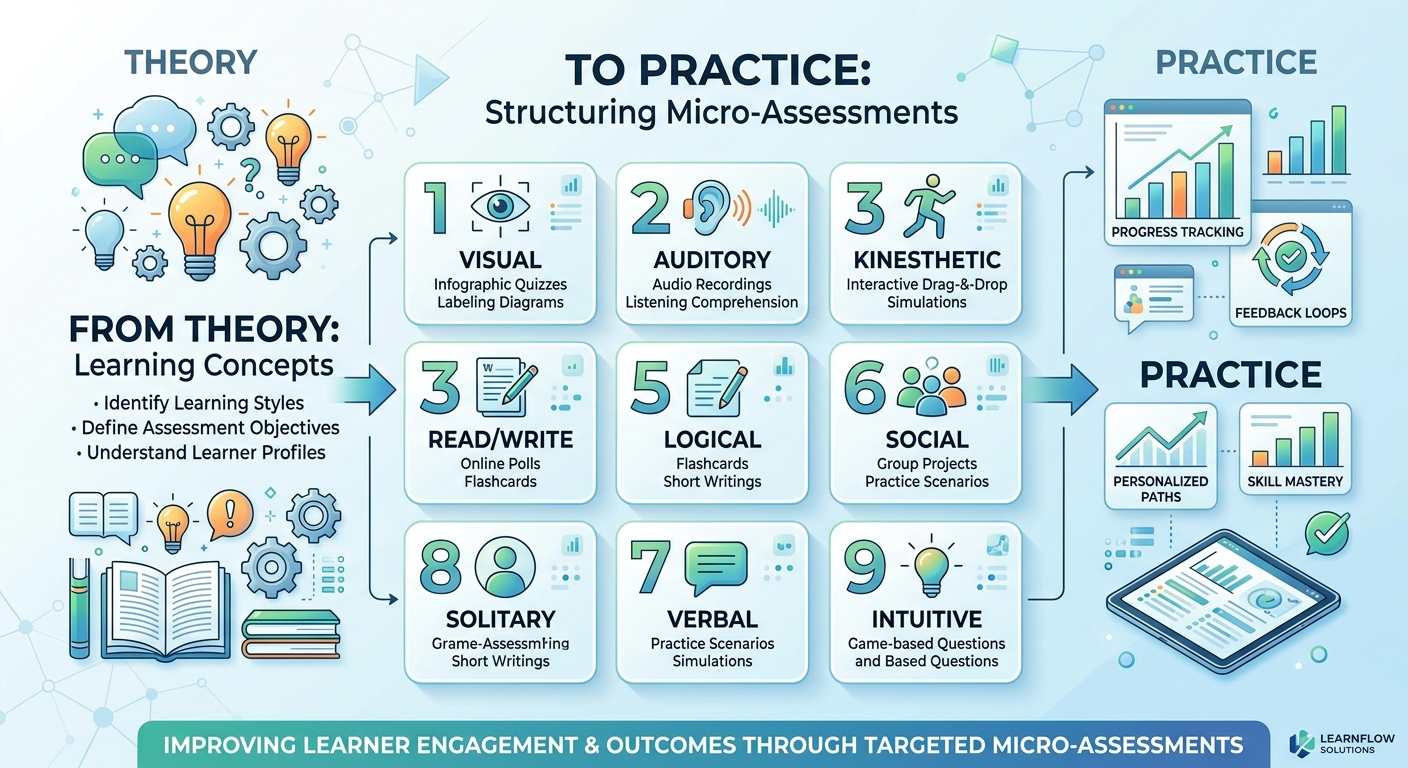
In the dynamic landscape of modern corporate learning, the traditional one-size-fits-all assessment model is rapidly becoming obsolete. As Vice Presidents, Directors, and Managers of L&D, you understand the critical need for training that not only imparts knowledge but genuinely resonates with every individual across your diverse workforce. From compliance to sales, banking to healthcare, and oil & gas to retail, your learners span a spectrum of preferences, backgrounds, and learning styles. The challenge? How to effectively measure comprehension and skill application in a way that truly engages and empowers each unique learner. The answer lies in thoughtfully structured micro-assessments, delivered through a robust Microlearning LMS. This article will guide you through designing targeted micro-assessments for nine distinct learner types, ensuring your learning management software delivers maximum impact and verifiable outcomes. Every learner processes information differently. Some thrive on visual cues, others through auditory input, and many through hands-on practice. Ignoring these fundamental differences leads to disengagement, poor retention, and ultimately, an ineffective learning management system. High-stakes industries like finance, pharma, and mining demand precision in knowledge transfer, making the stakes even higher. Micro-assessments, by their very nature, are short, focused evaluations designed to check understanding of specific learning objectives. When combined with an intelligent Adaptive Learning approach, they can transform how your organization measures competence and drives continuous improvement. But how do we tailor these brief checks to cater to such a wide array of learning profiles? Consider this challenge: How can we design assessments to maximize engagement and ensure knowledge retention for specific learning outcomes? An AI Powered Authoring Tool within your MaxLearn LMS can analyze learner behavior and content effectiveness, suggesting optimal assessment formats. Similarly, how can assessment content be localized or made relevant to learners in different regions or operational contexts, such as varying compliance regulations in different markets? Modern learning content management system platforms allow for rapid content localization and contextualization. And crucially, how can we dynamically adapt assessment paths and feedback based on an individual learner's real-time performance and preferences? This is where an intelligent Gamified LMS truly shines, providing tailored challenges and instant feedback to keep learners motivated and on track. Let's explore how to craft micro-assessments that speak directly to the unique needs of different learners: These individuals absorb information best through sight. They respond well to images, videos, charts, and diagrams. Auditory learners process information through sound. They learn by listening and often benefit from discussions or verbal explanations. These learners thrive on hands-on experiences, movement, and interaction. They learn by doing. These learners prefer to consume information through text and express understanding through written words. Driven by logic, reasoning, and systems, these learners prefer to understand underlying principles and relationships. These individuals learn best through interaction, collaboration, and discussion with others. These learners prefer independent study and self-reflection. They are often introspective and self-motivated. These learners have a strong affinity for words, both written and spoken. They excel in language-based activities. These individuals are attuned to the natural world and patterns. They learn by observing, classifying, and understanding environmental contexts. Implementing a comprehensive learning management system with diversified micro-assessments offers substantial advantages: Moving from theoretical understanding to practical application in L&D means embracing the diversity of your learners. Structuring micro-assessments for 9 unique learner types is not merely an educational best practice; it's a strategic imperative for any organization aiming for excellence in a competitive global market. By leveraging a modern LMS that supports MaxLearn LMS methodologies and an AI Powered Authoring Tool, you can ensure your learning management solutions are not just delivering content, but truly transforming capabilities across your enterprise. Invest in an lms learning management system that empowers every individual to succeed, driving your organization's growth and innovation.
From Theory to Practice: Structuring Micro-Assessments for 9 Unique Learner Types
The Imperative of Personalized Assessment
Leveraging Advanced Tools for Personalized Learning
Structuring Micro-Assessments for 9 Unique Learner Types
1. The Visual Learner
2. The Auditory Learner
3. The Kinesthetic/Tactile Learner
4. The Reading/Writing Learner
5. The Logical/Mathematical Learner
6. The Social/Interpersonal Learner
7. The Solitary/Intrapersonal Learner
8. The Verbal/Linguistic Learner
9. The Naturalistic Learner
The Benefits for Your Organization
Conclusion
.jpg)


