

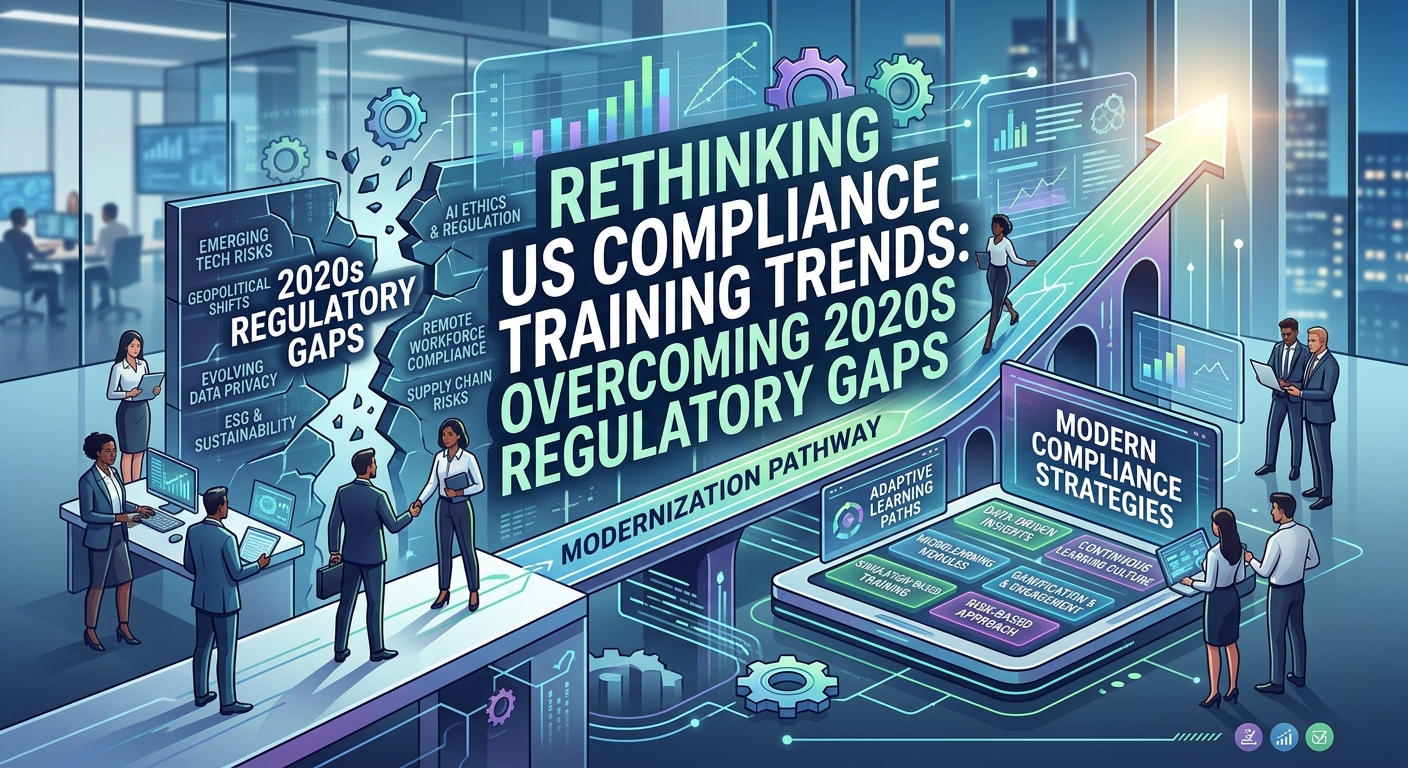
Rethinking US Compliance Training Trends: Overcoming 2020s Regulatory Gaps
The dawn of the 2020s ushered in an era of unprecedented change, not least in the realm of US regulatory compliance. For Vice Presidents, Directors, and Senior Managers in Learning & Development across industries like finance, healthcare, retail, and energy, the challenge isn't just keeping pace; it's anticipating and proactively addressing new compliance demands. Traditional compliance training, often a one-size-fits-all annual event, is no longer sufficient to navigate the intricate web of evolving laws, industry-specific mandates, and the complex risk landscape. This article explores the critical need to rethink compliance training, leverage innovative eLearning methodologies, and harness the power of artificial intelligence to bridge existing regulatory gaps and foster a culture of continuous compliance.
The Evolving Regulatory Landscape and Its Impact
The period following 2020 has seen an acceleration in regulatory shifts across nearly every sector. From data privacy regulations like the CCPA and emerging state-specific laws to ESG (Environmental, Social, and Governance) reporting requirements, financial transparency acts, and sector-specific guidelines in pharmaceuticals and healthcare, the volume and complexity of compliance obligations have surged. Organizations are grappling with:
- Increased scrutiny from regulatory bodies.
- Higher penalties for non-compliance.
- Reputational damage from ethical lapses or data breaches.
- A globalized workforce facing diverse local and international compliance challenges.
Traditional Training's Shortcomings in a Modern World
For too long, compliance training has been viewed as a necessary evil rather than a strategic asset. Conventional approaches often fall short in several key areas:
Information Overload and Retention Issues
Dumping vast amounts of information in lengthy modules leads to cognitive overload. Employees struggle to retain critical details, especially those not directly relevant to their day-to-day roles. A generic learning management software often lacks the ability to personalize this delivery.
Lack of Engagement and Relevancy
Static content, bullet points, and endless quizzes rarely capture attention. When training feels irrelevant to an employee's specific job function or the real-world scenarios they face, engagement plummets, and the training's effectiveness is severely compromised. An enterprise learning management solution needs to address this.
Difficulty in Tracking Impact and Proactive Risk Mitigation
Traditional methods often provide basic completion rates but offer little insight into true comprehension, behavioral change, or the identification of emerging risk areas. Without granular data, L&D leaders cannot effectively measure ROI or proactively address compliance vulnerabilities. This highlights a gap in many learning management solutions.
Modern Approaches to Compliance Training: Building Resilient Programs
To overcome these challenges, organizations must adopt modern eLearning strategies that prioritize engagement, personalization, and measurable impact. A robust learning content management system (LCMS) is foundational to these strategies.
Focus on Relevance and Engagement
- Microlearning LMS: Breaking down complex compliance topics into short, digestible modules significantly improves retention and fits into busy schedules. This approach ensures employees can learn on demand, reinforcing critical information precisely when needed.
- Gamified LMS: Incorporating game-like elements such as points, badges, leaderboards, and interactive simulations transforms compliance training from a chore into an engaging experience. Gamification fosters friendly competition and boosts motivation, making learning more enjoyable and effective.
- Adaptive Learning Paths: Personalized learning experiences, where content adjusts based on an individual's prior knowledge, role, and learning pace, ensure relevance. This prevents experienced employees from slogging through basic modules and helps new hires get the foundational knowledge they need efficiently.
- Risk-focused Training: Shifting the paradigm from broad regulatory overviews to specific, scenario-based training that highlights real-world risks and consequences is vital. This helps employees understand the 'why' behind compliance and how their actions directly impact the organization's integrity.
The AI Advantage: Transforming Compliance Training
Artificial intelligence is rapidly becoming a game-changer for compliance training. Its ability to analyze vast datasets, personalize experiences, and predict needs offers unprecedented opportunities for L&D professionals. A modern LMS with AI capabilities is no longer a luxury but a necessity.
Q&A with AI: Shaping the Future of Compliance Training
Q1: How can artificial intelligence help us fine-tune our training programs for maximum impact and efficiency?
A: AI can analyze learner performance data, engagement metrics, and content consumption patterns to identify areas of weakness or topics that require more reinforcement. By understanding which modules are most effective and where learners struggle, AI can recommend optimal content sequences, suggest improvements to learning materials, and even predict potential compliance gaps before they become issues. This leads to continuous optimization, ensuring every training minute is productive and every learning path is streamlined for the best possible outcome.
Q2: In what ways can AI ensure that our compliance training is hyper-relevant to an individual's specific job role, geographical location, or real-time operational context?
A: AI algorithms can assess an employee's role, department, previous training history, and even their current projects or geographic location to deliver highly customized content. For instance, a salesperson in California might receive specific data privacy training relevant to CCPA, while a manufacturing employee in Texas gets OSHA-specific modules. AI can also adapt training based on real-time triggers, such as new policy rollouts or a reported incident in a specific region, ensuring that individuals receive timely and contextually appropriate compliance information right when they need it, mitigating immediate risks.
Q3: How can AI capabilities be harnessed to extract actionable insights from our compliance data and inform our strategic training objectives?
A: AI can delve into mountains of training data, incident reports, audit findings, and even anonymous feedback to uncover underlying trends, potential risk hotspots, and systemic knowledge gaps. It can identify patterns that human analysis might miss, such as a consistent misunderstanding of a particular regulation across multiple departments or a correlation between specific training modules and a reduction in reported violations. These deep insights enable L&D leaders to proactively adjust training curricula, allocate resources more effectively, and set data-driven strategic objectives that directly address the most pressing compliance challenges, moving from reactive to predictive risk management. An AI Powered Authoring Tool further streamlines this process by helping create targeted content.
Implementing a Modern Compliance Training Strategy
Adopting these advanced methodologies requires a robust foundation. A modern learning management system (LMS) is the central nervous system for your compliance training initiatives. Look for a cloud based learning management system that offers:
- Built-in capabilities for microlearning, gamification, and adaptive paths.
- Powerful analytics and reporting for detailed insights into learner performance and compliance readiness.
- Scalability to support a growing global workforce and diverse compliance needs.
- Seamless integration with other HR and business systems.
- Advanced security features to protect sensitive training data.
An enterprise learning management solution like MaxLearn LMS empowers L&D professionals to move beyond basic training administration to strategic compliance program management.
The Path Forward: Cultivating a Culture of Continuous Compliance
Overcoming the regulatory gaps of the 2020s isn't just about avoiding penalties; it's about safeguarding reputation, fostering ethical conduct, and ensuring sustainable business growth. By embracing modern eLearning trends and the transformative power of AI, L&D leaders can transition compliance training from a reactive checkbox exercise to a proactive, engaging, and highly effective driver of organizational integrity. This strategic shift will not only meet current regulatory demands but also build a resilient workforce capable of navigating the compliance challenges of tomorrow.
Invest in an advanced Microlearning LMS that helps you adapt, engage, and excel in the ever-changing regulatory landscape. The future of US compliance training is intelligent, adaptive, and always on.
.jpg)


