

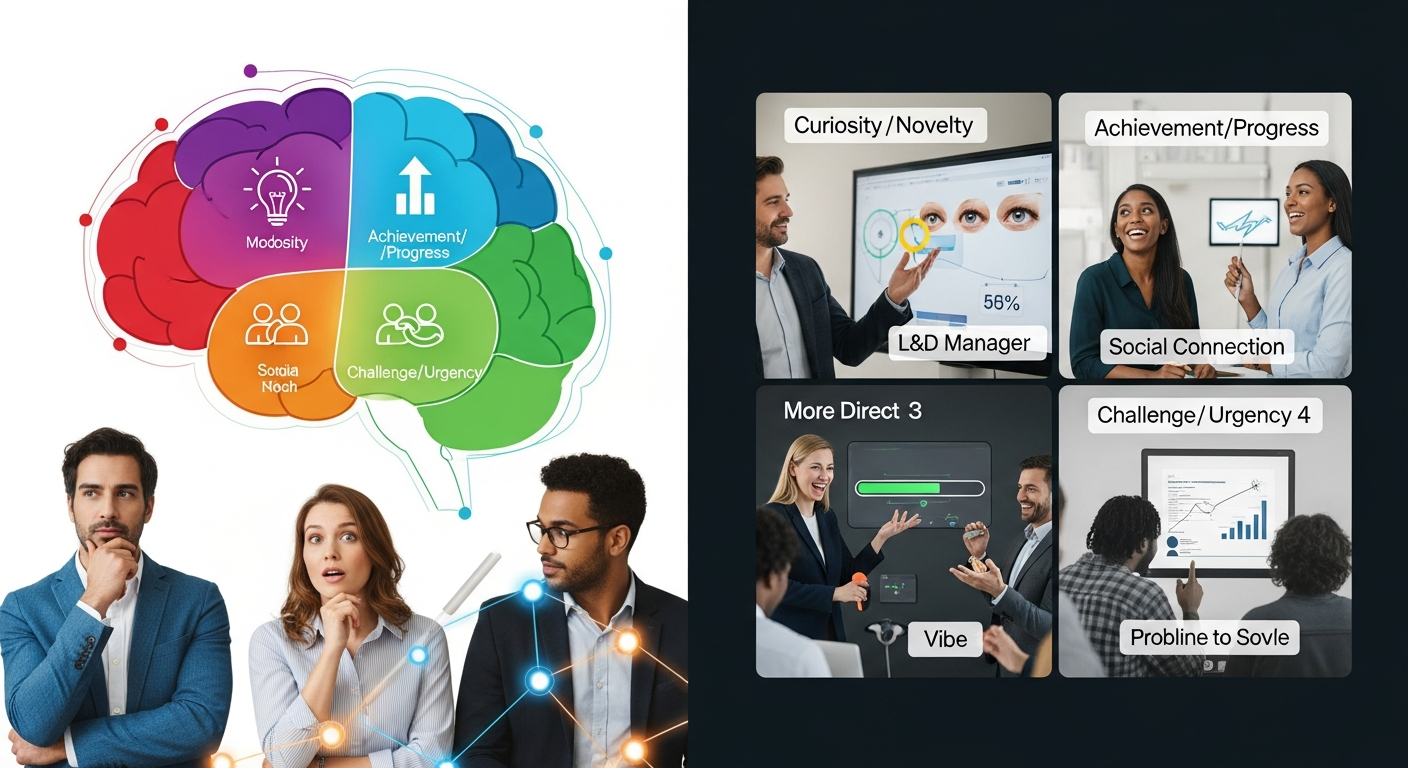
4 Emotional Triggers Every L&D Manager Needs to Master Today
In the dynamic landscape of corporate learning, L&D managers are increasingly challenged to do more than just deliver content. The shift from mere information dissemination to true knowledge retention and behavioral change demands a deeper understanding of human psychology. For Vice Presidents, Directors, and Senior Managers in L&D, mastering emotional triggers isn't just a soft skill—it's a strategic imperative that directly impacts engagement, performance, and ultimately, ROI across industries like Compliance, Sales, Banking, Finance, Insurance, Retail, Pharma, Healthcare, Hospitality, Oil and Gas, and Mining.
Traditional training often focuses solely on cognitive processes, overlooking the powerful emotional undercurrents that drive motivation and action. When learners are emotionally invested, they are more receptive, more resilient, and more likely to apply what they've learned. An effective learning management system (LMS) can be a powerful ally in this endeavor, but only when guided by an L&D strategy that understands the human element. Let's explore four critical emotional triggers every L&D leader must master to cultivate a truly impactful learning culture.
1. The Drive for Autonomy and Mastery (Empowerment)
Humans inherently desire control over their environment and a sense of competence in their abilities. When learners feel empowered to choose their learning path, pace, and focus areas, their engagement soars. This isn't just about offering options; it's about fostering a sense of ownership and personal growth.
Why it Matters for L&D:
- Increased learner motivation and self-direction.
- Better retention as learners connect content to personal relevance.
- Cultivates a proactive learning mindset, crucial for upskilling and reskilling.
How to Leverage It:
Implement learning strategies that allow for personalization. Offer a range of topics within a compliance module, or let sales professionals select advanced selling techniques relevant to their specific product line. Utilize an Microlearning LMS that supports diverse content formats and self-paced consumption. This approach aligns well with Adaptive Learning methodologies, where the learning journey adjusts to the individual's progress and preferences. A robust learning management software should facilitate this flexibility, empowering employees to take charge of their professional development.
Common question: How can technology enable learners to have more control over their development?
Answer: Modern learning management solutions often incorporate AI-driven recommendation engines, personalized dashboards, and curated content libraries. These features allow individuals to select learning modules that align with their career goals and current skill gaps, providing a self-directed and highly relevant learning experience. A good lms learning management system should offer this level of customization and choice.
2. The Need for Belonging and Connection (Community)
As social creatures, people thrive on connection and a sense of belonging. Isolation can be a significant barrier to learning, especially in remote or hybrid work environments. L&D managers must actively foster a sense of community to enhance collaborative learning and shared understanding.
Why it Matters for L&D:
- Boosts peer-to-peer learning and knowledge sharing.
- Creates a supportive environment, reducing feelings of stress or overwhelm.
- Enhances team cohesion and interdepartmental collaboration.
How to Leverage It:
Design learning experiences that encourage interaction and collaboration. This could include group projects, discussion forums, peer feedback sessions, or collaborative problem-solving scenarios relevant to banking or healthcare operations. A Gamified LMS can introduce team challenges, leaderboards, and shared goals, turning learning into a collective achievement. Social learning features within your enterprise learning management system are vital for building these connections, whether employees are learning about new retail strategies or complex pharma regulations.
Common question: What digital tools are most effective for fostering a sense of community in remote learning environments?
Answer: Platforms with integrated discussion boards, virtual breakout rooms, shared document editing capabilities, and live webinar functions are crucial. A comprehensive learning content management system often includes social feeds and collaboration spaces, mimicking the organic interactions of a physical workplace. These tools facilitate knowledge exchange and create a shared learning journey, even across geographical distances.
3. The Fear of Missing Out (Urgency/Relevance)
While often associated with social media, FOMO—the fear of missing out—is a powerful psychological trigger that can be ethically leveraged in L&D. It’s not about generating anxiety, but about highlighting the compelling benefits of participation and the potential downsides of inaction. This is particularly potent in fast-evolving sectors like finance, oil and gas, or technology-driven retail.
Why it Matters for L&D:
- Creates a sense of urgency and importance for new training initiatives.
- Motivates learners to engage with content that addresses critical skills gaps.
- Highlights the direct impact of learning on career progression or company success.
How to Leverage It:
Clearly articulate the "what's in it for me" for every learning module. For example, for a sales team, emphasize how mastering new product knowledge directly translates to higher commissions or career advancement. For compliance training, highlight the personal and organizational risks of not staying current. Use real-world case studies demonstrating how individuals or teams benefited from specific training. This also ties into Risk-focused Training, where the consequences of inaction are clearly outlined, making the training's value undeniable. A sophisticated MaxLearn LMS can track and showcase these individual and collective improvements.
Common question: How can L&D demonstrate the immediate value and career impact of new training programs?
Answer: By creating clear learning pathways linked to career progression frameworks, sharing success stories of employees who have benefited from specific training, and providing data-driven insights into how skills acquisition translates into improved job performance or opportunities. Highlighting these connections creates a powerful incentive, making employees eager to participate to avoid falling behind in their career trajectory or missing out on key opportunities.
4. The Pursuit of Purpose and Impact (Meaning)
Beyond individual gain, people are deeply motivated when they feel their work contributes to a greater purpose. L&D initiatives that connect learning to the organization's mission, societal impact, or customer success resonate deeply with learners, particularly in sectors like healthcare, mining, or hospitality where direct impact is often visible.
Why it Matters for L&D:
- Fosters a sense of meaning and higher engagement with learning.
- Strengthens organizational culture and alignment with company values.
- Inspires greater commitment and dedication to applying learned skills.
How to Leverage It:
Frame learning content within the broader context of the company's goals and its impact on customers or society. For instance, in healthcare, training on new protocols isn't just about compliance; it's about improving patient outcomes. In finance, ethics training connects directly to maintaining public trust. Storytelling is a powerful tool here. Use an AI Powered Authoring Tool to quickly generate scenarios and examples that highlight the real-world impact of learning, making it easier to connect dry facts to compelling narratives. A modern cloud based learning management system should enable easy deployment of such meaningful content.
Common question: Can AI assist in tailoring learning content to resonate with individual employees' personal and professional goals?
Answer: Absolutely. AI can analyze an employee's role, career aspirations, and even previous learning behaviors to recommend content that aligns with their personal sense of purpose. It can also help content creators identify themes and narratives most likely to resonate with specific learner segments, ensuring that the 'why' behind the learning is always clear and compelling. This capability transforms an LCMS into a strategic partner for driving meaningful engagement.
Unlocking Potential with a Strategic LMS
Mastering these four emotional triggers is fundamental to elevating L&D from a cost center to a strategic driver of business success. While understanding human psychology is key, the right technology acts as an indispensable enabler. An advanced LMS like MaxLearn provides the infrastructure to deliver personalized, collaborative, relevant, and purposeful learning experiences at scale.
By leveraging features that support autonomy, foster community, highlight urgency, and instill purpose, L&D leaders can transform passive learners into active participants, driving tangible improvements in performance, productivity, and employee satisfaction across all industries. Investing in a comprehensive learning management system that empowers these emotional connections is not just an upgrade; it's an investment in your organization's most valuable asset: its people.
.jpg)