

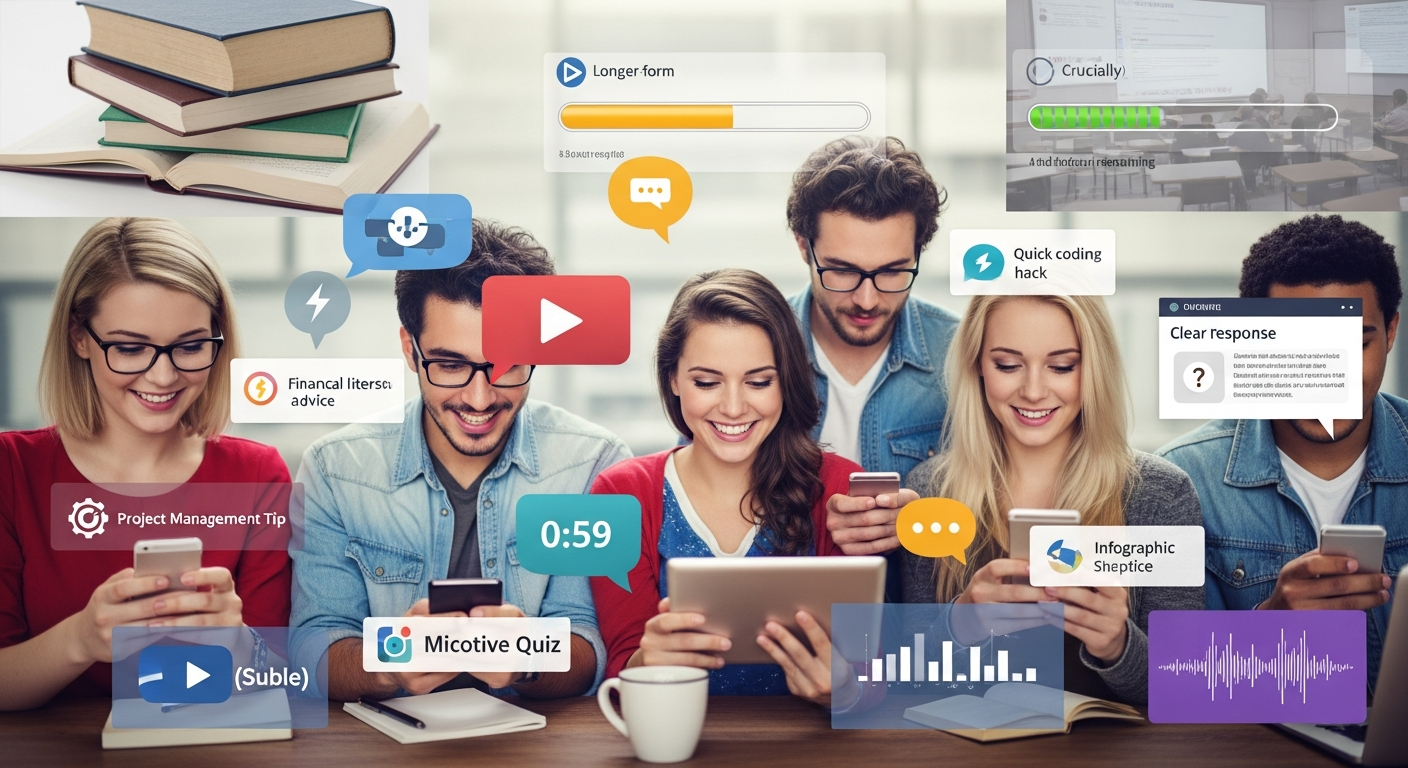
Millennial and Gen Z Training: Why Microlearning is the Format They Actually Want
For Vice Presidents, Directors, and Senior Managers in Learning & Development, the challenge of engaging today's workforce is ever-present. Especially when it comes to training Millennials and Gen Z, traditional long-form courses often fall flat. These generations, now forming the majority of the global workforce across diverse sectors like Compliance, Sales, Banking, Finance, Insurance, Retail, Pharma, Health care, Hospitality, Oil and Gas, and Mining, have distinct learning preferences shaped by a lifetime of digital interaction. The solution isn't just a tweak to your existing LMS; it's a fundamental shift in approach, and it’s called microlearning.
As L&D leaders, you're tasked with ensuring your teams are highly skilled, compliant, and productive. This means investing in effective learning management software that truly resonates with your learners. Microlearning isn't merely a trend; it's a strategic imperative for organizations aiming to maximize knowledge retention, engagement, and overall business performance in the modern era. It's the format that these digital-native generations don't just tolerate, but genuinely prefer.
Understanding the Modern Learner: Millennials and Gen Z
Millennials (born 1981-1996) and Gen Z (born 1997-2012) are digital natives, raised with immediate access to information. Their learning habits are characterized by:
- Instant Gratification: They expect quick answers and immediate value.
- Mobile-First Mentality: Smartphones are their primary device for consumption and communication.
- Short Attention Spans: The constant influx of information online has conditioned them to consume content in bite-sized chunks.
- Self-Directed Learning: They are adept at finding information themselves and prefer to learn on demand.
- Visual and Interactive: They respond best to engaging, multimedia-rich content rather than static text.
Traditional, lengthy training sessions, often hours-long or multi-day classroom setups, clash fundamentally with these preferences. They lead to disengagement, poor retention, and a perception that training is a chore rather than an opportunity for growth. This is where a modern learning content management system or enterprise learning management solution truly shines when it embraces microlearning.
The Power of Microlearning
Microlearning delivers learning content in short, focused bursts – typically 2-7 minutes long – each addressing a single learning objective. Think of it as breaking down complex topics into digestible, engaging modules. This format directly addresses the learning styles of Millennials and Gen Z, offering:
- Enhanced Engagement: Short, focused modules prevent information overload and maintain interest.
- Better Retention: Spaced repetition and targeted content help solidify knowledge.
- Flexibility and Accessibility: Learners can access content anytime, anywhere, on any device, making it perfect for remote or hybrid workforces.
- Immediate Relevance: Just-in-time learning allows employees to acquire skills precisely when they need them, whether it's understanding a new compliance regulation or mastering a sales technique.
An effective lms learning management system designed for microlearning can transform how your organization delivers training across all departments.
Key Benefits of Microlearning for L&D Leaders
For L&D professionals, embracing microlearning translates into tangible business advantages:
- Maximized ROI on Training: By delivering content that's actually consumed and retained, you get more value from your training investments.
- Faster Skill Acquisition: Employees can quickly learn and apply new skills, leading to immediate performance improvements.
- Agility and Responsiveness: Microlearning modules are quicker to create, update, and deploy, allowing your organization to adapt rapidly to changing market conditions, regulations, or product launches. This is critical in fast-paced industries like Finance, Pharma, and Retail.
- Personalized Learning Paths: A sophisticated Microlearning LMS can offer Adaptive Learning experiences, tailoring content to individual learner needs and progress.
- Data-Driven Insights: Advanced learning management solutions provide robust analytics, showing exactly what content is being consumed, how learners are performing, and where knowledge gaps exist.
Microlearning in Action: Industry-Specific Applications
The versatility of microlearning makes it ideal for a multitude of industries and use cases:
- Compliance: Break down complex regulations into short, scenario-based modules, making annual compliance training less daunting and more effective for sectors like Banking, Finance, Insurance, and Pharma.
- Sales: Provide quick refreshers on product features, objection handling, or closing techniques just before client calls, directly impacting conversion rates.
- Healthcare: Deliver concise updates on new medical procedures, equipment usage, or patient safety protocols, ensuring critical knowledge is always current for nurses and medical staff.
- Retail: Offer rapid training on new product lines, customer service best practices, or seasonal promotions to frontline staff.
- Hospitality: Equip employees with quick tips on guest relations, service standards, or new operational procedures.
- Oil and Gas / Mining: Provide safety protocol refreshers, equipment maintenance guides, or emergency response procedures in an easily accessible format.
Regardless of your industry, a modern LCMS can empower your teams with timely, relevant information.
Implementing Microlearning Successfully
Adopting microlearning requires more than just breaking down old courses. It demands a strategic approach:
- Define Clear Learning Objectives: Each micro-module should address a single, actionable learning goal.
- Leverage the Right Technology: A dedicated Microlearning LMS is crucial. Solutions like MaxLearn LMS are built from the ground up to support bite-sized learning, mobile delivery, and robust analytics.
- Focus on Engagement: Incorporate interactive elements, quizzes, videos, and even a Gamified LMS approach to keep learners hooked.
- Integrate with Workflow: Make learning part of the daily workflow, easily accessible when needed.
Unlocking Potential: AI and the Future of Training
As L&D leaders consider future-proofing their strategies, artificial intelligence plays an increasingly pivotal role in optimizing microlearning. Here are some key considerations:
Question: How can L&D departments future-proof their training strategies to meet evolving learner expectations?
Answer: Future-proofing involves embracing technology that understands and adapts to individual learner needs. AI-powered platforms can analyze learning patterns, predict skill gaps, and recommend personalized microlearning paths. This ensures that every employee, regardless of their current proficiency or learning style, receives the most relevant and impactful content. An AI Powered Authoring Tool, for instance, can significantly accelerate content creation and personalization, making it easier for L&D teams to stay agile and responsive to organizational needs.
Question: In a globally distributed workforce, how can microlearning ensure consistent and effective training across diverse regions?
Answer: For organizations with a global footprint in industries like Pharma, Finance, or Oil and Gas, consistency is paramount. AI can facilitate this by automatically translating and localizing microlearning content, ensuring cultural relevance and language accuracy across different regions. Furthermore, AI analytics can track global engagement and comprehension rates, highlighting disparities and allowing L&D managers to address specific regional training needs with targeted micro-modules. This capability of a cloud based learning management system is invaluable for multinational corporations.
Question: What role does artificial intelligence play in optimizing microlearning content creation and delivery for maximum impact?
Answer: Artificial intelligence is a game-changer for optimizing microlearning. It can analyze vast amounts of data to identify the most effective content formats, delivery times, and even predict which topics will resonate best with specific learner groups. AI algorithms can help curate existing resources into new micro-modules, suggest improvements to current content based on learner feedback, and even automate parts of the content generation process. This ensures that every piece of microlearning content is highly engaging and contributes directly to critical outcomes, including Risk-focused Training, by identifying and addressing high-priority knowledge areas effectively.
Conclusion
The shift towards microlearning is not merely a passing fad; it's a necessary evolution in corporate training, driven by the changing preferences of the modern workforce. Millennials and Gen Z are not just requesting this format; they expect it. By adopting a strategic approach to microlearning, supported by a robust learning management system that leverages the power of AI, L&D leaders can transform their training programs from a compliance checkbox into a powerful driver of engagement, skill development, and competitive advantage. Investing in a future-ready learning management solution like MaxLearn LMS is an investment in your people and your organization's sustained success.
.jpg)


