

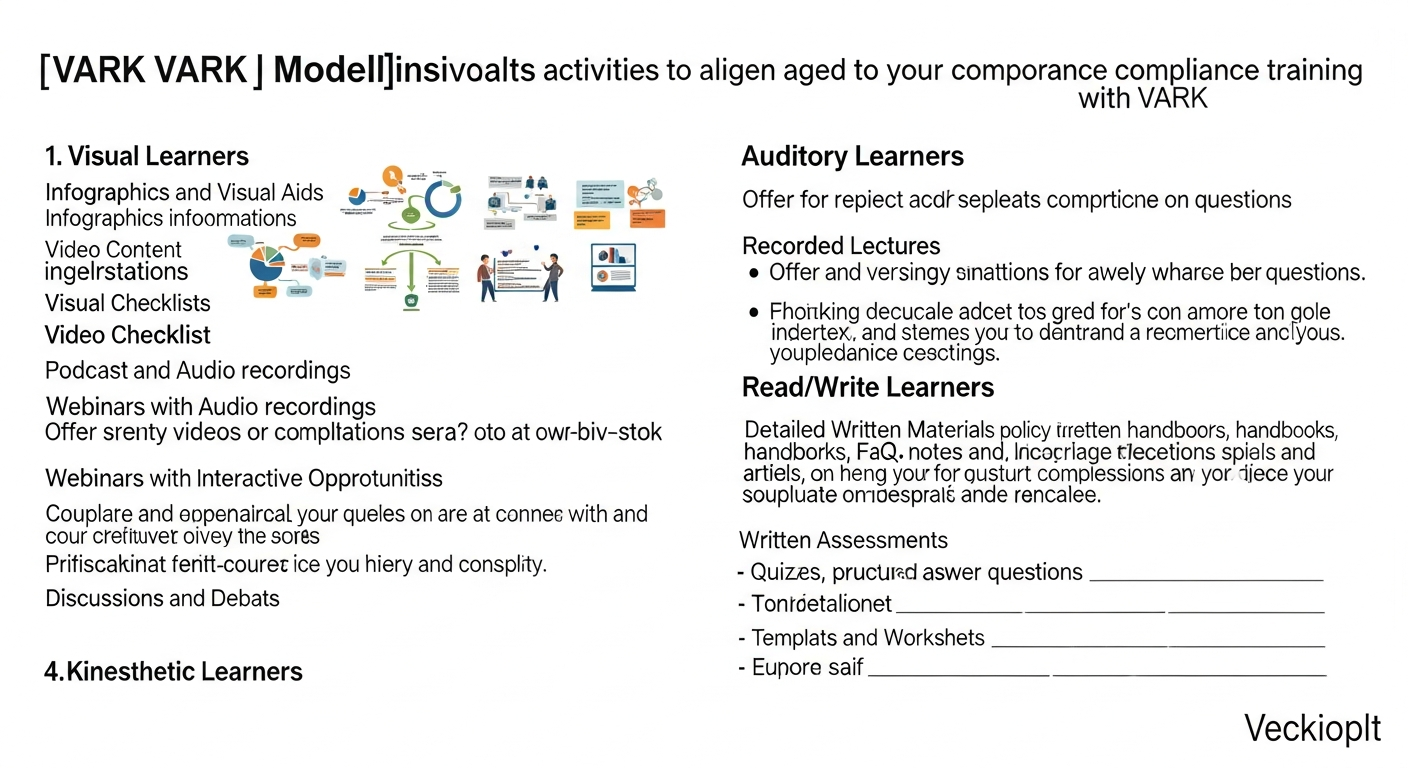
How to Align Corporate Compliance Training with the VARK Model for Enhanced Efficacy
In today’s dynamic corporate landscape, compliance training is more than just a regulatory checkbox; it’s a critical investment in an organization's integrity, reputation, and operational continuity. However, for many Vice Presidents, Directors, and Managers of L&D, the challenge lies in transforming these essential modules from rote obligations into truly engaging and effective learning experiences. The traditional one-size-fits-all approach often falls short, leading to disengagement, poor knowledge retention, and ultimately, increased organizational risk.
Enter the VARK model. An acronym for Visual, Auditory, Read/Write, and Kinesthetic, VARK categorizes learning preferences, offering a powerful framework to design Microlearning LMS content that resonates with diverse learners. By aligning corporate compliance training with the VARK model, L&D leaders can unlock greater engagement, improve comprehension, and foster a stronger culture of compliance across industries like Banking, Finance, Insurance, Retail, Pharma, and Health care, as well as Hospitality, Oil and Gas, and Mining.
Understanding the VARK Model in the Context of Compliance
The VARK model posits that individuals learn best through specific sensory modalities. Recognizing and catering to these preferences can dramatically improve the effectiveness of any learning management system. For compliance training, where accuracy and retention are paramount, a multi-modal approach is not just beneficial, it’s essential.
Visual Learners (V)
Visual learners absorb information best when it's presented graphically. They thrive on seeing data, relationships, and concepts laid out in a clear, compelling manner.
- Compliance Application: Instead of dense policy documents, present compliance rules through infographics, flowcharts, diagrams illustrating processes (e.g., anti-money laundering workflows), video demonstrations of correct procedures, and interactive simulations. Use color-coding to highlight critical information and create visual summaries of complex regulations. A modern learning content management system can easily host such rich media.
- Engagement Strategy: Utilize short, animated videos explaining new regulations or demonstrating proper conduct in challenging situations. Provide graphical timelines for compliance deadlines and visual "do's and don'ts" posters within the digital learning environment.
Auditory Learners (A)
Auditory learners prefer to hear information. They learn best through lectures, discussions, podcasts, and verbal instructions.
- Compliance Application: Incorporate audio recordings of key policy summaries, expert interviews on compliance best practices, and interactive discussions. Webinars, podcasts, and voice-overs in video presentations are highly effective. Consider using scenarios where learners listen to hypothetical compliance breaches and discuss appropriate responses.
- Engagement Strategy: Host live or recorded Q&A sessions with compliance officers. Encourage peer discussions on forums or during virtual live training sessions. Provide audio summaries of each training module within your enterprise learning management system.
Read/Write Learners (R)
Read/Write learners excel through written communication. They prefer to consume information via text, whether through reading articles, taking notes, or writing summaries.
- Compliance Application: Provide detailed policy documents, comprehensive handbooks, written case studies, and clear text-based instructions. Ensure that all visual and auditory content is accompanied by transcripts or detailed descriptions. Quizzes, written assignments, and opportunities for written feedback are also crucial.
- Engagement Strategy: Offer downloadable cheat sheets, FAQs, and glossaries of compliance terms. Encourage learners to take notes directly within the LMS platform or to write short reflections after each module. Regular written assessments can reinforce learning.
Kinesthetic Learners (K)
Kinesthetic learners learn by doing. They thrive on hands-on experiences, simulations, role-playing, and practical application of knowledge.
- Compliance Application: This is where interactive simulations, role-playing scenarios, and practical exercises become invaluable. For example, a banking employee could navigate a simulated customer interaction identifying potential fraud indicators, or a healthcare worker could practice data privacy protocols in a virtual environment. A Gamified LMS can provide immediate feedback and progression, appealing directly to this learning style.
- Engagement Strategy: Design interactive quizzes with real-world scenarios, drag-and-drop exercises, and decision-tree simulations. Encourage learners to apply compliance principles to their daily tasks and reflect on the outcomes. Practical workshops, even if virtual, can also be highly effective.
Leveraging Modern Learning Technologies to Implement VARK
Implementing a VARK-aligned strategy effectively requires a robust learning management software. Modern cloud based learning management system solutions offer the flexibility and features necessary to deliver diverse content tailored to individual preferences.
An lms learning management system like MaxLearn LMS is designed to support such a multi-modal approach, facilitating the deployment of interactive content, video tutorials, audio resources, and text-based modules. This ensures that every employee, regardless of their dominant learning style, can access compliance training in a way that maximizes comprehension and retention.
By integrating a strong LCMS, L&D teams can efficiently create, manage, and distribute varied content, making it easier to update policies and adapt training as regulations evolve. This adaptability is crucial for maintaining compliance in fast-changing industries.
AI and the Future of Personalized Compliance Training
The convergence of the VARK model with artificial intelligence presents unprecedented opportunities for optimizing compliance training. AI can not only help identify individual learning preferences but also dynamically adapt content delivery to ensure maximum impact.
In what ways can artificial intelligence personalize compliance training to resonate more deeply with each employee's unique role and learning style?
AI can analyze learning patterns, performance data, and even role-specific compliance risks to deliver highly relevant content. This ensures that a sales manager receives training tailored to their specific market regulations, while a finance analyst focuses on financial reporting compliance, significantly improving engagement and retention. This level of Adaptive Learning ensures that each learner's journey is optimized for their needs and organizational role.
How can intelligent systems adapt compliance modules to cater to diverse geographical regulatory frameworks and cultural nuances across a global organization?
AI-powered platforms can dynamically adjust content based on the learner's location, ensuring they receive the most up-to-date and locally relevant compliance information. This includes language localization, region-specific case studies, and adherence to varying data privacy laws, making training universally effective yet locally precise. This reduces the administrative burden on L&D teams managing global compliance.
Beyond merely tailoring content, how can advanced algorithms optimize the entire compliance learning ecosystem, from content creation to predictive risk identification?
AI can streamline the development of content through an AI Powered Authoring Tool, suggest optimal delivery schedules, and even predict potential compliance gaps before they become critical issues. By continuously analyzing training effectiveness and organizational risk profiles, AI transforms compliance from a reactive necessity into a proactive, strategic advantage, ensuring maximum impact and efficiency in your learning management system. This approach also supports Risk-focused Training, directing resources where they are most needed.
Conclusion
Aligning corporate compliance training with the VARK model is a strategic imperative for L&D leaders aiming to foster a resilient and compliant workforce. By moving beyond generic, lecture-based modules to a rich, multi-modal learning experience, organizations can significantly boost engagement, knowledge retention, and overall effectiveness.
Modern learning management solutions, particularly those that offer a comprehensive suite of features for varied content delivery and integrate AI capabilities, are instrumental in achieving this alignment. Investing in an LMS that supports visual, auditory, read/write, and kinesthetic learning ensures that every employee understands their compliance obligations, ultimately safeguarding the organization's future and turning compliance into a competitive advantage.
.jpg)


