

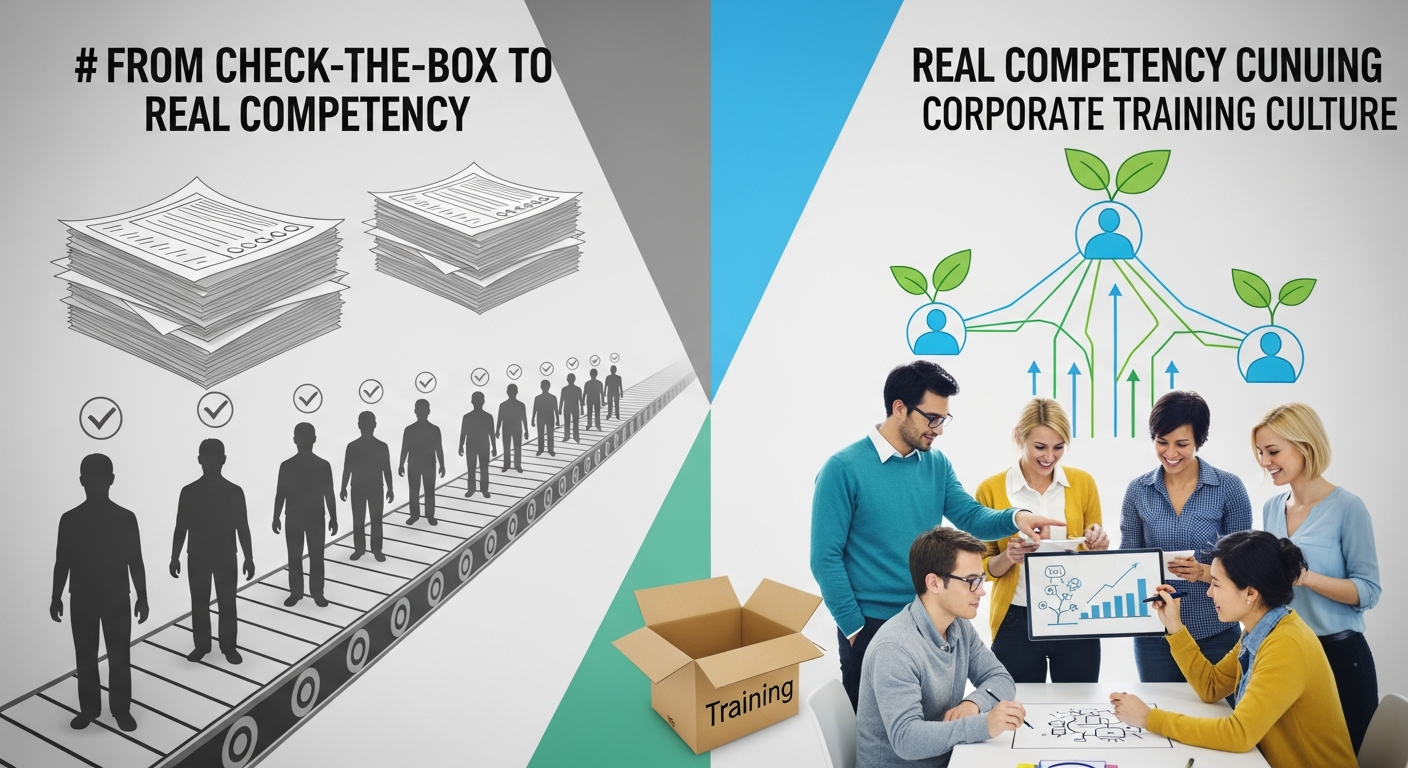
From Check-the-Box to Real Competency: Transforming Your Corporate Training Culture
For too long, corporate training has operated under the shadow of the "check-the-box" mentality. Employees attend mandatory sessions, click through modules, and complete quizzes, often with little tangible impact on their skills or job performance. This passive approach wastes valuable resources and fails to equip your workforce with the real competencies needed to navigate today's dynamic business landscape. If you're a Vice President, Director, or Senior Manager in L&D, you understand this challenge intimately, especially across diverse sectors like Compliance, Sales, Banking, Finance, Insurance, Retail, Pharma, Healthcare, Hospitality, Oil and Gas, and Mining.
It's time for a paradigm shift. The goal is no longer just knowledge dissemination but the cultivation of genuine, measurable competency that drives organizational success and fosters a culture of continuous learning. This article will explore how to transform your corporate training culture from a reactive necessity to a proactive strategic advantage, leveraging modern eLearning solutions and cutting-edge technology.
The Pitfalls of Traditional Training: Why "Check-the-Box" Fails
Traditional training methodologies, often characterized by lengthy, generic modules and infrequent sessions, are inherently flawed. They struggle with engagement, retention, and, most critically, the transfer of learning to real-world application. Learners become passive recipients, rarely internalizing information deeply enough to change behavior or improve performance.
Consider the implications across industries:
- Compliance: In banking, finance, and pharma, compliance training is paramount. Yet, if it's merely a box to check, the risk of costly errors, penalties, and reputational damage remains high.
- Sales & Retail: Without truly competent sales teams, product knowledge remains theoretical, customer engagement falters, and revenue opportunities are missed.
- Healthcare & Hospitality: Critical service delivery and safety protocols demand more than rote memorization; they require ingrained skills and judgment.
- Oil and Gas & Mining: Safety training is life-or-death. "Checking the box" here is simply unacceptable.
The core issue is a disconnect: training often isn't designed with the end-goal of competency in mind, nor is it delivered in a way that truly resonates with the modern learner.
The Vision: Competency-Driven Learning as a Strategic Advantage
Competency-driven learning focuses on developing specific, measurable skills and behaviors directly relevant to job roles and business objectives. It's about empowering employees not just to know, but to *do*. This shift is vital for several reasons:
- Enhanced Performance: Directly impacts individual and team productivity.
- Reduced Risk: Crucial for high-stakes industries by ensuring employees can effectively manage situations.
- Increased Agility: Creates a workforce capable of adapting to new technologies, regulations, and market demands.
- Employee Retention: Investing in meaningful development boosts engagement and loyalty.
For organizations utilizing a robust learning management system (LMS), this transformation means moving beyond basic tracking to deep insights into skill acquisition and application. A modern learning content management system (LCMS) becomes the backbone of this approach, enabling dynamic content delivery and skill mapping.
Pillars of Transformation: Building a Competency-Focused Training Culture
Strategic Content & Delivery
Gone are the days of one-size-fits-all, lengthy courses. Modern learning embraces methods that meet learners where they are, with content that is digestible, relevant, and engaging. A Microlearning LMS delivers bite-sized content that fits into busy schedules, maximizing retention and application. This approach is particularly effective for busy professionals in industries like healthcare and finance. Furthermore, introducing a Gamified LMS can transform dull, mandatory training into an interactive and enjoyable experience, boosting motivation and participation.
Personalization & Adaptability
Every learner is unique. Their existing knowledge, learning style, and specific job requirements vary. Adaptive Learning technologies are key here. They analyze a learner's progress and performance, then dynamically adjust the learning path, providing extra support where needed or accelerating through familiar topics. This personalized approach ensures maximum efficiency and relevance, making training truly effective for diverse roles within retail or complex compliance scenarios in banking.
Leveraging Technology for Efficiency
The right technology can dramatically streamline content creation and delivery. An AI Powered Authoring Tool can automate the generation of training modules, quizzes, and simulations, significantly reducing the burden on L&D teams. This allows L&D professionals to focus on instructional design and strategic planning rather than manual content creation. Such tools are invaluable for maintaining up-to-date materials across industries like Pharma, which have frequent regulatory changes.
Focus on Impact and Risk Mitigation
For many industries, training isn't just about skill-building; it's about mitigating significant operational, financial, and reputational risks. Implementing Risk-focused Training ensures that learning initiatives directly address potential vulnerabilities. In compliance-heavy sectors, this means targeted training that anticipates potential issues and builds resilience. A comprehensive learning management software can track these critical areas, providing a clear picture of an organization's preparedness.
AI in Action: Answering Key Questions for L&D Leaders
As L&D leaders, you're constantly seeking innovative ways to improve training effectiveness. Artificial Intelligence (AI) offers transformative capabilities that address common challenges. Here are fundamental questions and how AI-powered solutions provide answers:
How can AI enhance learner engagement and performance for a diverse global workforce?
- AI's Role: AI algorithms analyze individual learner performance, job roles, existing skills, and learning preferences. It can dynamically recommend specific modules, resources, or challenges that align with their needs and career goals. For example, a sales professional in a specific region might receive training localized to their market conditions and product offerings.
- Impact: This eliminates irrelevant training, boosts engagement, and accelerates skill acquisition across different departments and geographical locations, ensuring that all employees receive the most pertinent information for their role and region.
How can AI help L&D teams rapidly create, update, and deploy engaging content across various industries?
- AI's Role: AI-driven authoring tools can automate content creation by converting raw data into engaging modules, quizzes, and simulations. They can also identify outdated information, suggest updates, and even translate content, making it immediately accessible and culturally relevant for different industry segments and international teams.
- Impact: This significantly reduces the time and cost associated with content development and maintenance, allowing L&D to respond swiftly to regulatory changes in finance or new product launches in retail, while ensuring high-quality, up-to-date materials are always available.
How does AI assist in precisely measuring the impact of training on business outcomes and identifying skill gaps?
- AI's Role: AI-driven analytics within an enterprise learning management system can track learner progress, engagement, and performance data, correlating it with real-world business metrics like sales figures, compliance rates, or incident reports. It can predict future skill requirements by analyzing industry trends and internal performance data.
- Impact: L&D can move beyond completion rates to demonstrate tangible ROI. For instance, in healthcare, AI can show how specific training modules reduced medical errors, or in banking, how focused risk mitigation training improved compliance scores, providing clear data to optimize future training investments.
Implementing the Shift: A Roadmap for L&D Leaders
Transforming your training culture requires a strategic approach. Here’s a roadmap for L&D leaders:
- Define Clear Competency Objectives: Start by identifying the critical skills and behaviors required for each role and align them with organizational goals.
- Invest in the Right Ecosystem: Select a cloud based learning management system (LMS) that supports microlearning, gamification, adaptive learning, and AI-powered analytics. Solutions like MaxLearn LMS offer comprehensive learning management solutions designed for this transformation.
- Foster a Culture of Continuous Learning: Encourage self-directed learning and provide easy access to resources through your learning management system. Promote a growth mindset where learning is valued as an ongoing process.
- Measure, Analyze, and Iterate: Utilize the powerful analytics of your learning management software to track competency development, measure impact, and continuously refine your training programs.
Conclusion
The journey from "check-the-box" training to a culture of real competency is not just an aspiration; it's a strategic imperative for any organization aiming to thrive in today's competitive and regulated environments. By embracing modern eLearning methodologies, leveraging the power of AI, and investing in advanced learning management solutions, L&D leaders can transform their departments into true drivers of business success. It's time to empower your workforce with the skills they need, not just the certificates they collect, and pave the way for a more competent, agile, and resilient enterprise.
.jpg)


