

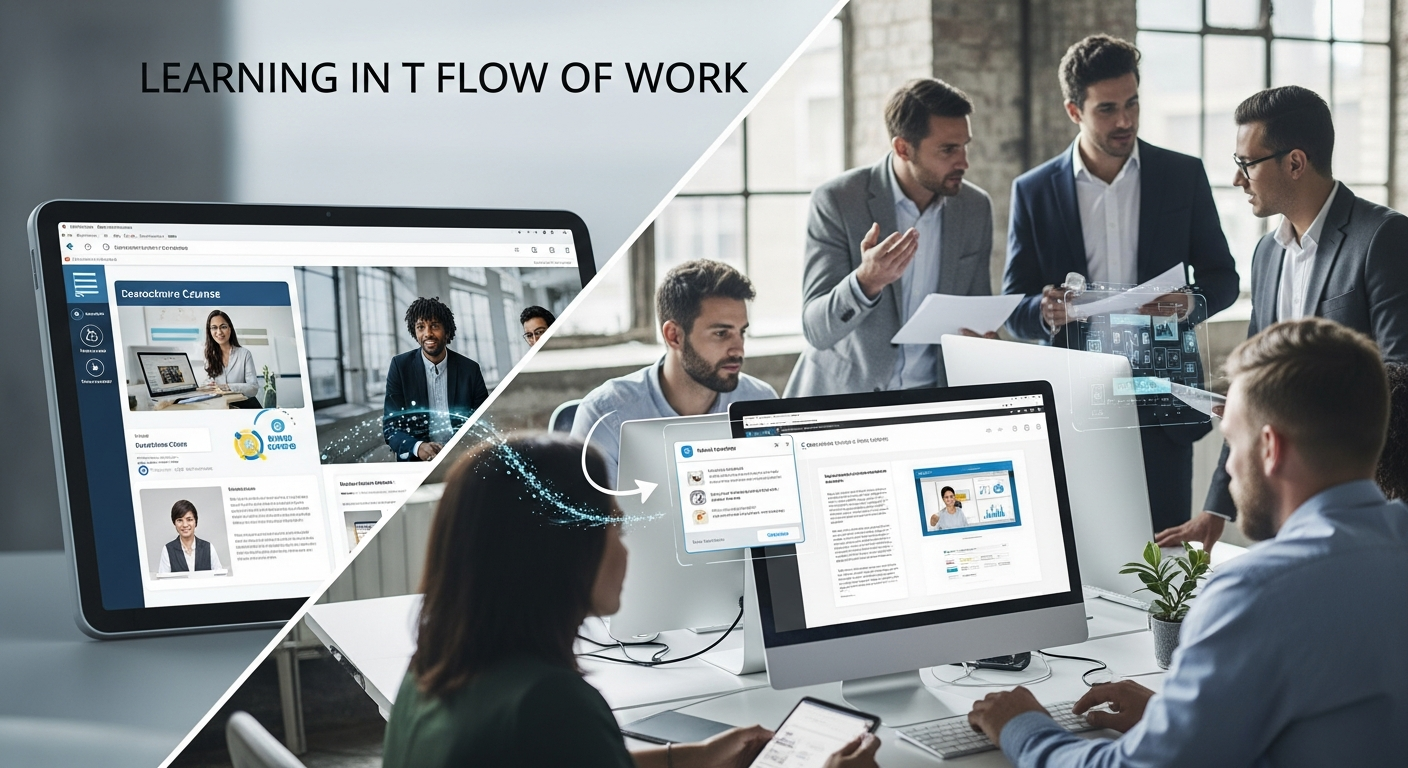
What Is "Learning In The Flow Of Work"? A Practical Guide
In today's fast-paced corporate world, the traditional model of learning is rapidly evolving. For Vice Presidents, Directors, and Managers of Learning & Development, the challenge isn't just delivering training, but ensuring that knowledge translates directly into performance. This is where "Learning In The Flow Of Work" (LIFO) emerges as a powerful, transformative strategy.
LIFO isn't merely a buzzword; it's a fundamental shift in how we approach skill development and knowledge acquisition. It champions the idea that learning should be seamlessly integrated into an employee's daily tasks, accessible precisely when and where it's needed most. This practical guide will delve into what LIFO truly means, why it's indispensable for modern L&D, and how your organization can effectively implement it to drive measurable business outcomes across sectors like Compliance, Sales, Banking, Finance, Insurance, Retail, Pharma, Health care, Hospitality, Oil and Gas, and Mining.
What is Learning in the Flow of Work?
At its core, Learning In The Flow Of Work refers to the act of acquiring knowledge or developing skills while actively performing a job task. It moves away from scheduled, isolated training sessions towards an on-demand, contextualized learning experience. Imagine a sales professional needing to quickly recall a product feature during a client call, or a compliance officer verifying a new regulation detail while processing a document – LIFO provides that instant access to information and guidance.
Unlike conventional training, which often involves taking employees away from their duties for extended periods, LIFO delivers bite-sized, relevant content at the moment of need. This approach minimizes disruption, maximizes retention through immediate application, and fosters a continuous learning mindset. It's about empowering employees to solve problems, learn new skills, and adapt to changing demands without missing a beat.
Why L&D Leaders Are Embracing LIFO
L&D leaders are increasingly turning to LIFO for compelling reasons. Traditional training often struggles with knowledge retention and transfer to the job. Employees might forget what they've learned by the time they need to apply it, or the training might not be directly relevant to their immediate tasks. LIFO directly addresses these pain points:
- Enhanced Productivity: By providing immediate answers and solutions, LIFO reduces downtime associated with searching for information or waiting for support.
- Improved Engagement: Learning becomes less of a chore and more of an aid, directly helping employees succeed in their roles, leading to higher motivation.
- Faster Skill Acquisition: The ability to apply new knowledge instantly reinforces learning and accelerates skill mastery.
- Increased Agility: Organizations can respond more quickly to market changes, new regulations, or technological advancements by rapidly deploying context-specific learning resources.
- Cost-Effectiveness: Reducing time away from work for training can significantly cut indirect costs.
For industries like Compliance, where regulations frequently change, or Sales, which demands constant product knowledge updates, LIFO is not just beneficial but critical. It ensures that employees are always equipped with the most current and accurate information, directly impacting performance and mitigating risks.
Core Principles of Effective Learning in the Flow of Work
Implementing a successful LIFO strategy requires adherence to several key principles:
Immediacy
Learning content must be accessible instantly. There's no room for delays or cumbersome navigation. When an employee needs information, it should be available within a few clicks or taps, right at their workstation or on their mobile device.
Relevance
The content delivered must directly pertain to the task at hand. Irrelevant information, no matter how well-produced, will be ignored. LIFO thrives on providing surgical precision in its learning interventions.
Accessibility
Content should be easily discoverable and consumable across various devices and platforms. Whether an employee is on a desktop in the office, a tablet on the factory floor, or a smartphone in the field, the learning experience must be seamless.
Bite-sized Content (Microlearning)
Given the "in the flow" nature, learning units should be short, focused, and digestible. This Adaptive Learning approach, often called microlearning, prevents cognitive overload and fits naturally into brief moments of pause during work.
Practical Strategies for Implementing LIFO
For L&D professionals, translating the LIFO concept into actionable strategies is paramount. Here's how to begin:
Leverage Technology
A robust Microlearning LMS is the backbone of any effective LIFO strategy. This kind of learning management system facilitates the delivery of targeted, on-demand content. Look for a LMS or cloud based learning management system that supports various content types, easy search, and mobile access. A truly effective learning management system should function as a comprehensive learning content management system (LCMS), allowing for easy creation, organization, and distribution of resources. MaxLearn LMS is an example of an enterprise learning management solution designed for this purpose.
Consider a Gamified LMS to boost engagement and make learning more interactive and enjoyable, especially for repetitive or complex topics. The right learning management software transforms how organizations manage and deliver training, turning what was once a burden into a seamless process. The best learning management solutions prioritize user experience and integration.
Content Design and Curation
Focus on creating or curating content that is truly task-specific. Utilize an AI Powered Authoring Tool to quickly generate relevant, engaging, and localized content. This allows L&D teams to keep pace with changing demands without extensive manual effort. For critical areas like compliance, develop Risk-focused Training modules that can be accessed instantly when employees encounter a potential compliance issue.
Break down complex topics into micro-modules: short videos, interactive simulations, quick reference guides, FAQs, or bite-sized quizzes. Each piece should address a specific learning objective directly related to a job function.
Integration with Workflow Tools
Learning resources should reside within or be easily accessible from the tools employees use daily – whether it's an CRM, ERP, project management software, or internal communication platforms. This minimizes context-switching and makes learning a natural extension of work.
Foster a Culture of Continuous Learning
Encourage employees to proactively seek out learning resources. Managers play a crucial role in normalizing LIFO by modeling desired behaviors and recognizing those who leverage in-workflow learning to improve performance.
Frequently Asked Questions for L&D Innovators
How does machine intelligence enhance just-in-time learning?
Artificial intelligence plays a pivotal role in optimizing on-demand learning. It can personalize content recommendations based on an employee's role, performance data, and past learning history. AI-driven chatbots can provide instant answers to common questions, acting as a virtual coach or knowledge assistant. Furthermore, predictive analytics can identify potential skill gaps before they impact performance, proactively pushing relevant learning modules to employees.
What are the future global implications of adaptive learning platforms for workforce development?
For organizations operating across different regions, adaptive learning platforms powered by advanced analytics offer immense scalability and standardization. They can deliver localized, culturally relevant content while maintaining consistent learning outcomes globally. This helps in bridging skill gaps across diverse workforces, ensuring compliance with varied regional regulations, and fostering a universally skilled talent pool. The ability to quickly update and deploy learning across borders makes these platforms indispensable for global workforce agility.
How can advanced analytical tools measure the impact of integrated workflow learning on individual productivity?
Advanced analytical tools provide the data necessary to demonstrate the ROI of LIFO. They can track content consumption against performance metrics, such as task completion rates, error reduction, time saved on specific tasks, and improvements in key performance indicators (KPIs). By correlating learning activity with job performance, L&D leaders can gain actionable insights into which learning interventions are most effective, identify areas for improvement, and quantify the direct business impact of their programs. This data-driven approach is essential for continuously refining and optimizing LIFO strategies.
Benefits of LIFO for L&D Leaders
Adopting Learning In The Flow Of Work brings substantial benefits directly to L&D leaders and their organizations:
- Demonstrable ROI: By linking learning directly to performance and measurable business outcomes, L&D can clearly demonstrate the value of their initiatives.
- Enhanced Talent Development: Employees are better equipped to adapt to new challenges, fostering a highly skilled and resilient workforce.
- Improved Compliance and Risk Mitigation: In sectors like Banking, Finance, and Pharma, immediate access to compliance training and regulatory updates significantly reduces the risk of non-compliance.
- Greater Employee Satisfaction: Empowered employees who feel supported in their development are more engaged and satisfied in their roles.
Implementing an effective lms learning management system is key to unlocking these benefits. A comprehensive MaxLearn LMS, for example, can serve as the central hub for all your in-workflow learning initiatives.
Conclusion
Learning In The Flow Of Work is no longer a luxury; it's a strategic imperative for L&D leaders navigating the complexities of the modern workplace. By moving beyond traditional training paradigms and embracing immediate, relevant, and accessible learning, organizations can unlock unprecedented levels of productivity, engagement, and adaptability.
For L&D professionals, this means re-evaluating existing strategies, investing in the right technological infrastructure like a capable LMS, and championing a culture where learning is an inherent part of every employee's daily journey. The future of workforce development is contextual, continuous, and integrated – it's learning in the flow of work.
.jpg)


