

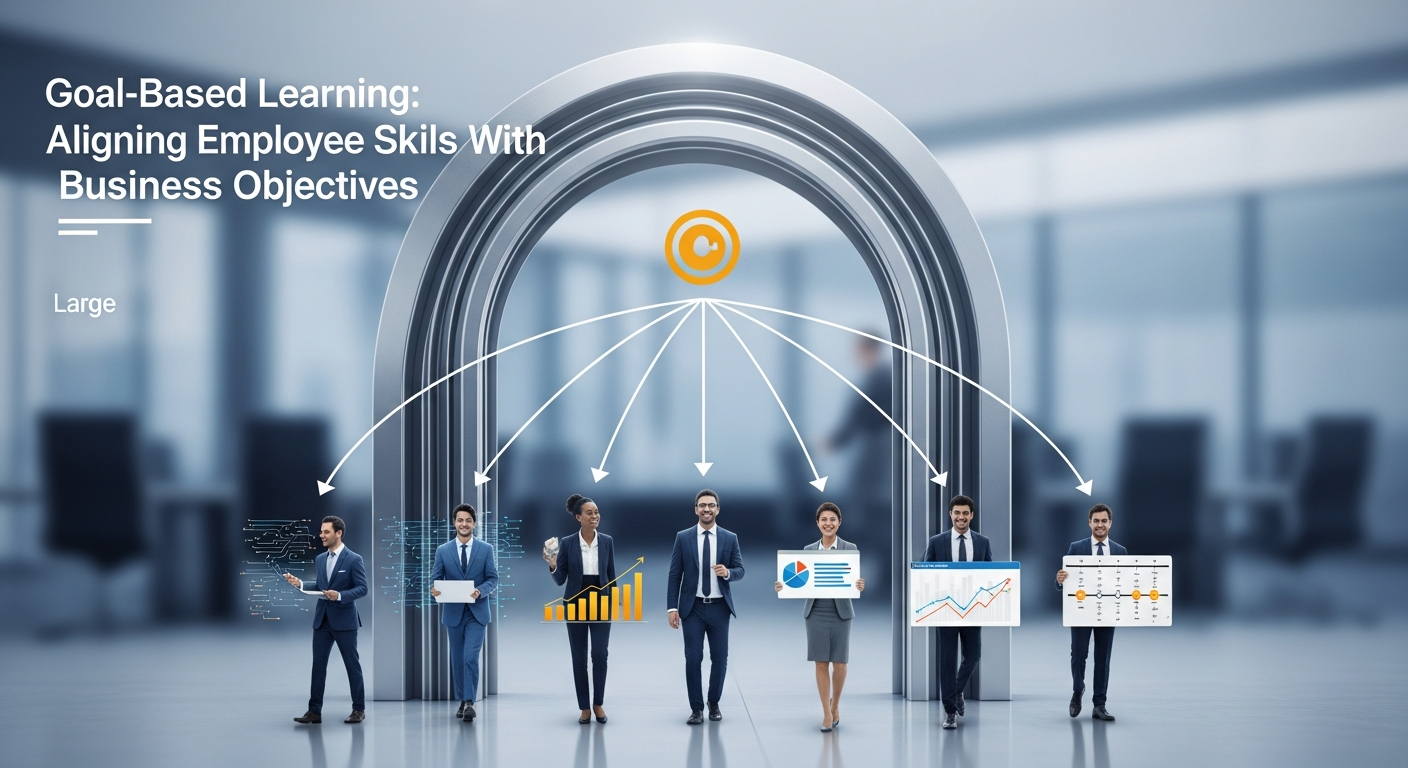
Goal-Based Learning: Aligning Employee Skills With Business Objectives
In today's dynamic business landscape, the traditional approach to employee training often falls short. L&D professionals are constantly challenged to demonstrate tangible ROI from their initiatives, moving beyond mere completion rates to actual performance improvement and strategic impact. This is where goal-based learning emerges as a powerful paradigm shift, offering a structured, purposeful methodology to ensure that every learning activity directly contributes to overarching business objectives.
Goal-based learning isn't just a buzzword; it's a strategic framework that integrates skill development with an organization's mission and vision. It ensures that employees acquire, refine, and apply skills that are critical for achieving specific business outcomes, whether that's boosting sales, enhancing compliance, improving customer satisfaction, or driving innovation. For Vice Presidents, Directors, Senior Managers, and Managers of L&D, understanding and implementing this approach is paramount to transforming your learning programs into genuine growth engines.
The Imperative of Goal-Based Learning for L&D Leaders
The transition to a goal-based learning model addresses several critical pain points faced by L&D departments across industries like Banking, Finance, Insurance, Retail, Pharma, Health care, Hospitality, Oil and Gas, and Mining. It shifts the focus from 'what to teach' to 'what needs to be achieved,' creating a clear line of sight between learning activities and organizational success.
Driving Measurable ROI and Strategic Impact
- Enhanced Business Performance: By aligning learning with specific key performance indicators (KPIs), goal-based learning directly impacts financial results, operational efficiency, and market competitiveness. For example, in Sales, training might focus on improving conversion rates; in Compliance, it could be reducing regulatory breaches.
- Optimized Resource Allocation: L&D teams can prioritize training investments where they will yield the greatest return, avoiding wasteful initiatives that don't serve a clear business purpose. This intelligent use of resources is critical for any enterprise learning management strategy.
- Future-Proofing the Workforce: Proactively identifying future skill requirements linked to strategic goals allows organizations to prepare their workforce for evolving challenges and opportunities, fostering a culture of continuous development.
Boosting Employee Engagement and Retention
When employees understand how their learning contributes to the larger organizational picture and their personal career growth, engagement naturally soars. Goal-based learning provides clarity on career pathways and skill progression, making learning feel less like a chore and more like an investment in their future. It connects individual effort to collective success, empowering employees with a sense of purpose and direction.
Implementing a Goal-Based Learning Framework
Adopting a goal-based approach requires a systematic methodology that spans identification, design, delivery, and measurement. A robust learning management system (LMS) is foundational to this process, acting as the central hub for all learning management software initiatives.
1. Define Clear Business Objectives and Desired Outcomes
The first step is always to articulate what the business needs to achieve. These are not generic goals but specific, measurable outcomes. For instance, "reduce customer churn by 15% in Q3" or "achieve 100% compliance with new industry regulations by year-end." These objectives then cascade down to departmental and individual learning goals.
2. Conduct a Skill Gap Analysis Aligned with Objectives
Once objectives are clear, assess the current capabilities of your workforce against the skills required to meet those objectives. This can involve performance reviews, skills inventories, stakeholder interviews, and data analytics. Identifying these gaps is crucial for targeting your training effectively.
3. Design Targeted Learning Paths and Content
With identified skill gaps and clear objectives, design specific learning paths. This is where modern eLearning solutions truly shine. Leveraging a Microlearning LMS can break down complex topics into bite-sized, easily digestible modules, improving knowledge retention and application. For critical or high-stakes areas, Risk-focused Training ensures employees are prepared for the most crucial challenges.
4. Deliver Engaging and Effective Learning Experiences
Content delivery must be engaging to be effective. Incorporating elements of Gamified LMS design can significantly boost learner motivation and completion rates. Furthermore, Adaptive Learning technologies personalize the learning journey, adjusting content and pace based on individual learner progress and preferences, ensuring relevance and efficiency. This is a key advantage of a cloud based learning management system.
5. Measure, Analyze, and Iterate
The journey doesn't end with delivery. Continuously measure the impact of training on the initially defined business objectives. Are those sales targets being met? Has compliance improved? Use data from your learning management system (LMS) to analyze effectiveness, gather feedback, and iterate on your learning content management system strategy for continuous improvement.
The AI Advantage in Goal-Based Learning
Artificial intelligence is rapidly transforming the eLearning landscape, offering unprecedented capabilities for L&D leaders looking to optimize goal-based learning. An advanced lms learning management system is no longer just a repository; it's an intelligent partner.
How can AI help personalize learning paths to achieve specific business goals? AI-driven platforms analyze learner data, performance metrics, and career aspirations to recommend highly personalized learning modules. This ensures that employees are always learning exactly what they need to achieve their individual and organizational goals, whether it’s a new software skill for a finance analyst or improved communication for a healthcare professional.
What role does AI play in efficiently developing and deploying relevant training content across diverse operational landscapes? AI significantly streamlines content creation and adaptation. With an AI Powered Authoring Tool, L&D teams can rapidly generate, translate, and localize training materials to cater to a global workforce or specific regional requirements, ensuring consistent quality and relevance across all geographical divisions, from oil and gas operations to international retail chains.
How can intelligent systems provide insights into future skill requirements and potential organizational challenges? AI's predictive analytics capabilities can analyze market trends, operational data, and employee performance to forecast future skill needs and identify potential performance bottlenecks. This allows L&D to proactively design training interventions, ensuring the workforce is always prepared for upcoming challenges, be it new regulatory changes in banking or technological shifts in manufacturing. This forms the backbone of a truly intelligent learning management solution.
Industry-Specific Applications of Goal-Based Learning
- Compliance: For industries like Banking, Finance, Pharma, and Healthcare, goal-based learning is critical for ensuring adherence to complex regulations. Training modules are designed with the explicit goal of achieving 100% understanding and application of compliance policies, often using scenario-based learning and regular assessments. A robust learning management system (LMS) helps track and report on compliance training completion.
- Sales: In Retail, Hospitality, and Pharma, sales training goals might include increasing product knowledge, improving negotiation skills, or boosting customer relationship management. Learning paths are tailored to these specific outcomes, with measurable KPIs like sales growth or customer satisfaction scores.
- Oil and Gas / Mining: Safety and operational efficiency are paramount. Goal-based learning focuses on achieving zero incidents, enhancing equipment proficiency, and adhering to strict environmental protocols. Simulation-based training and practical assessments are common to ensure skills translate directly to critical field operations.
Conclusion
Goal-based learning represents a strategic evolution for L&D leaders. By consciously aligning every training initiative with precise business objectives, organizations can move beyond simply delivering courses to actively shaping their workforce's capabilities in ways that directly contribute to strategic success. The integration of advanced learning management solutions, particularly those leveraging AI, offers an unprecedented opportunity to create personalized, engaging, and highly effective learning experiences. Embracing this approach is not just about better training; it's about building a more agile, skilled, and future-ready organization. It's time for every L&D professional to transform their vision into measurable impact with MaxLearn LMS and similar powerful tools.
.jpg)


