

Mastering Engagement: The Synergy of Game Mechanics and Game Dynamics in L&D
In the evolving landscape of corporate learning and development, capturing and sustaining learner attention is paramount. For Vice Presidents, Directors, and Senior Managers in L&D across sectors like Compliance, Sales, Banking, Finance, Insurance, Retail, Pharma, Healthcare, Hospitality, Oil and Gas, and Mining, the challenge often lies in transforming mandatory or complex training into an engaging, impactful experience. The answer, increasingly, is found in the thoughtful application of game design principles, specifically the interplay between game mechanics and game dynamics.
Often used interchangeably, game mechanics and game dynamics are distinct yet symbiotic elements crucial for designing truly effective gamified learning. Understanding their relationship is key to unlocking profound improvements in employee engagement, knowledge retention, and ultimately, business performance.
What Are Game Mechanics? The Building Blocks of Engagement
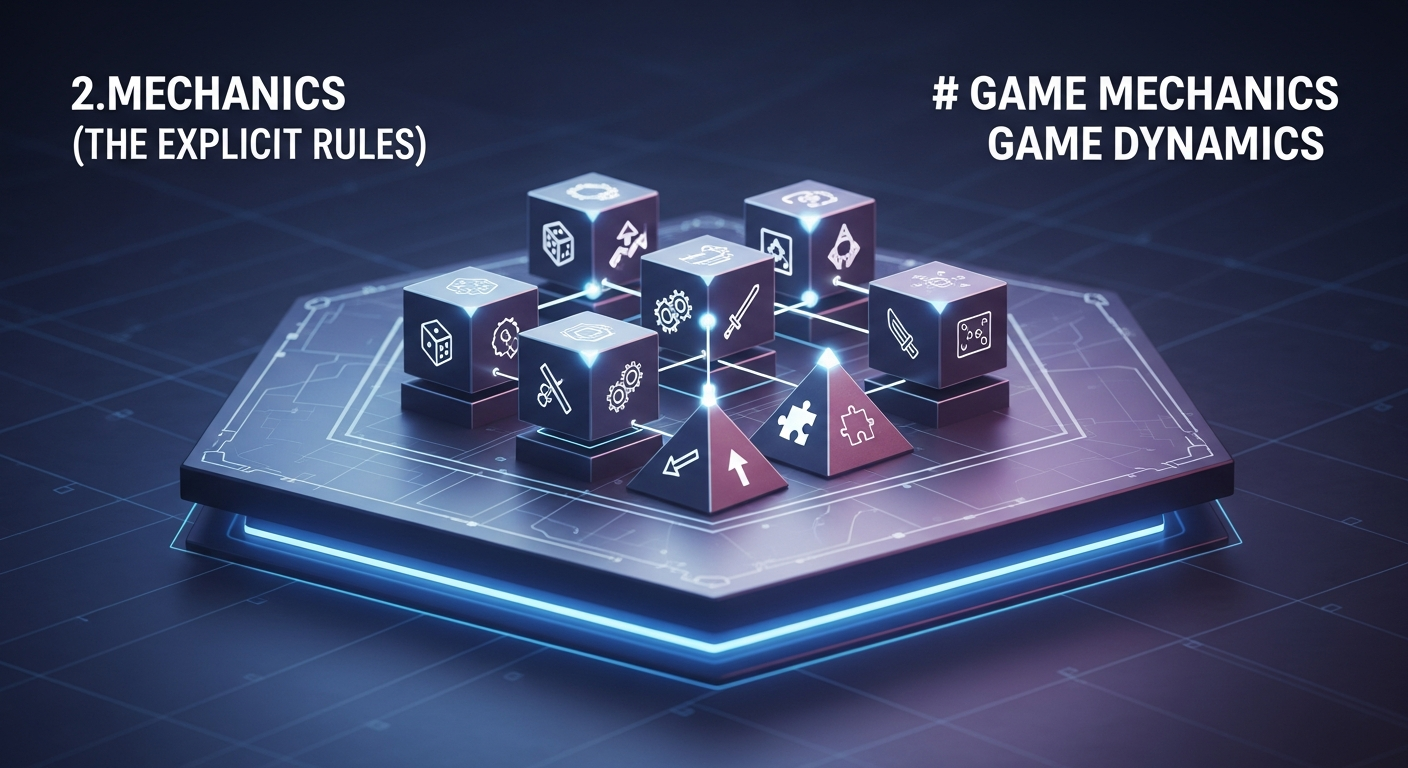
Think of game mechanics as the rules, tools, and actions available to the player within a gamified system. They are the tangible, observable components that drive interaction and define how a learner can participate. In the context of corporate training, these are the elements you consciously design and implement.
Common Game Mechanics in L&D:
- Points: Quantifiable rewards for completing tasks, answering questions correctly, or demonstrating proficiency.
- Badges/Awards: Visual representations of achievement, often given for reaching milestones, mastering skills, or completing modules.
- Leaderboards: Displays that rank learners based on accumulated points, progress, or other metrics, fostering healthy competition.
- Levels: A progression system where learners unlock new content, challenges, or privileges as they demonstrate mastery.
- Challenges/Quests: Specific tasks or scenarios that learners must complete to advance or earn rewards, often simulating real-world job functions.
- Feedback Loops: Immediate responses to learner actions, guiding them towards correct solutions or reinforcing positive behaviors.
- Narrative/Storytelling: Placing learning content within a compelling story arc that gives context and meaning to activities.
These mechanics are the scaffolding upon which a gamified learning experience is built. They provide structure and clear objectives for the learner.
What Are Game Dynamics? The Emotional & Behavioral Experience
If mechanics are the "how," dynamics are the "why" and the "feel." Game dynamics are the emergent behaviors, emotions, and experiences that arise from a learner's interaction with the game mechanics. They are the psychological and social outcomes that truly motivate and engage. Dynamics cannot be directly designed; rather, they emerge as a result of well-chosen mechanics interacting with the learner's intrinsic motivations.
Key Game Dynamics in L&D:
- Achievement: The feeling of accomplishment and mastery derived from overcoming challenges or earning rewards.
- Competition: The drive to outperform others, fueled by leaderboards or peer comparison.
- Collaboration: The desire to work with others towards a common goal, enhancing team cohesion and knowledge sharing.
- Expression/Self-Discovery: The ability for learners to express their individuality or learn about their own strengths and weaknesses.
- Altruism: The desire to help or teach others within the learning environment.
- Exploration: The curiosity to discover new content, pathways, or hidden rewards.
- Relatedness/Social Connection: The sense of belonging to a community or interacting with peers and instructors.
Dynamics are what make a learning experience compelling. They tap into fundamental human psychological drives, transforming mundane tasks into meaningful endeavors.
The Indispensable Interplay: Mechanics Drive Dynamics
The true power of gamification in L&D lies in understanding how mechanics influence dynamics. A leaderboard (mechanic) isn't inherently engaging; it's the resulting dynamic of competition or the drive for achievement that makes it effective. Points (mechanic) lead to a sense of progression and accomplishment (dynamic). Challenges (mechanic) create opportunities for mastery and self-improvement (dynamic).
For L&D leaders, this means moving beyond simply adding points and badges. It requires a strategic approach: first, identify the desired learning dynamics (e.g., increased collaboration, enhanced risk awareness, faster skill acquisition); then, select and design the appropriate game mechanics that will reliably evoke those dynamics.
Why This Matters for Your L&D Strategy
Across diverse industries, the strategic application of game mechanics and dynamics translates directly into tangible business benefits:
- Compliance Training: Transforms dry, mandatory content into engaging scenarios, significantly boosting retention of critical regulations and policies. In Banking, Finance, and Pharma, this is crucial for mitigating risks. Risk-focused Training becomes more effective.
- Sales Training: Creates competitive environments where sales teams practice pitches, learn product knowledge, and refine negotiation skills in a low-stakes setting, leading to improved sales performance. A Gamified LMS can be a game-changer here.
- Healthcare & Hospitality: Engages employees in learning new procedures, patient care protocols, or customer service excellence through interactive simulations and scenario-based challenges.
- Oil & Gas / Mining: Provides immersive training for safety protocols, equipment operation, and emergency procedures, where hands-on experience is critical but often costly or dangerous to simulate physically.
Leveraging a Microlearning LMS can further enhance this by breaking down complex content into bite-sized, gamified modules, making learning more accessible and less daunting.
Optimizing Learning Through Intelligent Systems: Questions for L&D Leaders
The advent of advanced technology provides unprecedented opportunities to fine-tune the interplay between mechanics and dynamics. Here are some critical questions to consider:
Question: How can an intelligent system personalize learning paths based on learner interaction with game mechanics?
Answer: An intelligent system can analyze a learner's performance, progress, and preferences as they engage with mechanics like points, levels, and challenges. It can then dynamically adjust the difficulty, recommend specific modules, or suggest alternative learning resources. For instance, if a learner excels in a competitive leaderboard scenario, the system might offer more advanced, challenge-based content. Conversely, if they struggle, it can provide remedial modules or offer collaborative activities. This tailored approach, often referred to as Adaptive Learning, ensures optimal engagement and skill development for every individual.
Question: What considerations should an organization make for deploying advanced learning solutions across diverse regional operations?
Answer: When deploying sophisticated learning platforms globally, it's essential to consider cultural nuances, language variations, and local regulations. An effective solution should allow for easy localization of content, ensuring that game mechanics and scenarios resonate with different cultural contexts. Furthermore, the platform must be scalable to accommodate varying team sizes and technological infrastructures across regions, providing a consistent yet locally relevant learning experience. Considerations for data privacy and security, as well as offline access capabilities for remote locations, are also paramount.
Question: How does an advanced intelligent platform enhance the design and deployment of engaging learning experiences?
Answer: An advanced intelligent platform can significantly streamline the creation and management of gamified content. It can offer smart templates, automated content suggestions, and even analyze existing learning materials to recommend optimal game mechanics for specific learning objectives. Such a platform acts as a powerful assistant for instructional designers, accelerating the development of interactive quizzes, simulations, and scenario-based training. This significantly reduces time-to-market for critical training initiatives and ensures a consistent quality of engagement across all modules, especially when utilizing an AI Powered Authoring Tool.
Implementing for Impact: Practical Steps for L&D Leaders
To harness the power of game mechanics and dynamics, L&D leaders should:
- Define Learning Objectives First: Before thinking about game elements, clearly articulate what you want learners to achieve.
- Identify Desired Dynamics: What behaviors and emotions do you want to evoke? (e.g., mastery, collaboration, urgency, critical thinking in Risk-focused Training).
- Select Appropriate Mechanics: Choose mechanics that will reliably trigger those desired dynamics. A Gamified LMS provides the framework to implement these.
- Iterate and Refine: Launch with a pilot group, gather feedback on how learners are experiencing the dynamics, and adjust mechanics accordingly.
- Measure Impact: Go beyond completion rates. Track changes in performance, compliance, sales figures, and other KPIs directly linked to the training.
Conclusion: Elevate Your L&D with Strategic Gamification
For L&D Vice Presidents, Directors, and Managers, understanding and strategically applying game mechanics and game dynamics is no longer a luxury but a necessity for creating impactful learning experiences. It’s about more than just making learning "fun"; it's about leveraging deep psychological principles to drive genuine engagement, knowledge retention, and behavioral change across your organization. By adopting this nuanced approach, supported by platforms like a robust Microlearning LMS and advanced intelligent tools, you can transform your learning programs from obligatory tasks into powerful engines of growth and performance.
.jpg)


