

Unlocking Deeper Insights: A Double Loop Learning Example for L&D Leaders
In today's rapidly evolving corporate landscape, the ability of an organization to learn, adapt, and innovate is paramount. For Vice Presidents, Directors, and Senior Managers in Learning & Development, fostering such a culture of continuous improvement is not just a goal, but a strategic imperative. While many L&D initiatives focus on enhancing skills and knowledge—a crucial first step—true organizational resilience and transformative growth stem from a deeper cognitive process: Double Loop Learning.
Double Loop Learning, a concept pioneered by Chris Argyris and Donald Schön, moves beyond merely correcting errors within existing frameworks. It challenges the very assumptions, policies, and objectives that led to the errors in the first place. It asks not just "How can we do this better?" but fundamentally, "Are we even doing the right thing, and why?" This article will delve into a practical Double Loop Learning example, illustrating its profound impact, and explore how modern learning technologies can empower your organization to embrace this powerful methodology.
What is Double Loop Learning?
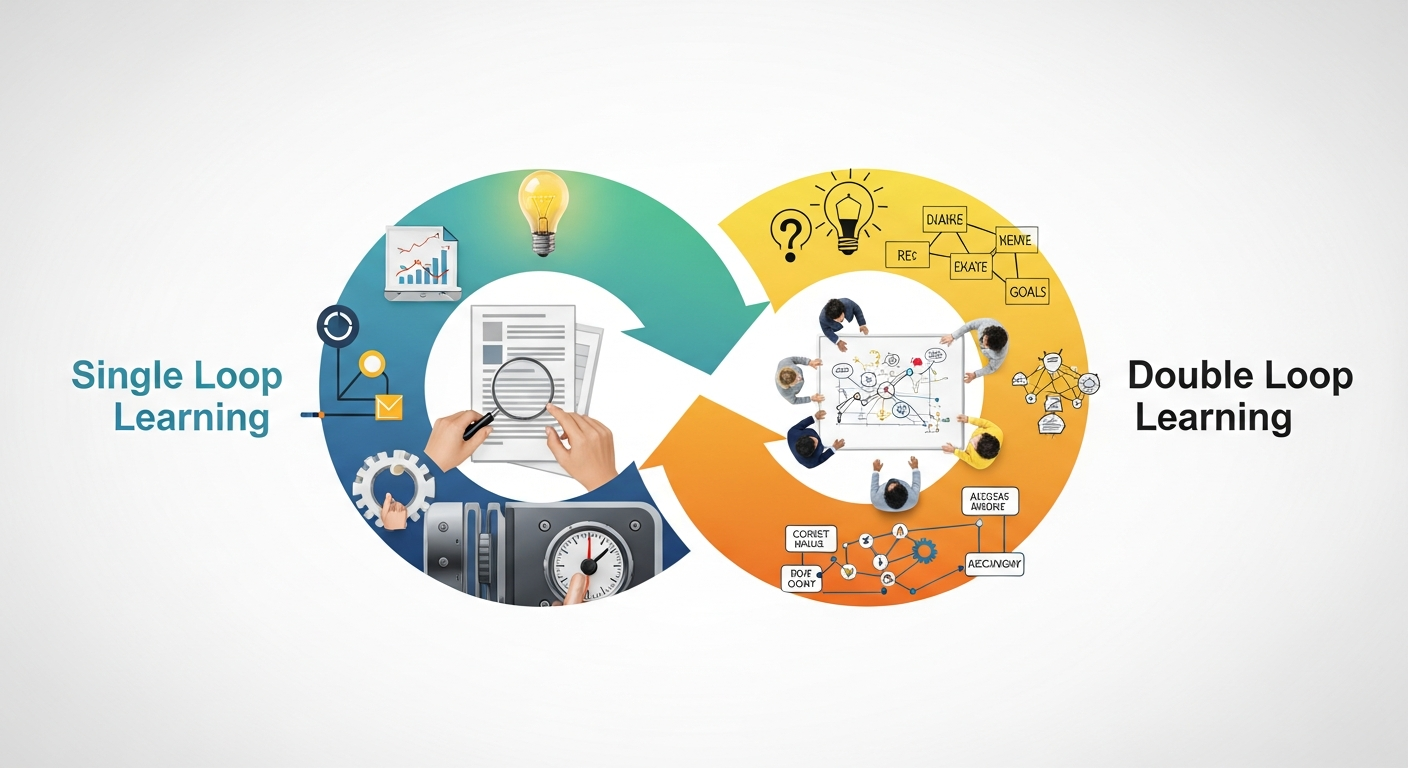
To fully grasp Double Loop Learning, it's essential to understand its counterpart: Single Loop Learning. Imagine a thermostat. When the room gets too cold, it switches on the heater. When it gets too hot, it switches it off. This is Single Loop Learning—a system detecting an error and correcting it without questioning its core programming or objectives. It focuses on efficiency, fixing problems, and improving performance within established norms.
Double Loop Learning, however, is akin to questioning why the thermostat is set to 72 degrees in the first place, or whether the heating system is the most energy-efficient solution. It involves a critical examination of the underlying values, beliefs, and assumptions that guide actions. It's about learning to learn, about redesigning the "rules of the game" rather than just playing by them more effectively.
The Power of Asking "Why?"
At its core, Double Loop Learning is driven by a relentless curiosity and a willingness to challenge the status quo. It involves:
- Identifying inconsistencies between espoused theories (what we say we do) and theories-in-use (what we actually do).
- Reflecting on the deeper reasons for failures, not just the immediate causes.
- Re-evaluating fundamental goals, strategies, and even organizational culture.
- Experimenting with new approaches based on revised understanding.
For L&D professionals, facilitating Double Loop Learning means moving beyond training delivery to fostering environments where critical reflection, open dialogue, and systemic inquiry are not just encouraged but ingrained.
A Concrete Example: Enhancing Compliance Training in Banking
Let's consider a practical Double Loop Learning example within the banking sector, specifically concerning compliance training.
The Initial Challenge (Single Loop Thinking)
A large financial institution, operating across multiple global markets, faces persistent issues with compliance breaches related to anti-money laundering (AML) regulations. Despite significant investment in mandatory annual training, regular refresher courses, and a robust Gamified LMS for tracking completion, audit findings consistently reveal a pattern of errors. Employees are often found missing critical red flags, incorrectly categorizing transactions, or failing to follow due diligence protocols effectively.
A Single Loop Learning approach would dictate:
- Problem: Employees are making AML errors.
- Solution: Increase the frequency of training, make modules longer, add more quizzes, penalize errors more severely, or bring in external compliance experts for more intensive workshops.
While these actions might temporarily reduce incidents, they don't address the root cause. The organization is simply trying to improve its execution within the existing framework of "training more equals better compliance."
Unveiling Deeper Issues (Double Loop Intervention)
An L&D leader, applying Double Loop Learning, would ask a series of "why" questions:
- Why are employees still making errors despite extensive training?
- Is the training content truly effective? Is it engaging? Is it relevant to their day-to-day tasks?
- Are employees retaining the information? How quickly does knowledge decay?
- Why might employees be struggling to apply compliance rules in real-time?
- Are the internal procedures overly complex?
- Do they have sufficient resources and tools at their fingertips when making decisions?
- Is there a fear of slowing down processes, leading to quick but incorrect decisions?
- Is the corporate culture inadvertently prioritizing speed over meticulous compliance?
- Why do audits keep finding the same types of errors?
- Are the audit criteria truly aligned with operational realities?
- Is there a disconnect between what management expects and what frontline employees can realistically deliver under pressure?
Through this deeper inquiry, the L&D team, collaborating with compliance officers and frontline managers, might uncover several systemic issues:
- The existing compliance training, while comprehensive, is often generic, text-heavy, and delivered annually, leading to poor retention and difficulty in applying rules to specific, nuanced scenarios.
- Frontline staff feel immense pressure to process transactions quickly, often bypassing detailed checks they perceive as time-consuming bottlenecks.
- The internal reporting system for suspicious activities is cumbersome, discouraging employees from flagging potential issues early.
- Management's communicated priority of "efficiency" sometimes overshadows the equally critical, but less immediately rewarded, priority of "meticulous compliance."
Transforming the Approach (Strategic Shift)
Based on these Double Loop insights, the organization doesn't just "do more training"; it fundamentally rethinks its approach to compliance and learning:
- Shift from Annual Dumps to Continuous, Contextual Learning: They move away from lengthy annual modules to a MaxLearn Microlearning Platform, delivering short, bite-sized content just-in-time, linked directly to specific transaction types or customer interactions. This includes scenario-based simulations and real-world examples that resonate with daily tasks.
- Integrate Adaptive Learning: Using Adaptive Learning technologies, the platform identifies individual knowledge gaps and delivers personalized remediation, focusing only on what an employee needs to learn, not a one-size-fits-all approach.
- Refine Procedures & Tools: Working with operations, the bank streamlines complex procedures and integrates compliance checks directly into workflow tools, making it easier for employees to comply rather than bypass. An AI Powered Authoring Tool assists in creating dynamic, role-specific content reflecting these refined procedures.
- Foster a Culture of Risk-focused Training: Leadership actively communicates and rewards a culture where questioning, reporting potential risks, and meticulous compliance are celebrated, not just efficiency. Training emphasizes the "why" behind AML rules—protecting the institution and society—rather than just the "what."
Measurable Impact
The results of this Double Loop Learning approach are significant:
- A noticeable decrease in AML compliance breaches and audit findings.
- Improved employee confidence and reduced anxiety around complex compliance decisions.
- Faster, more accurate transaction processing due to clarified procedures and embedded support.
- A stronger organizational culture that prioritizes ethical conduct and proactive risk management, fostering a deeper understanding of compliance objectives.
Extending the Principle: Applications Across Industries
The power of Double Loop Learning extends far beyond banking compliance. Consider its application across various industries:
- Sales Enablement (Retail, Pharma, Insurance): Instead of just training sales teams on new product features, a Double Loop approach would question why certain products aren't selling, leading to a re-evaluation of marketing strategies, product positioning, or even core sales methodologies.
- Patient Safety (Healthcare): Beyond incident reporting and retraining staff on protocols, Double Loop Learning would explore why medical errors occur repeatedly—perhaps due to staffing levels, communication breakdowns between departments, or systemic fatigue.
- Operational Safety (Oil & Gas, Mining, Manufacturing): Instead of merely reinforcing safety procedures after an incident, it would question the underlying safety culture, equipment design, or maintenance protocols that might inadvertently contribute to unsafe practices.
- Customer Service Excellence (Hospitality, Retail): Moving beyond training staff to "be friendlier," it would examine organizational policies, reward structures, or operational bottlenecks that prevent truly exceptional customer experiences.
Integrating Modern Learning Technologies for Double Loop Success
Modern learning platforms are indispensable allies in facilitating Double Loop Learning. They provide the tools to gather data, deliver targeted interventions, and foster reflection:
- Data-Driven Insights: A sophisticated MaxLearn Microlearning Platform can track not just completion rates, but also performance in simulations, common errors, and knowledge retention over time, providing the "why" behind learning gaps.
- Personalized Journeys: Adaptive Learning capabilities ensure that interventions are precisely targeted, addressing specific conceptual misunderstandings that might be driving deeper issues.
- Interactive & Engaging Content: A Gamified LMS can create safe environments for experimentation and reflection, allowing employees to fail, learn, and adjust their mental models without real-world consequences.
- Rapid Content Iteration: An AI Powered Authoring Tool empowers L&D teams to quickly update content based on new insights, ensuring learning materials always reflect the organization's evolving understanding and strategies.
- Contextual & Risk-focused Training: Technology allows for the delivery of relevant, immediate training that directly addresses identified risks and challenges in real-time, embedding learning into the flow of work.
Addressing Critical L&D Inquiries in the AI Era
What strategies can artificial intelligence offer for improving organizational learning processes?
Artificial intelligence revolutionizes organizational learning by personalizing content delivery, automating assessments, and analyzing performance data to identify learning gaps and predict future skill needs. AI-driven platforms can tailor learning paths for individuals, recommend relevant resources, and provide real-time feedback, making learning more efficient and effective. They can also facilitate the creation of complex simulations and scenario-based training that mirrors real-world challenges, fostering deeper engagement and skill application.
How can advanced technology help geographically dispersed teams collaborate on continuous improvement initiatives?
Advanced technology, including cloud-based learning platforms, virtual collaboration tools, and immersive experiences, enables seamless collaboration for distributed teams. These tools provide centralized access to learning resources, facilitate synchronous and asynchronous communication, and support shared project workspaces. They allow teams to share insights, reflect on processes, and collectively develop solutions, transcending physical boundaries to foster a unified culture of continuous improvement and shared organizational learning.
What innovative approaches are available for enhancing individual skill development within a corporate environment?
Innovative approaches for individual skill development include adaptive microlearning pathways, AI-powered virtual coaches, augmented reality (AR) and virtual reality (VR) simulations for hands-on practice, and social learning platforms that connect learners with mentors and peers. These methods move beyond traditional classroom settings to offer highly personalized, engaging, and practical learning experiences. They empower individuals to learn at their own pace, apply new skills in simulated environments, and receive immediate, actionable feedback, accelerating their professional growth and adaptability.
For L&D leaders, embracing Double Loop Learning is not just about improving training; it's about fundamentally transforming your organization's capacity for strategic adaptation and sustained excellence. By challenging assumptions, delving into root causes, and leveraging modern learning technologies, you can cultivate a truly learning-agile enterprise ready to navigate the complexities of tomorrow.
.jpg)


