

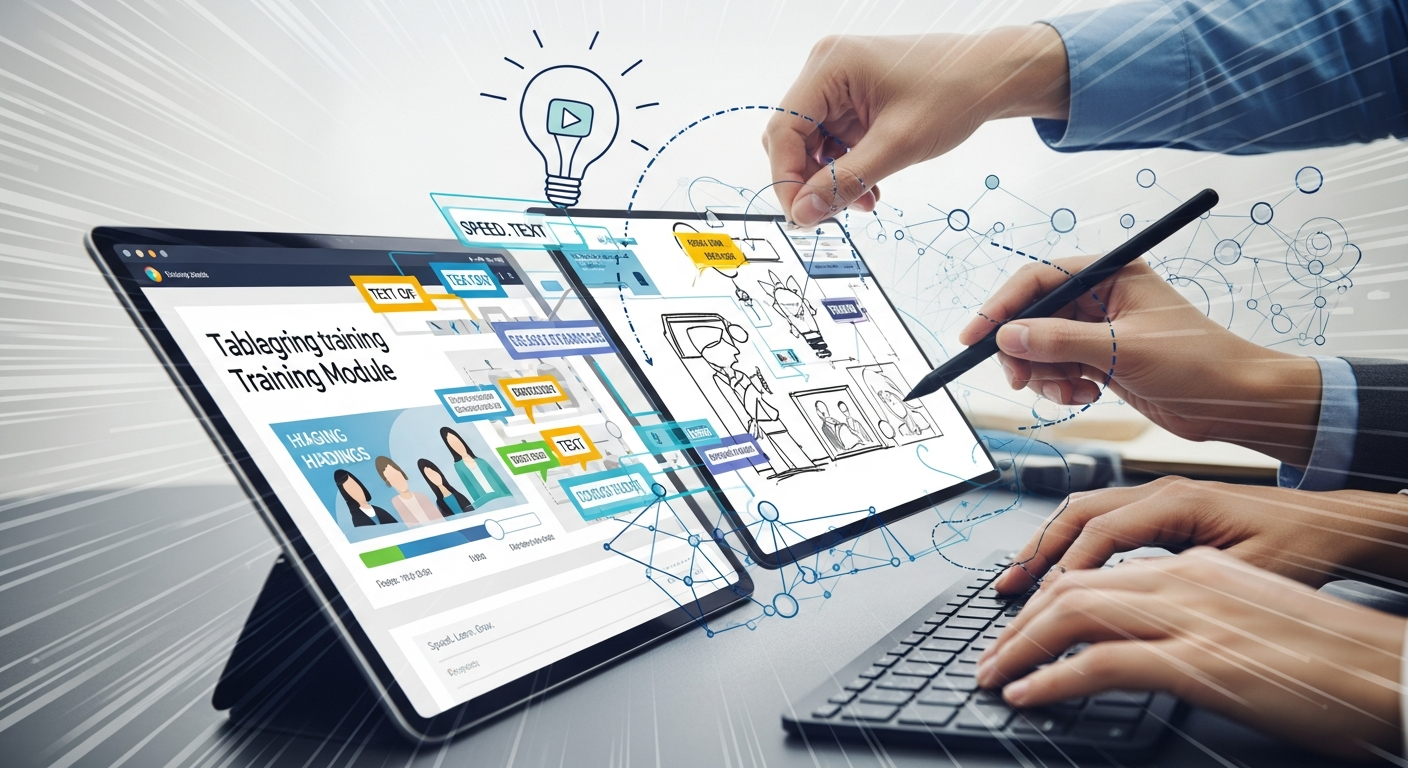
Fast Content Creation For Training: Accelerating Learning in a Dynamic World
In today's hyper-competitive and rapidly evolving business landscape, the ability to adapt and acquire new skills is paramount. Organizations are under immense pressure to keep their workforce updated with the latest industry trends, technological advancements, and compliance requirements. However, traditional content creation processes for training often lag, becoming a bottleneck that hinders agility and responsiveness. The need for fast content creation for training isn't just a luxury; it's a strategic imperative. This article delves into the strategies and tools that empower businesses to develop high-quality, engaging training content at speed, without compromising effectiveness.
Why Speed is the New Standard in Training
The Pace of Change Demands Agility
From AI and automation to shifting market demands and new regulations, the business environment is in constant flux. Training content that takes months to develop is often outdated by the time it reaches learners. Companies need to react swiftly to skill gaps, introduce new product knowledge, or roll out compliance updates almost immediately to maintain their competitive edge and avoid significant risks.
Meeting Learner Expectations
Modern learners, accustomed to instant information gratification, expect training that is relevant, accessible, and delivered just-in-time. Lengthy, generic courses no longer cut it. They demand personalized, bite-sized learning experiences that fit into their busy schedules and address their immediate needs. Fast content creation enables organizations to deliver this agile, on-demand learning experience.
Traditional Hurdles to Swift Content Development
Before we explore solutions, it's crucial to understand the common obstacles that slow down content creation:
- Lengthy Development Cycles: From conception to deployment, projects can drag on for months, involving multiple stakeholders and lengthy review processes.
- Subject Matter Expert (SME) Bottlenecks: Reliance on busy SMEs for content generation and review can cause significant delays.
- Complex Tools and Processes: Overly complicated authoring tools or lack of a standardized workflow can impede efficiency.
- Lack of Reusability: Starting from scratch for every new training module is a time-sink.
- Resistance to Technology Adoption: Failure to embrace modern authoring tools and platforms that streamline creation.
Strategies for Turbocharging Your Training Content Pipeline
Embrace Microlearning Principles
Breaking down complex topics into short, focused, bite-sized modules is perhaps the most impactful strategy for fast content creation. MaxLearn Microlearning Platform excels at facilitating this approach, allowing creators to produce content quickly because each module addresses only one learning objective. This not only speeds up creation but also enhances learner engagement and retention, making the content easier to consume and recall. Microlearning modules are quicker to update, review, and deploy, ensuring training remains current.
Leverage AI and Smart Authoring Tools
The advent of artificial intelligence has revolutionized content creation. An AI Powered Authoring Tool can significantly accelerate the development process by automating tedious tasks, generating initial content drafts, suggesting relevant images or multimedia, and even adapting content for different learning styles. Such tools can analyze existing documentation, extract key information, and help instructional designers quickly build structured courses, freeing up valuable time for fine-tuning and creative input.
Implement Gamification for Engagement and Efficiency
Integrating game-like elements into training content can dramatically increase engagement and motivation. A Gamified LMS simplifies the process of adding points, badges, leaderboards, and interactive challenges, which can be quicker to implement than developing complex scenarios from scratch. Gamification also often relies on clear, concise objectives and immediate feedback, which naturally aligns with a faster content creation methodology. By making learning fun and competitive, you can achieve better outcomes with less development time for elaborate narrative structures.
Harness the Power of Adaptive Learning
When training content is tailored to individual learner needs, less "catch-all" content is required. Adaptive Learning platforms use algorithms to adjust the learning path based on a learner's prior knowledge, performance, and preferences. This means content creators can focus on developing targeted modules that are only delivered when relevant, rather than building extensive, linear courses for every possible skill level. The result is a more efficient content creation process and a highly personalized, effective learning experience for each employee.
Prioritize with Risk-focused Training
Not all training has the same level of urgency or impact. By adopting Risk-focused Training, organizations can prioritize content creation on areas that pose the highest risk to the business if employees are not adequately trained. This strategy directs resources to critical content first, ensuring that essential knowledge and skills are developed quickly, while less critical training can follow a more relaxed schedule. This strategic prioritization significantly speeds up the delivery of high-impact training.
Standardize and Templatize
Creating a library of templates for various content types (e.g., quizzes, scenarios, informational slides) dramatically reduces creation time. Standardizing branding, layout, and instructional design principles ensures consistency and allows content creators to focus on the message rather than the mechanics. Reusable content assets, such as images, videos, and interactive elements, also accelerate the process.
Adopt an Agile Development Methodology
Instead of lengthy waterfall approaches, implement agile principles. Develop content in short sprints, gather immediate feedback, and iterate quickly. This iterative process allows for faster adjustments, reduces rework, and ensures the content meets learner needs more precisely and rapidly.
Best Practices for a Rapid Content Pipeline
- Cross-functional Teams: Involve instructional designers, SMEs, and tech support from the outset to streamline communication and reduce bottlenecks.
- Clear Content Governance: Establish clear guidelines for content creation, review, and approval to avoid delays.
- Continuous Feedback Loops: Regularly solicit feedback from learners and incorporate it quickly to keep content relevant and engaging.
- Invest in the Right Technology: Utilize modern authoring tools, robust Learning Management Systems (LMS), and AI-powered solutions that support rapid development.
- Train Your Creators: Ensure your content creation team is proficient with the tools and methodologies for efficient content development.
Measuring the Impact of Accelerated Content Creation
Fast content creation isn't just about speed; it's about achieving better business outcomes. Measure success by tracking metrics such as:
- Time-to-Market for New Training: How quickly new content goes from concept to deployment.
- Learner Engagement and Completion Rates: Indicating the quality and relevance of the rapidly created content.
- Skill Gap Closure: The measurable impact on employee performance and business objectives.
- Cost Efficiency: Reduced costs associated with shorter development cycles.
Conclusion
The demand for fast content creation for training is undeniable. By strategically embracing microlearning, leveraging AI-powered authoring tools, integrating gamification, adopting adaptive learning, prioritizing with risk-focused training, and implementing agile methodologies, organizations can build a highly efficient and effective training content pipeline. This not only keeps the workforce skilled and competitive but also positions the business for sustained growth and innovation in a world that never stops changing. The future of learning is fast, focused, and profoundly impactful.
.jpg)


